Geodes

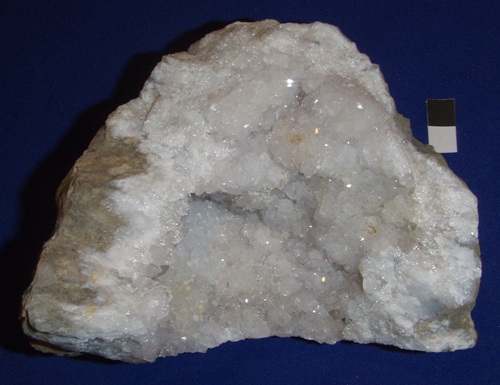
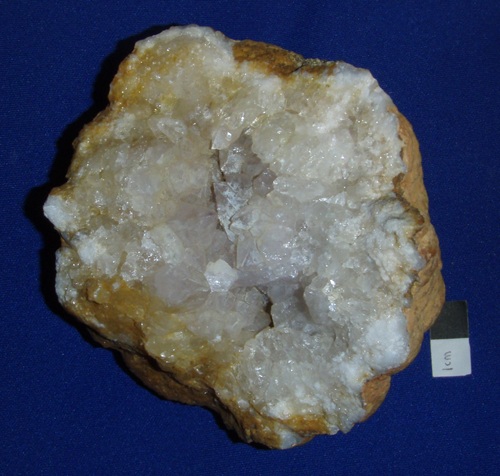
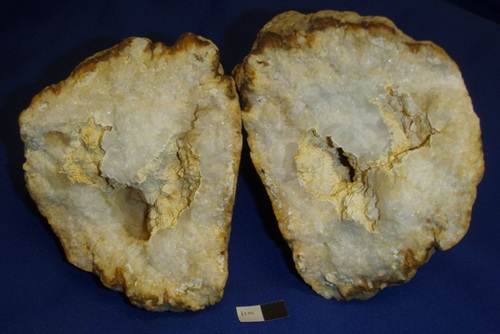
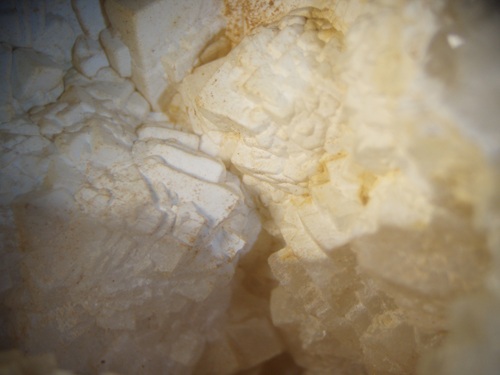
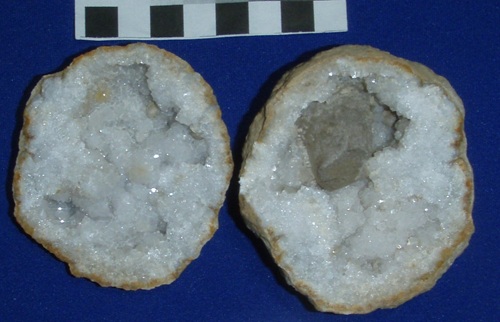
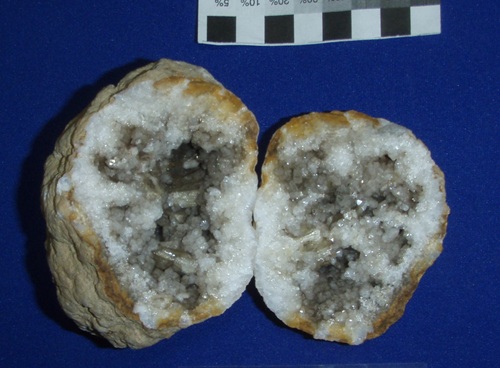
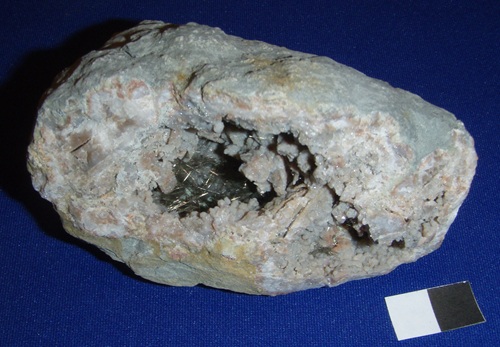
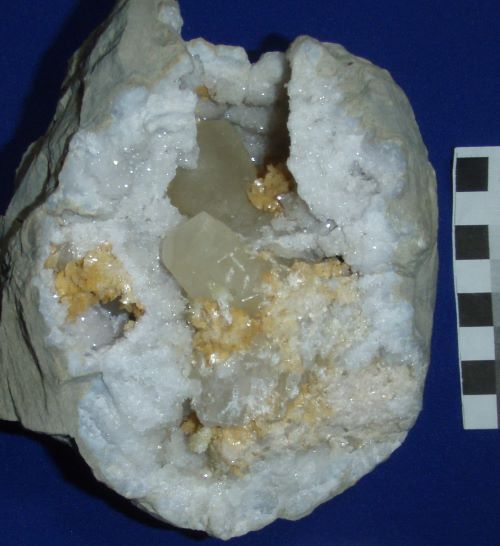
A geode with quartz, calcite, dolomite, and barite. From Harrodsburg, Indiana road cut.

What is a geode?

Geodes are nodules lined with quartz. They are found in sedimentary and igneous environments. In the eastern United States, geodes are found in sedimentary rock layers, including limestone, siltstone, and shale.

The smallest are pea-sized. The largest can exceed three feet (one meter), although these are very rare and often discolored by or filled with clay, making them unattractive.

Geodes may be solid when the quartz crystals have grown to fill the interior. The favorites are those with secondary minerals (describe below). In some locations, geodes may be 90% solid or have only small pockets of crystals. These are hard to crack open.

The exterior shell of a geode is formed from cryptocrystalline quartz, commonly called chalcedony (Kal-se-doh-nee). Sometimes, chalcedony dominates the interior, forming bubble-like masses. In its pure form, chalcedony is white to pale blue, but it may be colored by groundwater to other colors.

Agates are geodes that are often filled with chalcedony, having multiple colors. The highly sought-after Kentucky Agates have a spectrum of colors, including black, white, red, yellow, blue, and shades thereof. Some are banded, a pattern called “fortification.” (Like the walls of early forts.) These agates are found on private property in Rockcastle and Estill Counties, Kentucky.

“Geodes belts” define occurrences that follow specific rock layers along linear outcrops. For example, in Kentucky, the geode belt runs from Meade, Bullitt, and Hardin Counties south and east, until the rock strata run under the Cumberland Plateau. Outcrops occur south into Tennessee.

Indiana’s geode belt is ill-defined north of the Ohio River, and appears in Washington, Lawrence, Brown, and Monroe Counties before disappearing under glacial till.
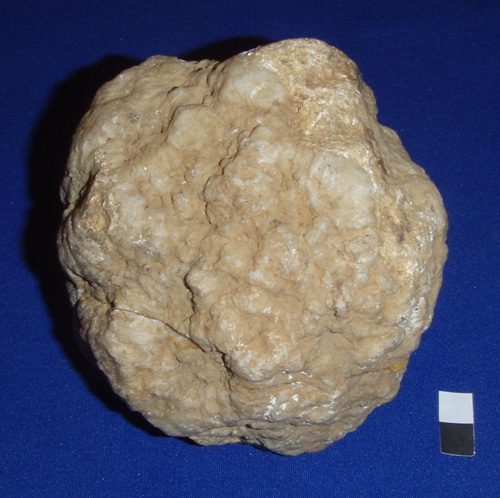
The exterior of a geode found in streams and fields. The cauliflower exterior is thought to form by pressure on the bedrock that surrounds the geode while it is forming.

How do geodes form?

The most recent theory in the Ohio Valley, geodes begin as gypsum nodules (calcium sulfate) in Mississippian-age sedimentary rocks in the Ohio Valley. Gypsum is water-soluble and migrates through rocks that are buried deep within the Earth. The thickest gypsum beds are in the St. Louis Limestone. Groundwater carries the dissolved gypsum, mostly into old rock layers, where the gypsum precipitates into nodules inside fossils or other features with space for molecules to congregate and expand.

Later, groundwater deposits a rind of chalcedony around the nodule. These so-called proto-geodes are gypsum nodules with a thin exterior, sometimes barely visible. Over time, the rind thickens. Some geodes have microscopic gypsum preserved in the quartz rind.

After that, anything goes. Gypsum usually dissolves away, leaving a hollow interior that has additional quartz added. When the quartz doesn’t fill the interior, groundwater can bring in other elements. Sulfur combines with barium or strontium to form barite and celestine, respectively. Iron can form pyrite or marcasite.

Unusual minerals occur in geodes where the bedrock forms structures, like the Cincinnati Arch or the Muldraugh Dome. These subsurface “topographic” highs can concentrate elements that would otherwise be too dispersed to form crystals. Halls Gap contains abundant nickel (probably from iron-nickel meteorites that rain down on Earth continuously over millions of years) to form millerite. It also has copper, lead, and titanium. Muldraugh/Fort Knox has celestine, fluorite, petroleum, strontianite, and sulfur.

How do I open a geode?

The safest way is to use a rock splitter. However, those are expensive and only cost-effective if you plan to open (and sell) a LOT of geodes. Using a hammer and chisel is the most common approach. However, it is dangerous. Flakes or chunks of quartz are just like glass. They fly off at high velocities and can easily penetrate skin and eyes!

Solid geodes can go sailing away like a golf ball hit by a club. Contain the space when attempting to open a geode. That will minimize the risk of denting a car, breaking a window, or hurting someone watching. (Observers should wear goggles and be dressed for safety.)

Wear safety gear when opening geodes. That includes safety goggles, a long-sleeve shirt, and heavy pants, such as blue jeans.

Some people put the geode in an old sock before they crack it open. It doesn’t take long to wear out the sock. Others wedge the geode with the tip of their boot. Steel-toed boots are best, but heavy rubber tips work – as long as your aim is accurate. Don’t do this unless you are experienced with a hammer and chisel.

Quartz has a hardness of seven on the Mohs Scale. That means the sharp edge of a chisel won’t last long. Access to a grinding wheel is essential to keep the chisel point sharp. Dull chisels are dangerous. Metal can flake off and cause as much bodily harm as a geode fragment.

Quartz Photos
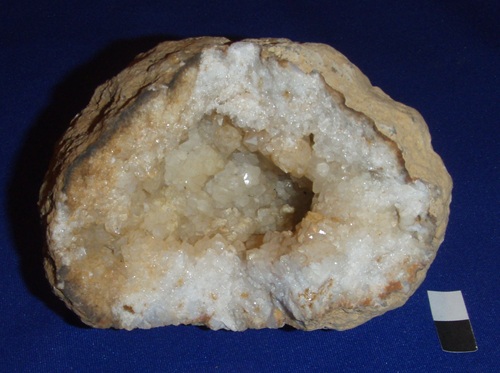
Quartz geode from Meade Co., KY. Colored by soil leaching inside. 2 cm scale.
Slightly amethystine quartz geode from Meade Co., KY. 2 cm scale.
Amethystine quartz in large crystals, from a deeply weathered geode found in a field in Bullitt Co., KY.
Quartz geode altering to secondary chalcedony, from Meade Co., KY. 2 cm scale.
Close-up of where the quartz has altered into chalcedony.
Close-up of where the quartz has altered into chalcedony. FOV ~2 cm.
Peach-colored quartz in small crystals, probably from iron. Collected in south-central Kentucky.
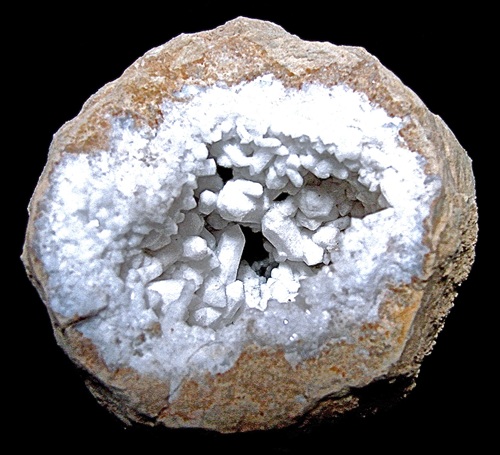
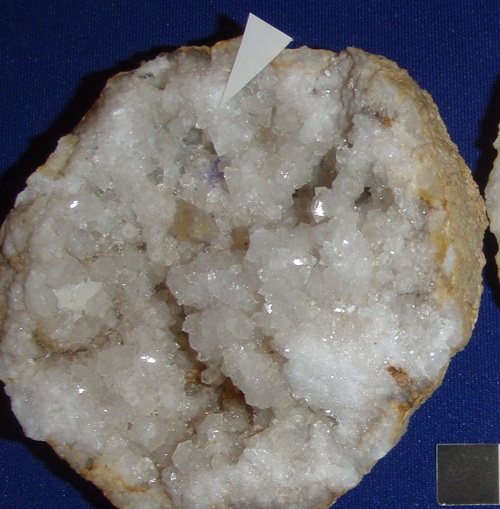
Milky Quartz in large crystals. The white color is due to microscopic inclusions of water and/or gas bubbles, like CO2. The 6 cm wide geode is from Monroe Co., Indiana. Bob Harman specimen and photo.

Milky Quartz in large crystals. The white color is due to microscopic inclusions of water and/or gas bubbles, like CO2. The 6 cm wide geode is from Monroe Co., Indiana. Bob Harman specimen and photo.

Secondary Minerals

Secondary minerals form after the quartz. Calcite is, by far, the most common secondary mineral. Calcium carbonate makes up limestone, and when dissolved by groundwater, can crystallize in hollow geodes. This is why hard water can damage pipes and water heaters from the inside. Calcite can fill a geode, hiding other secondary minerals. Hydrochloric acid will dissolve the calcite, exposing non-soluble minerals. Examples are noted below.

Barite – Barium Sulfate – BaSO4
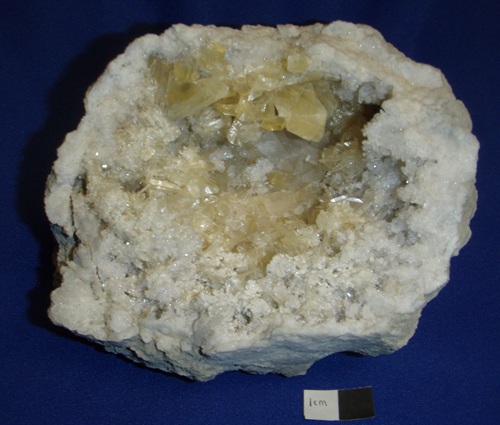
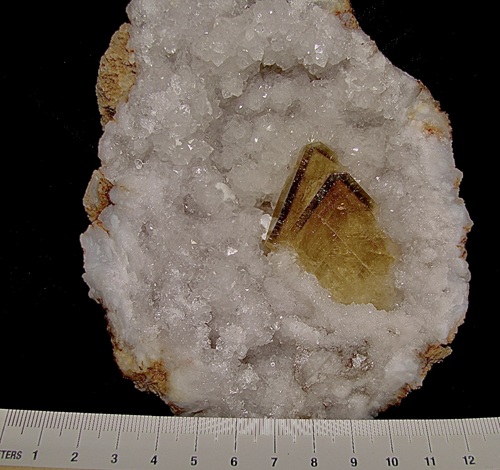
Yellow barite in a quartz geode. The calcite filling was dissolved with HCl. Harrodsburg,, Indiana. 2 cm scale.
Yellow barite in a quartz geode. The calcite filling was dissolved with HCl. Harrodsburg, Indiana. 2 cm scale.
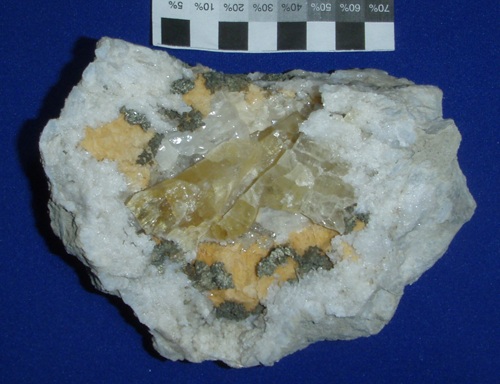
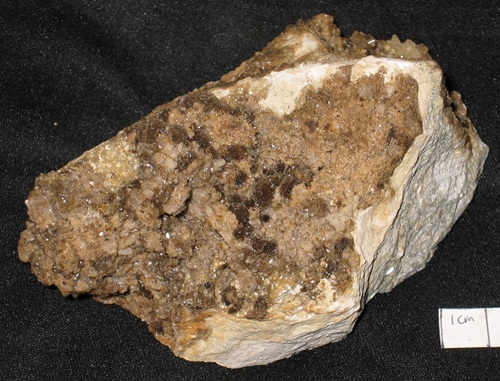
Massive yellow barite crystal with pyrite, exposed by dissolving the calcite with HCl. Collected in March 1986. Cm scale at top.
Barite with zoning, possibly from sulfide inclusions (pyrite or marcasite). Monroe Co., Indiana. Bob Harman specimen and photo.

Barite with zoning, possibly from sulfide inclusions (pyrite or marcasite). Monroe Co., Indiana. Bob Harman specimen and photo.

Calcite – Calcium Carbonate – CaCO3
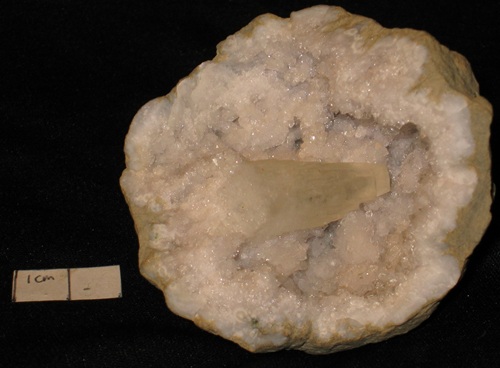
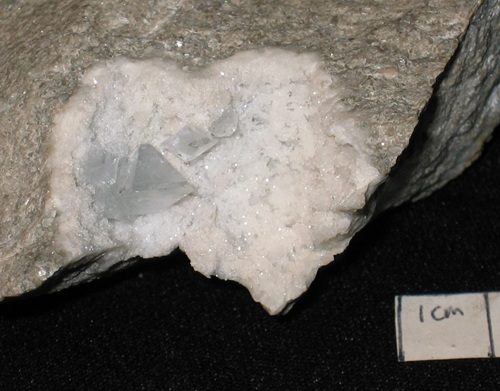
Calcite crystal in a quartz geode. This is an example of a lucky break when opening the geode, collected in November 1984 on the north side of the Harrodsburg, IN, exit.
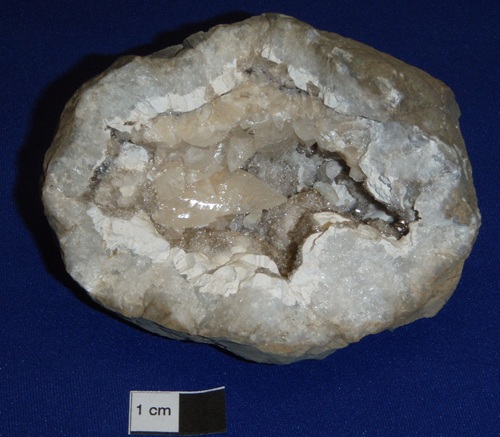
Calcite crystal in a quartz geode. This is an example of a lucky break when opening the geode, collected in November 1984 on the north side of the Harrodsburg, IN, exit.

Calcite in two generations inside a chalcedony geode. The first generation is large scalenohedral crystals. The second are tiny "dew drop" crystals, named because they resemble dew on grass. Muldraugh Hill, Kentucky.
Calcite in two generations inside a chalcedony geode. The first generation is large scalenohedral crystals. The second are tiny “dew drop” crystals, named because they resemble dew on grass. Muldraugh Hill, Kentucky.
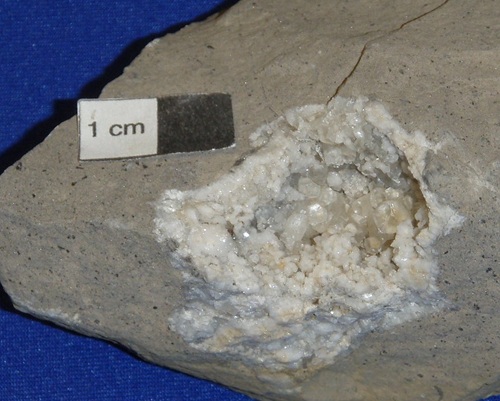
A calcite geode in Salem Limestone, from the dump of the Hutson Zinc Mine in Livingston Co., KY. Crystals are small and blocky.

A calcite geode in Salem Limestone, from the dump of the Hutson Zinc Mine in Livingston Co., KY. Crystals are small and blocky. Compare to the Salem Limestone geodes in Washington Coi., Indiana.
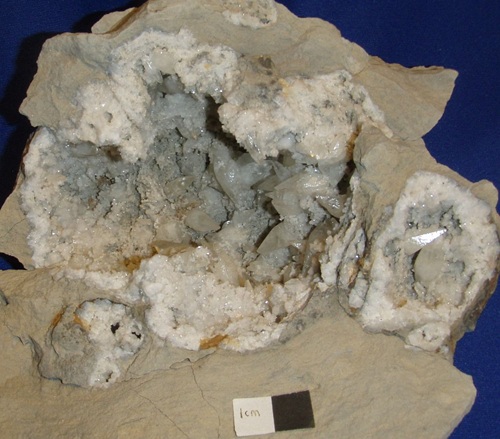
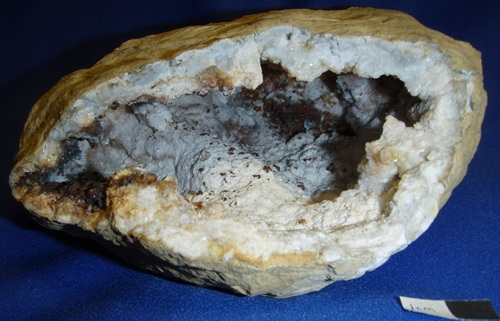
A large, complex geode with calcite in Salem Limestone, from Salem Quarry in Washington Co., Indiana. Crystals are sharp scalenohedrons.
Not all calcite geodes have distinct crystals. This one has very small crystals, coated with a crust of micro-crystalline calcite. It fluoresces and phosphoresces beautifully! Bullitt Co., Kentucky. Collected April 1985.
Calcite on one side of the geode. It has a silky luster due to slight dissolution by groundwater. From Meade Co., KY.
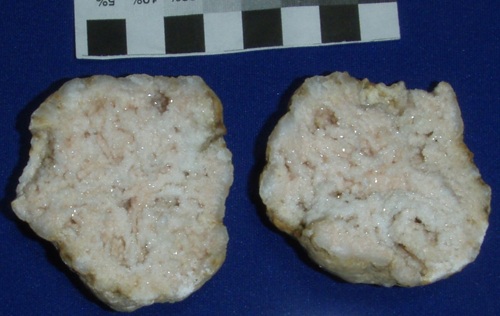
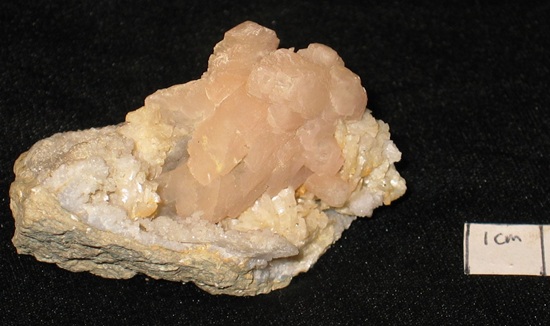
Pink calcite, probably magnesian, from Harrodsburg, Indiana, found in the early 1980s.

Pink calcite, probably magnesian, from Harrodsburg, Indiana, found in the early 1980s.

Celestine – Strontium Sulfate – SrSO4
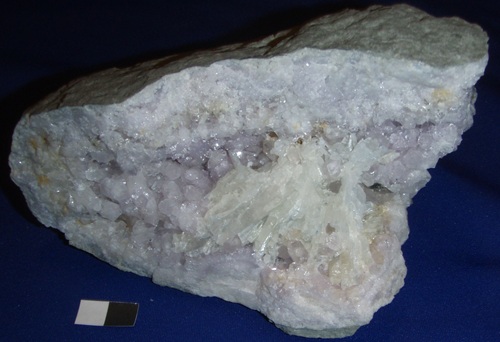
Celestine in amethystine quartz, from Kings Mountain, Lincoln Co., Kentucky.
Celestine in a large amethystine quartz, from Kings Mountain, Lincoln Co., KY. Collected in July 1996.
A cluster of celestine in blue, gemmy pseudo-octahedral crystals on quartz. Collected in 1991 during construction of the new Hwy 1638 near Fort Knox, KY.
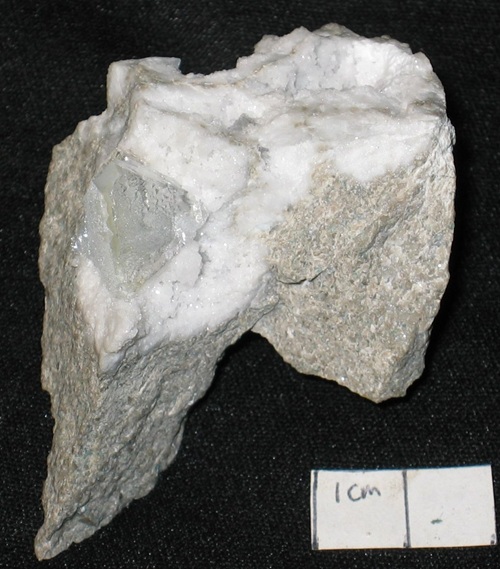
A cluster of celestine in blue, gemmy pseudo-octahedral crystals on quartz. Collected in 1991 during construction of the new Hwy 1638 near Fort Knox, KY.

Celestine in a light blue, gemmy pseudo-octahedral crystal. Collected in 1991 during construction of the new Hwy 1638 near Fort Knox, KY.
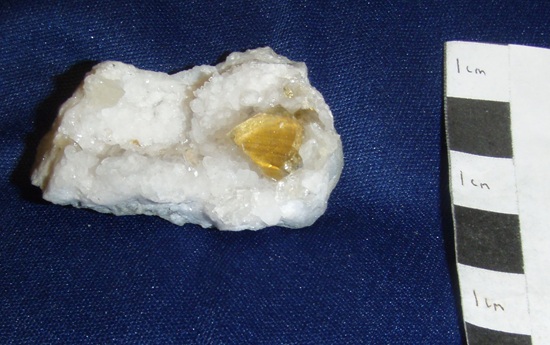
Celestine in a light blue, gemmy pseudo-octahedral crystal. Collected in 1991 during construction of the new Hwy 1638 near Fort Knox, KY.

Celestine in a blocky, yellow crystal from the cement quarry in Mitchell, Indiana.
Celestine in a blocky, yellow crystal from the cement quarry in Mitchell, Indiana. Ex-Steve Garza specimen.

Dolomite – Calcium Magnesium Carbonate – CaMg(CO3)2
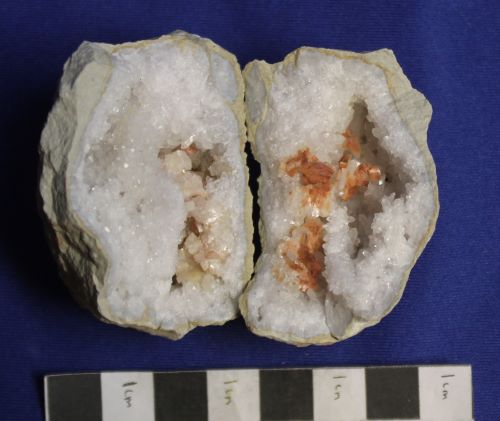
Dolomite, notice on one side the mineral is pink, and on the other it is orange, colored by iron. Harrodsburg, IN. Collected March 1989.
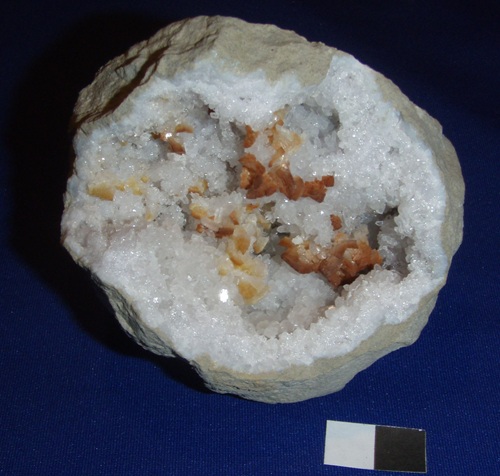
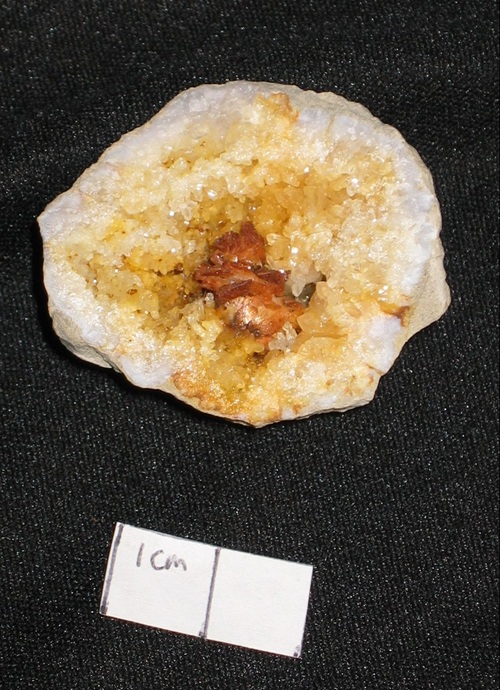
Dolomite, notice on one side the mineral is pink, and on the other it is orange, colored by iron. Harrodsburg, IN. Collected March 1989.

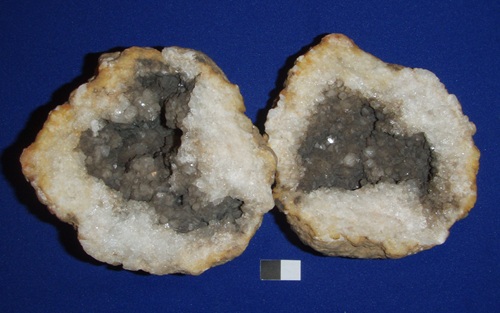
Ferroan dolomite is dolomite with a little iron. This beautiful geode is from the road cut near Harrodsburg, Indiana. 2 cm scale.
Ferroan dolomite with microscopic pyrite crystals that have colored the quartz, too. From the road cut near Harrodsburg, Indiana.
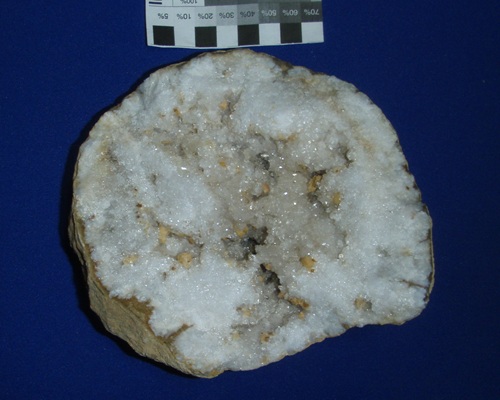
Ferroan dolomite with microscopic pyrite crystals that have colored the quartz, too. From the road cut near Harrodsburg, Indiana.

Small clusters of dolomite crystals are scattered in this quartz geode from Meade Co., KY. Collected in the fall of 1995.

Fluorite – Calcium Fluoride – CaF2
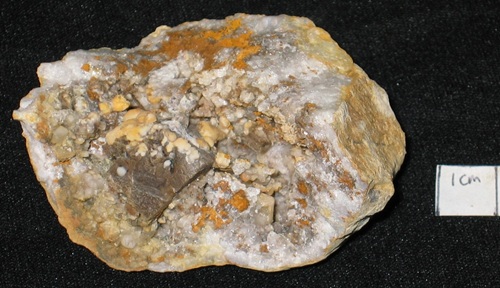
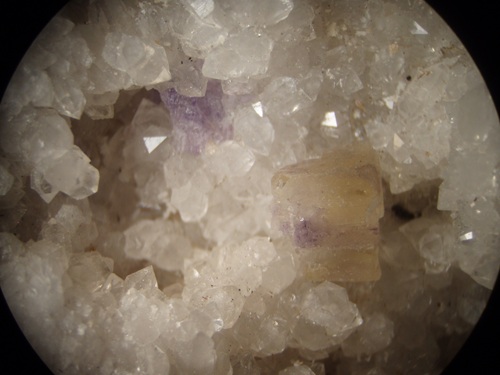
Fluorite in yellow and purple etched crystals in quartz. Fluorite is very rare. I have only found it in geodes on the Muldraugh dome - an unusual geological structure.
Fluorite in yellow and purple etched crystals in quartz. Fluorite is very rare. I have only found it in geodes on the Muldraugh dome – an unusual geological structure. 1 cm scale.
Close-up of the fluorite showing purple and yellow crystals. FOV = 3.5 cm.
Fluorite is the brownish block in the lower left, an etched crystal. Also present are spheres of calcite and brown goethite.

Fluorite is the brownish block in the lower left, an etched crystal. Also present are spheres of calcite and brown goethite. From the same location as above.

Goethite – Iron Hydroxide – α-FeO(OH)
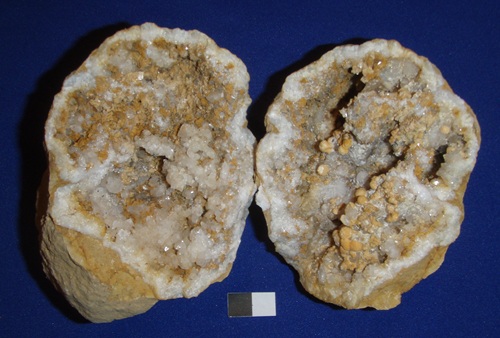
Brown goethite is usually a powder, but occasionally forms needle-like crystals. This geode also has calcite spheres and dolomite. Meade Co., KY
Brown goethite is usually a powder, but occasionally forms needle-like crystals. This geode also has calcite spheres and dolomite. Meade Co., KY. Collected October 1989. 2 cm scale.

Gypsum variety Selenite – Calcium Sulfate – CaSO4.nH2O
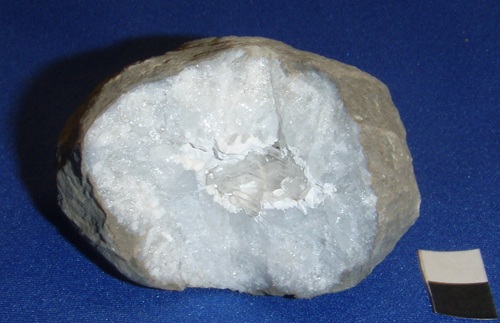
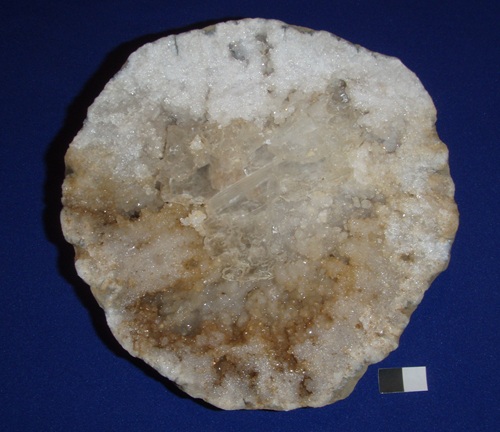
Ice-like selenite fills the opening, surrounded by chalcedony, which in turn is surrounded by mosaic quartz crystals. Muldraugh, Kentucky. 2 cm scale.
Ice-like selenite spans a large quartz geode from Meade Co., Kentucky
Ice-like selenite spans a large quartz geode from Meade Co., Kentucky. 2 cm scale.

Manganese Oxides – MnO2 mostly

A geode with manganese oxide coating quartz. Iron coatings are in shades of red, orange, yellow, and brown. Collected in Meade Co., KY in the late 1970s or early 1980s. Geode #3 in the Goldstein collection.
A geode with manganese oxide coating quartz. Iron coatings are in shades of red, orange, yellow, and brown. Collected in Meade Co., KY in the late 1970s or early 1980s. Geode #3 in the Goldstein collection. 2 cm scale.
Geode with manganese oxide coating quartz. Found in a rock dump at the Corydon Quarry, so the exact source is unknown, but from Indiana.
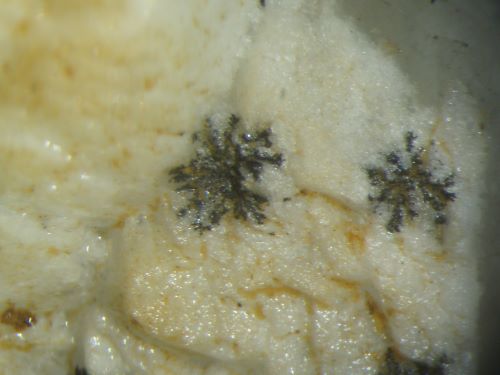
This is a close-up of manganese dendrites on calcite from a geode at Harrodsburg, Indiana. The mineral species (often ascribed to pyrolusite) is indeterminant. FOV ~1 cm.
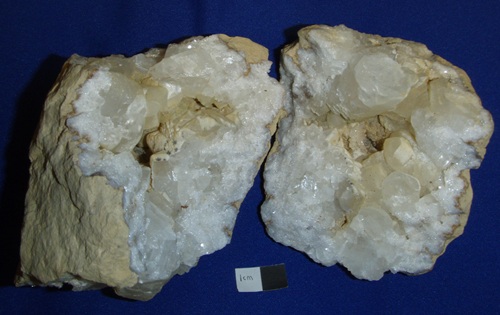
This is a close-up of manganese dendrites on calcite from a geode at Harrodsburg, Indiana. The mineral species (often ascribed to pyrolusite) is indeterminant. FOV ~1 cm.

Calcite with manganese dendrites (on the left side). This geode shows evidence of weathering before it was exposed on the road cut. Collected in the early 1980s, Harrodsburg, IN.

Millerite – Nickel Sulfide – NiS

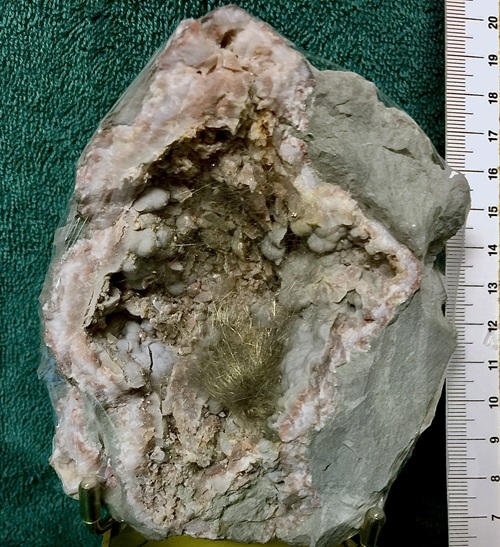
Millerite looks like brassy hair. The crystals are very thin. Halls Gap, Lincoln Co., Kentucky, is the most famous location of geodes with millerite.
Millerite in a brassy hair-like tuft with chalcedony. Halls Gap, KY. Bob Harman specimen and photo.

Millerite in a brassy hair-like tuft with chalcedony. Halls Gap, KY. Bob Harman specimen and photo.

Pyrite – Iron Sulfide – FeS2
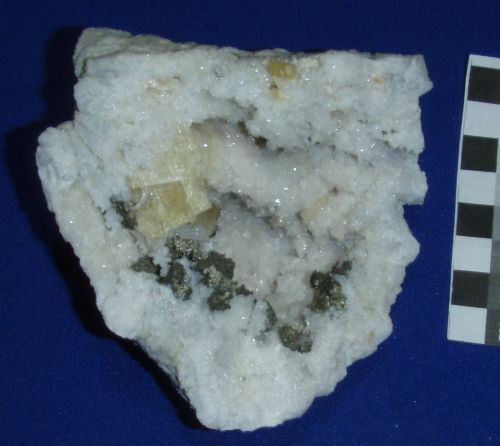
Pyrite in small crystal clusters. Their shape resembles dolomite aggregates, so they might be pseudomorphs from dolomite that became ankerite or siderite. With yellow barite on quartz, Calcite removed with HCl. Harrodsburg, Indiana.

Pyrite in small crystal clusters. Their shape resembles dolomite aggregates, so they might be pseudomorphs from dolomite that became ankerite or siderite. With yellow barite on quartz, Calcite removed with HCl. Harrodsburg, Indiana. Cm scale on right.
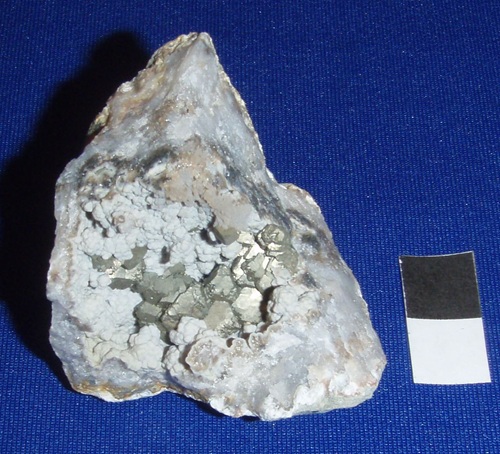
Pyrite in octahedral crystals, in chalcedony. Octahedral pyrite is found at Halls Gap, KY, but is otherwise uncommon in geodes. 2 cm scale.

Strontianite – Strontium Carbonate – SrCO3
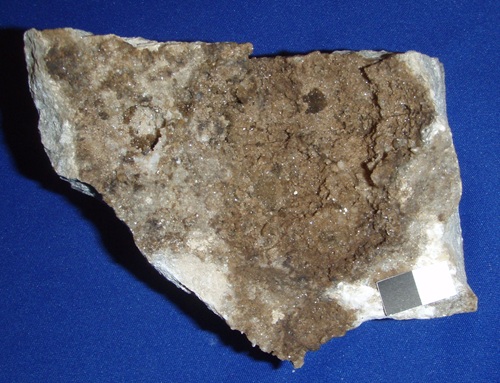
Strontianite forms dark brown balls in petroleum-stained quartz. The Muldraugh dome was a natural oil reservoir and occasionally geodes were found with liquid or dry oil inside. From KY 1638 during road construction in 1991, Fort Knox, KY
Strontianite forms dark brown balls in petroleum-stained quartz. The Muldraugh dome was a natural oil reservoir and occasionally geodes were found with liquid or dry oil inside. From KY 1638 during road construction in 1991, Fort Knox, KY. 2 cm scale.
Strontianite forms dark brown balls in petroleum-stained quartz.

Strontianite forms dark brown balls in petroleum-stained quartz. The normal color is white.
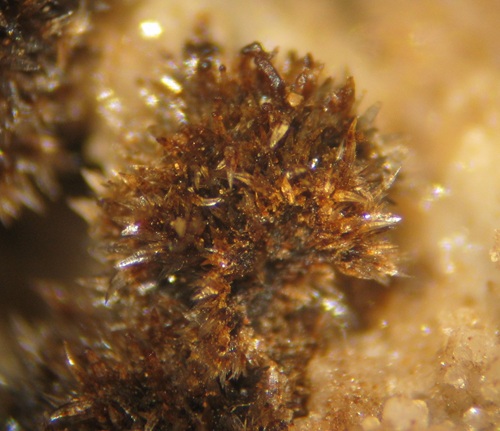
Close-up of petroleum-stained strontianite. Notice the small crystals are slightly curved. This is distinctive with this mineral. FOV ~6 mm

Close-up of petroleum-stained strontianite. Notice the small crystals are slightly curved. This is distinctive with this mineral. FOV ~6 mm