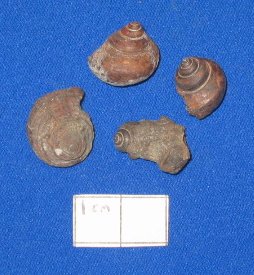
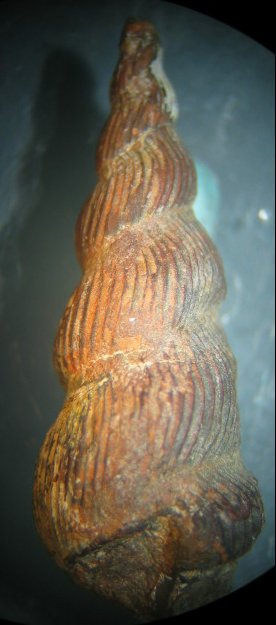
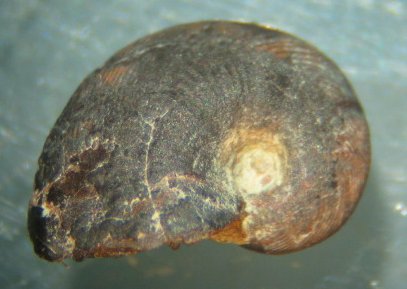
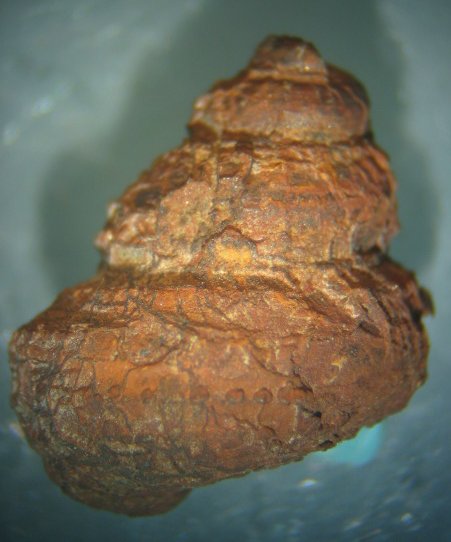
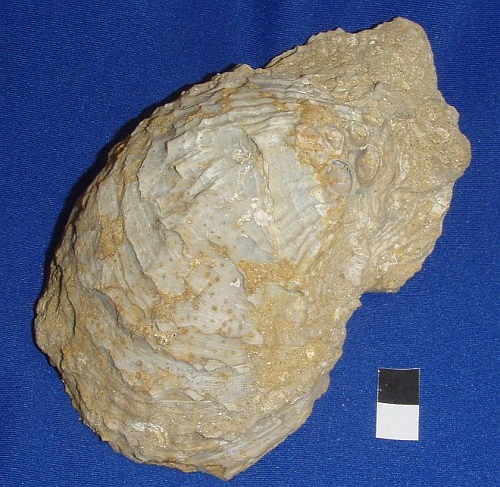
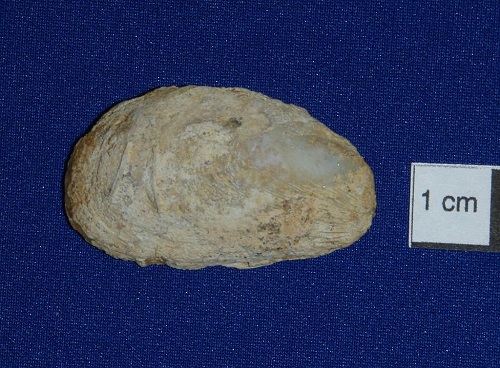
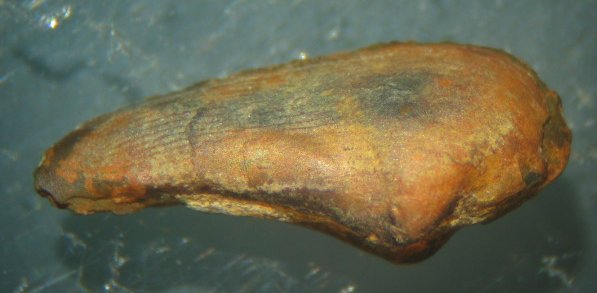
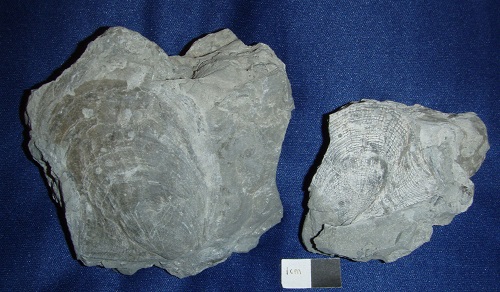
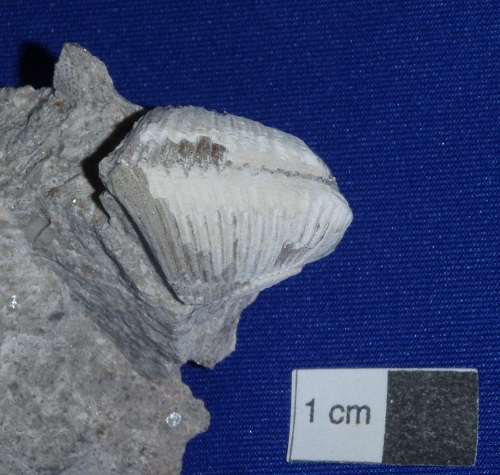
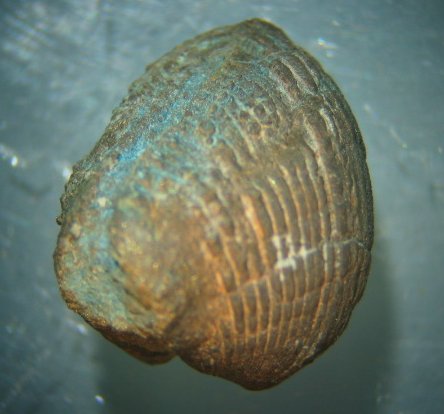
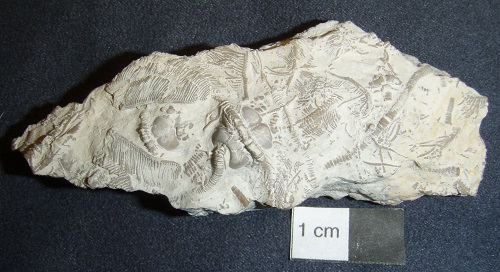
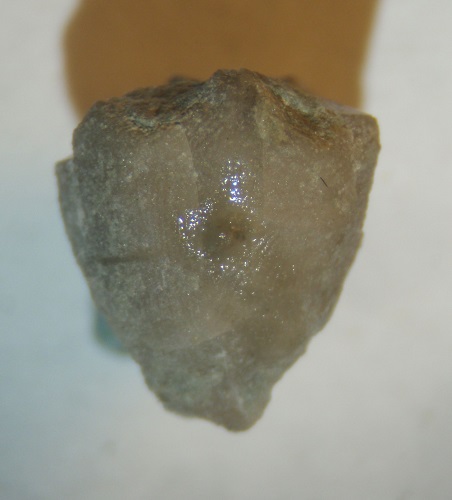
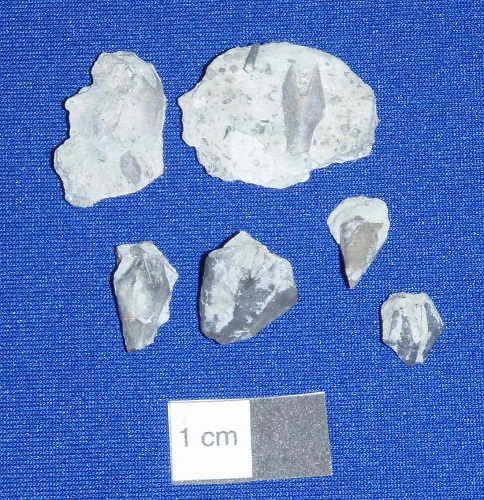
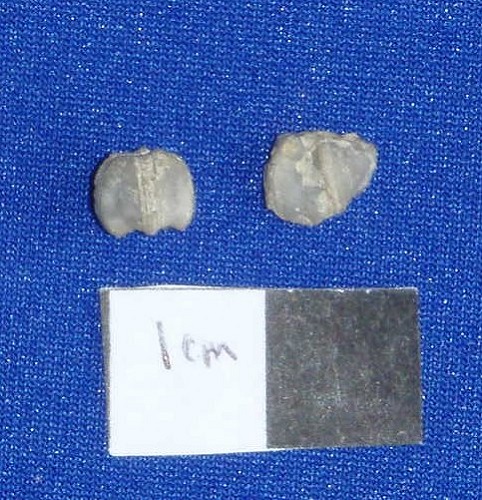
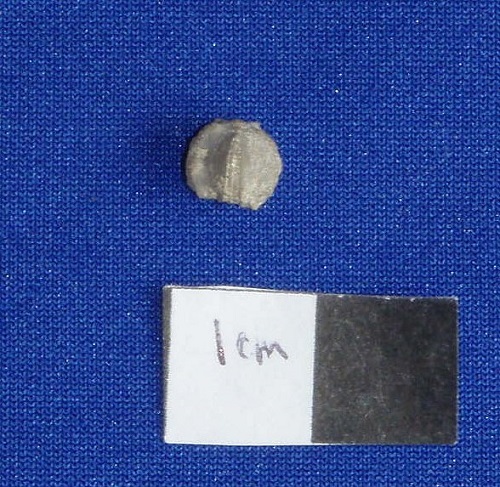
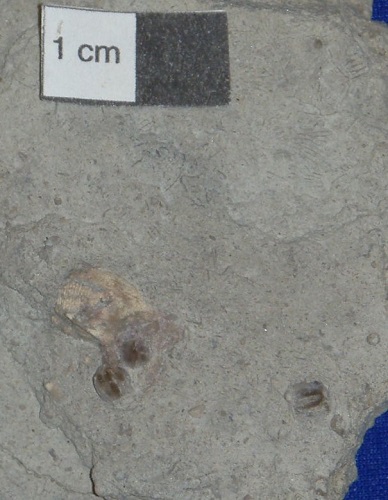
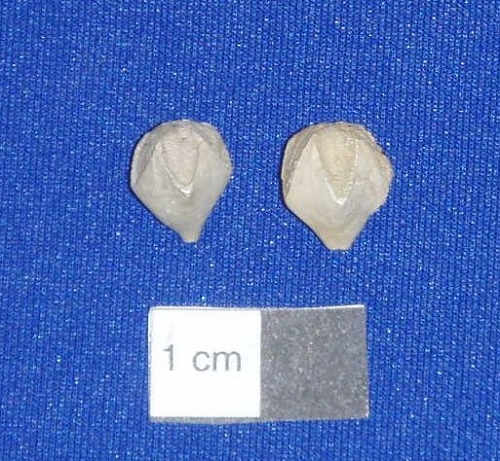
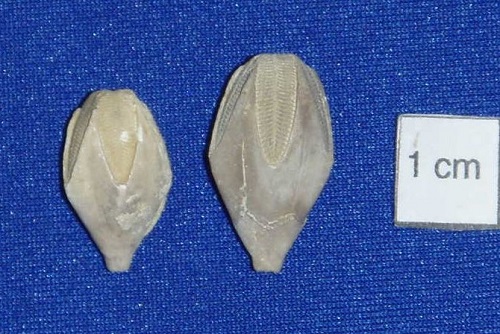
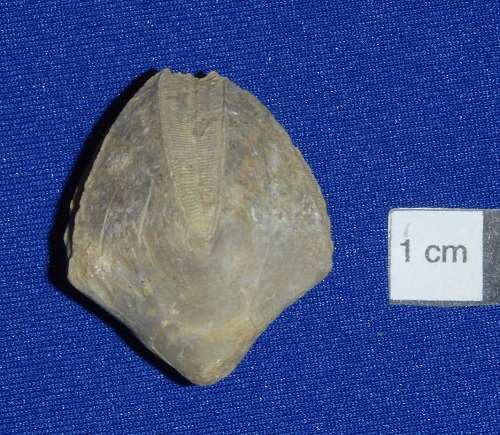
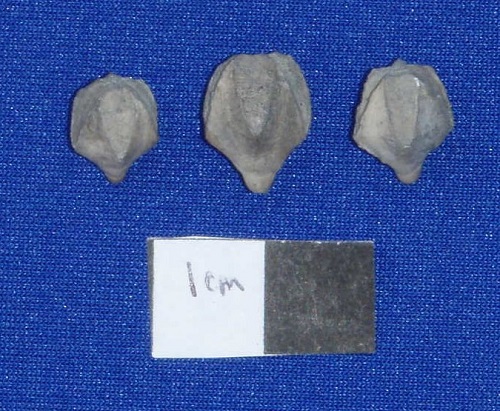
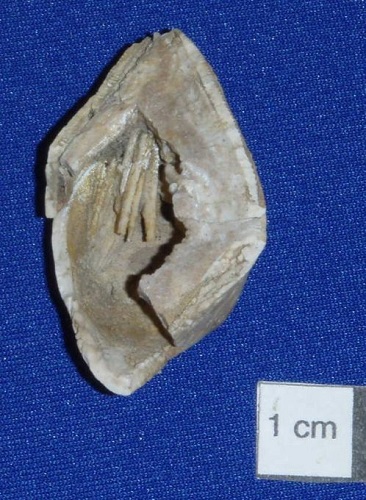
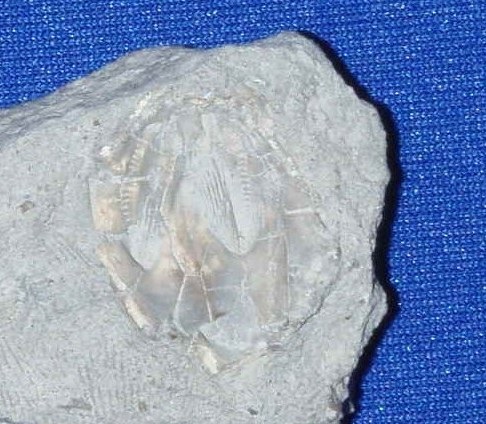
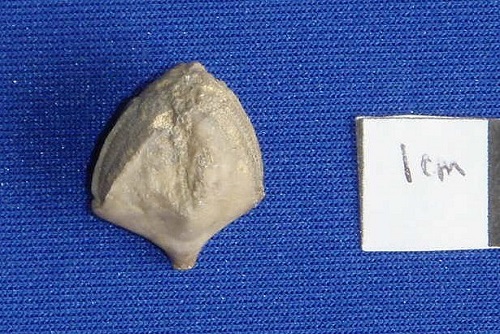
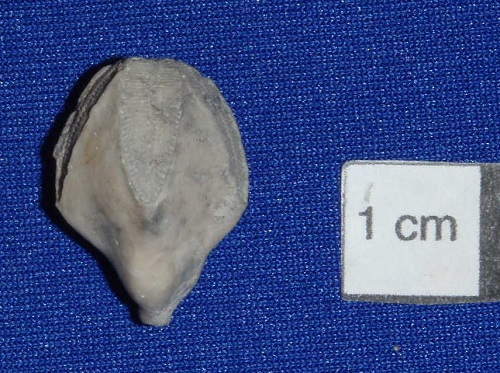
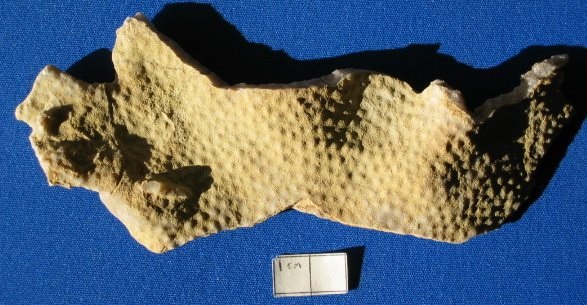
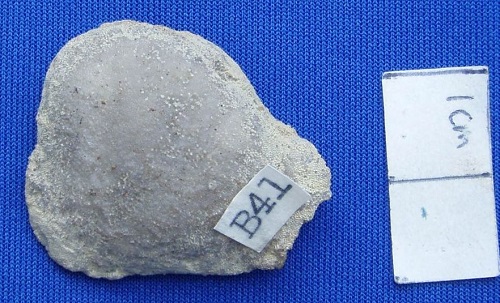
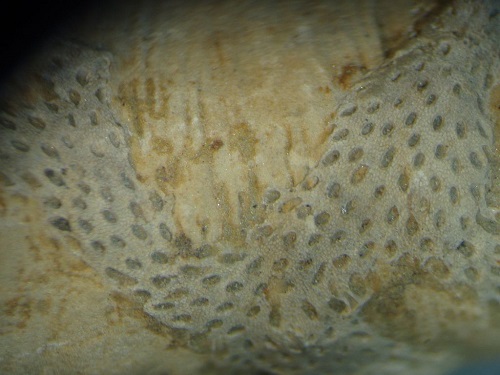
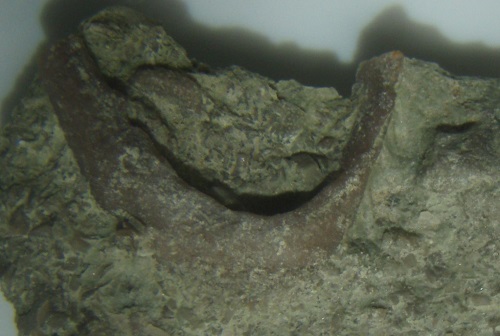
These pages illustrate a lot of different kinds of fossils. Within 60 minutes of the Louisville, Kentucky, area, geological time periods represented include: Upper Ordovician, Silurian, Middle – Upper Devonian, and Mississippian (Lower Carboniferous). The Pennsylvanian (Upper Carboniferous) is a bit beyond. The Pleistocene is represented by sand & gravel, loess and cave deposits.
Consider all guides to be “works in-progress. Images and information will be added.
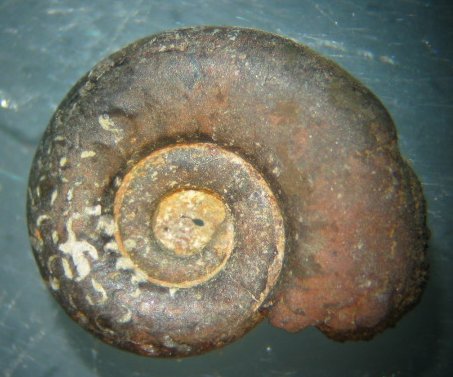
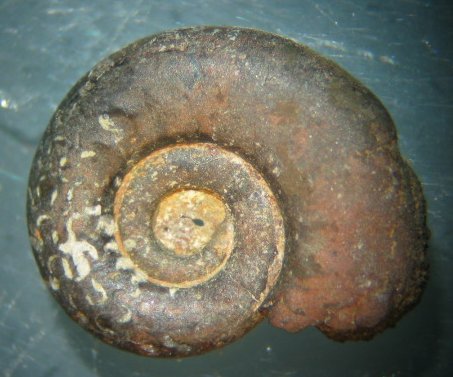
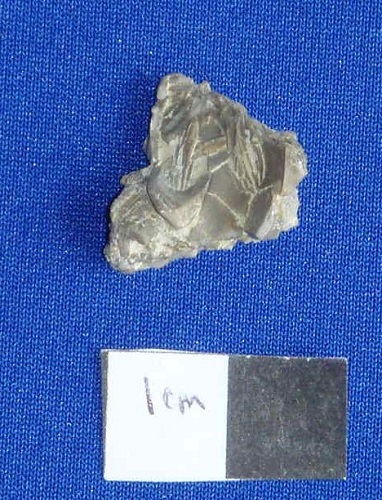
Cambrictites greenei – a small pyritized goniatite from the Mississippian Coral Ridge fauna of Jefferson Co., KY. Goniatites are ammonoids with undulating sutures.
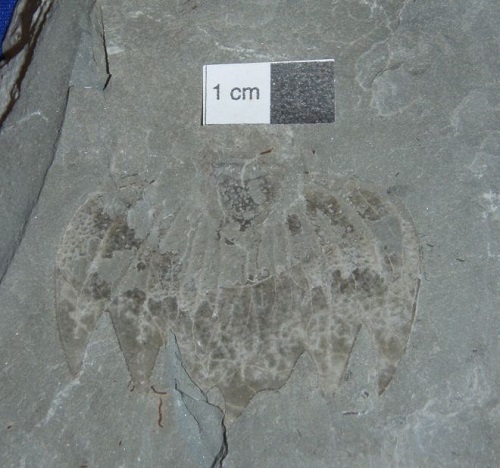
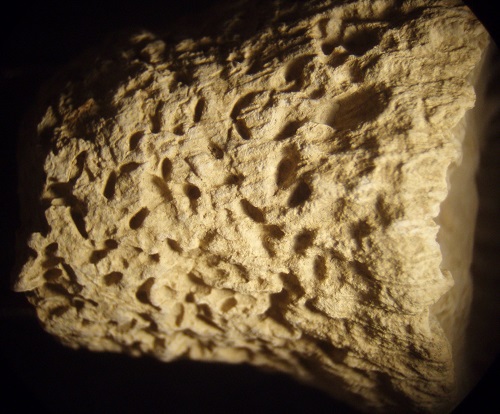
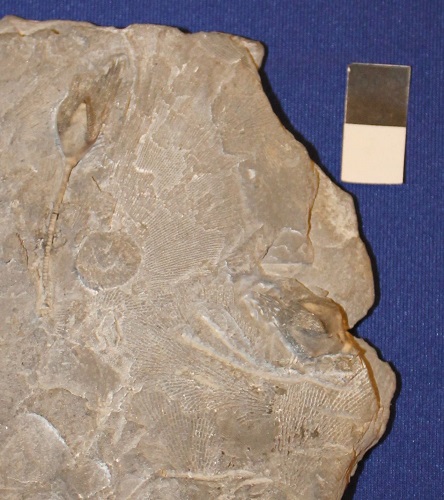
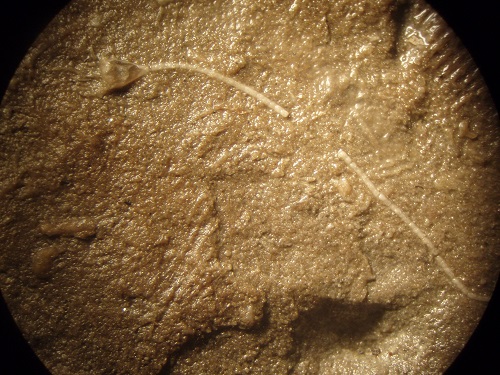
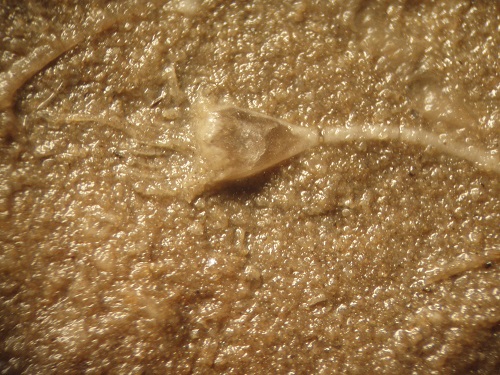
I’ve collected or traded for a lot of miscellaneous fossils that aren’t diverse enough to list by category. These include fossil plants, vertebrates (mostly fish bone pieces from local bone beds), worms, graptolites, and problematic fossils that may belong to other phyla but are odd examples.
Photos – See each category
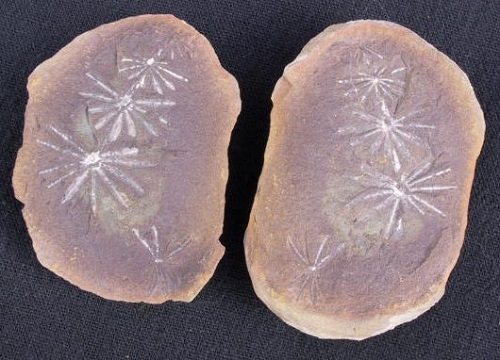
Annularia galoides in an ironstone nodule from northern Illinois.
Preservation Key : C = Calcified, Ph = Phosphatic, P = Pyritized, S = Silicified, 1= w/o, matrix, 2 = w/
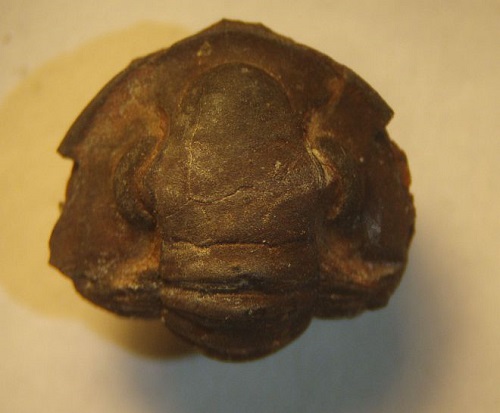
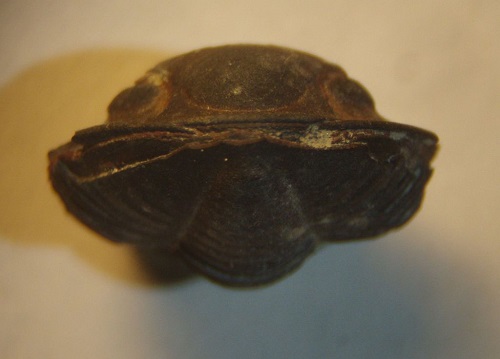
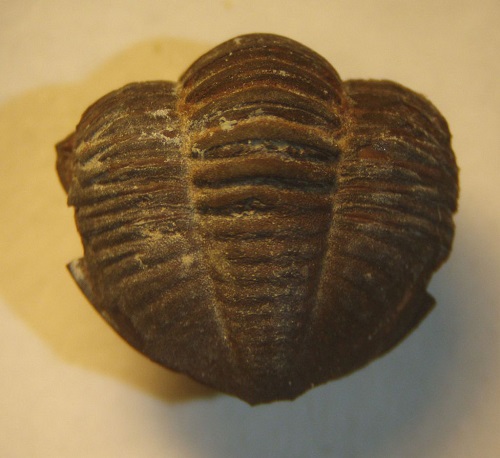
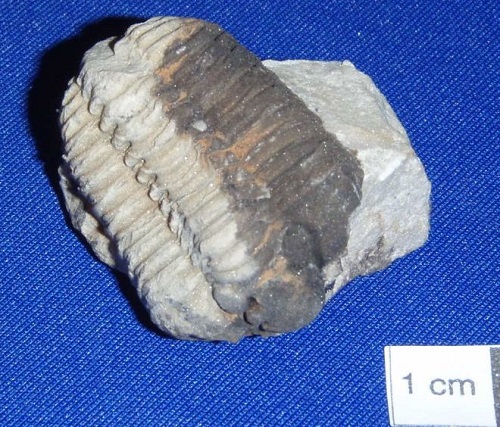
Trilobites and crustaceans are arthropods, the group that includes arachnids, horseshoe crabs, millipedes, and the like. Arthropods molt as they grow. The result is common fragments and rarer complete animals. (Updated Feb. 10, 2022)
Photos of Trilobites and Other arthropods
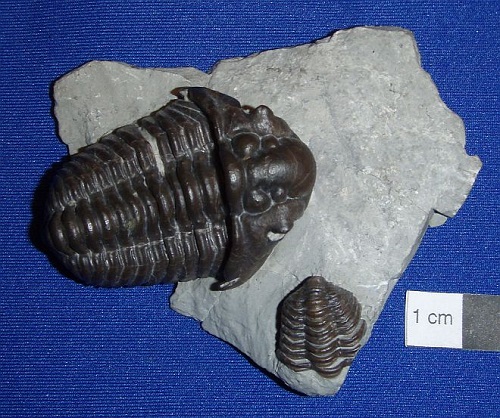
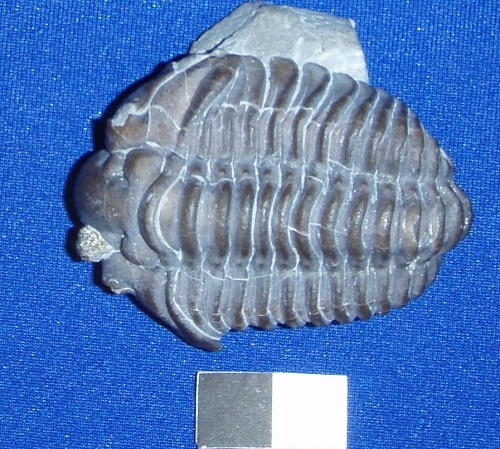
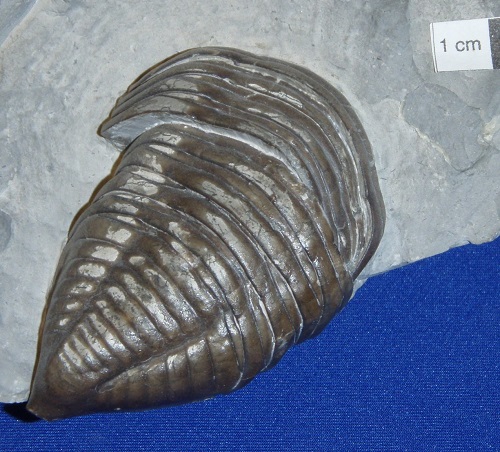
Calymene breviceps Hall from the Waldron Shale of Clark Co., Indiana.
TRILOBITES Period Location Preservation
p = pygidium, t = thorax, c = cephalon
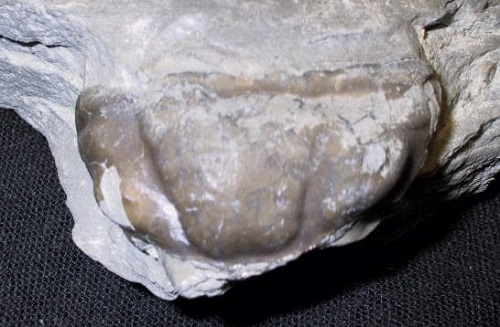
Arctinurus occidentalis (Hall) – Waldron Shale, Middle Silurian, Clark Co., IN – C,2
Arctinurus occidentalis (Hall) pygidium resembles a palmetto leaf
Bumastus sp. – Laurel Formation, Middle Silurian, Bardstown, Nelson Co., KY – C,2
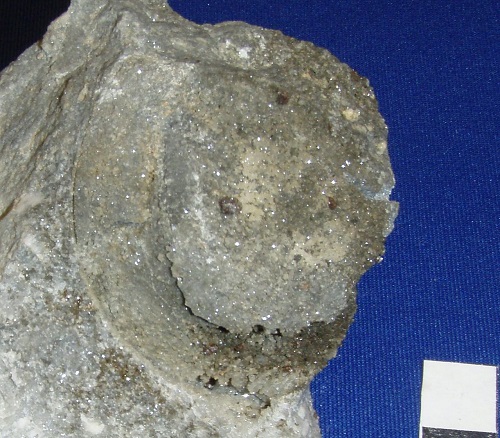
Bumastus pygidium, a steinkern encrusted with sphalerite crystals
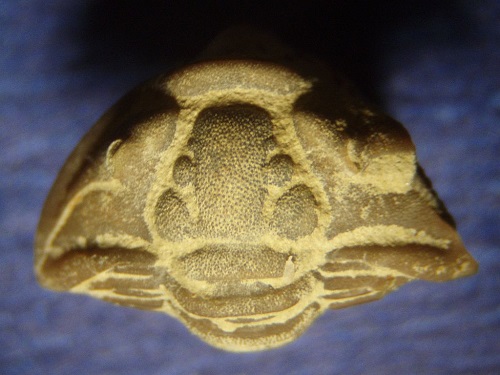
Calymene breviceps Hall – Waldron Shale, Middle Silurian, Clark Co., IN – C,2
Calymene breviceps Hall with pyrite – this was found attached to the floor of the Atkin’s Quarry
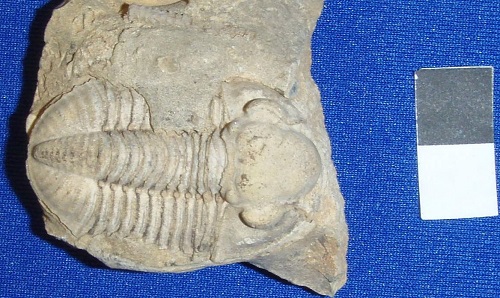
Cheirurus dilatatus Raymond – Waldron Shale, Middle Silurian, Clark Co., IN – C,2
Cheirurus dilatatus Raymond has a spiny pygidiumCheirurus dilatatus (Raymond) has a large glabella
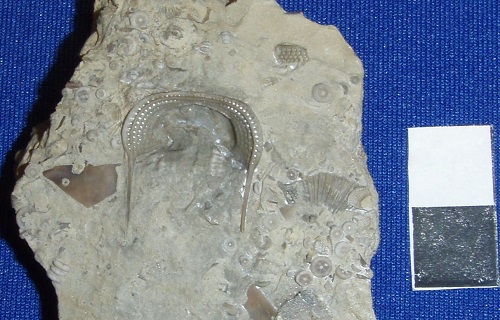
Cryptolithus bellulus Ulrich – a blind trilobite from the Kope Formation, Upper Ordovician, Carrol Co., KY – C,1,2
Cryptolithus bellulus Ulrich – cephalon interior with genial spines
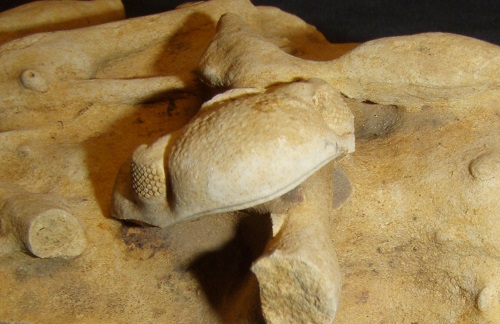
Eldridgeops sp. (was Phacops) – Sellersburg Limestone, Givetian, Middle Devonian, Clark Co., IN – S,1,2
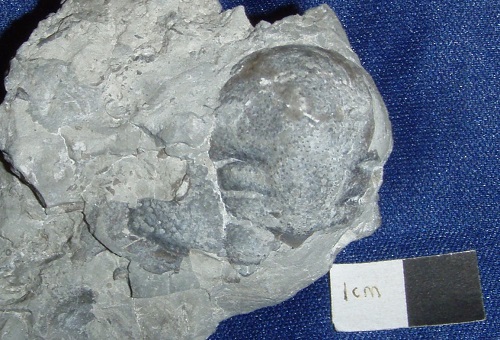
Eldridgeops sp. – complete, flat and made of quartzEldridgeops sp. – front of molted cephalon on trace fossil showing compound eyes (chert replacement)
Trace fossils are evidence of action by living creatures. Examples include locomotion, feeding, nesting, excretions, etc. The division of paleontology that studies trace fossils is called “ichnology.”
Mollusks are the most abundant “shell” on a beach or riverbank. Modern cephalopods include squid, octopus and nautiloids. They are (and have always been) strictly marine. Gastropods (snails) live in the greatest diversity of ecosystems – marine, fresh & brackish water and on land. Clams are similar except for land. Monoplacophorans & scaphopods are exclusively marine. Rostroconchs are the only extinct class of mollusks.
Mollusk Photos (organized by class)
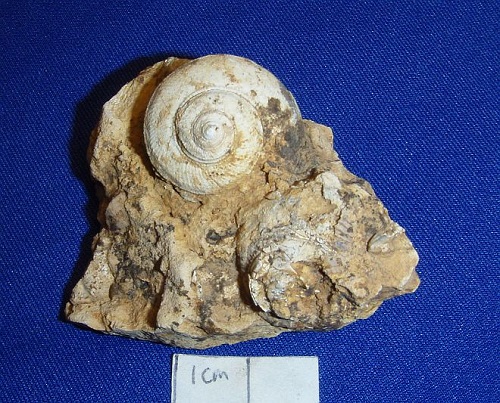
Bembexia sulcomarginata (Hall) – an exceptional specimen of a common Devonian species.
Preservation: C = Calcified, Ph = Phosphatic, P = Pyritized, S = Silicified, 1= w/o, matrix, 2 = w/ matrix
CEPHALOPODS Period Location Preservation
NAUTILOIDS
Dawsonoceras amycus Middle Silurian IN C,2
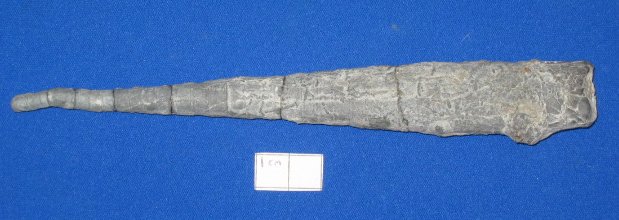
Michelinoceras sp. is generally found in small segments. This is the largest I found.
Michelinoceras sp. – Coral Ridge Member, New Providence Shale, basal Middle Mississippian, Jefferson Co., KY – P,1
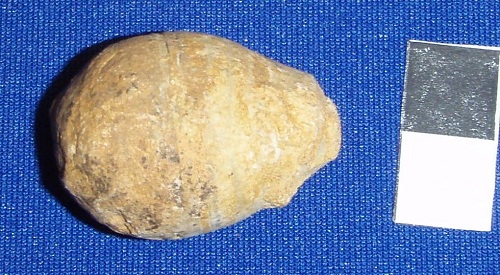
Ovoceras oviforme (or Acleistoceras?) – Sellersburg = North Vernon Limestone, Clark Co., Indiana – S,1
Small, somewhat egg-shaped nautiloid
Treptoceras duseri (Hall & Whitfield) – Ubiquitous in the Upper Ordovician of the Tri-state area (IN, KY, OH), C,1,2
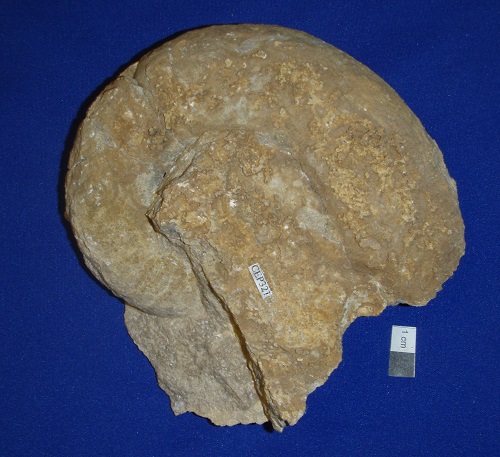
To be determined – large Devonian coiled nautiloid. Extremely rare, this specimen was found at the Speed Quarry in the Jeffersonville Limestone, Middle Devonian.
Large Devonian nautiloid
GONIATITES
Cantabricanites greenei (Miller) – Coral Ridge Member, New Providence Shale, basal Middle Mississippian, Jefferson Co., KY – P,1
Cantabricanites greenei (Miller) range from a few millimeters to a centimeter wide.
Polaricyclus ballardensis (Work & Mason) – Coral Ridge Member, New Providence Shale, basal Middle Mississippian, Jefferson Co., KY – P,1
Polaricyclus conkini (Work & Mason) – Coral Ridge Member, New Providence Shale, basal Middle Mississippian, Jefferson Co., KY – P,1
AMMONITES & BELEMNITES
Actinocamex verus (1) Cretaceous United Kingdom C,1
Baculites sp. Cretaceous Texas C,1
Belemitella americanus Jurassic Wyoming C,1
Hastites sp. (baculites) Lias, Early Jurassic Portugal C,1
Hildoceras bifrons ” ” ” Portugal C,1
Unidentified ” ” ” Portugal P,1
GASTROPODS/MONOPLACOPHORANS Period Location Preservation
Bellerophon gibsoni Middle Mississippian KY C,1
Bembexia sulcomarginata Middle Devonian IN S,1,2
Cyclonema sp. Upper Ordovician IN, KY C,1,2
Crytolites carinatus (Monoplacophoran) Upper Ordovician KY C,1
Glabrocingulum ellenae (Conkin), Coral Ridge Member, New Providence Shale, basal Middle Mississippian, Jefferson Co., KY – P,1 (type locality)
Glabrocingulum ellenae (Conkin) is a common pyrite-replaced snail
Globularia umbilica Upper Cretaceous MS C,1
Liospira macula Upper Ordovician KY C,1,2
Lophospira medialis Middle Ordovician KY S1,2
Lophospira biseriatus? Upper Ordovician KY C,1,2
Loxonema sp. Middle Ordovician KY S,1,2
Loxonema sp. – Coral Ridge Member, New Providence Shale, basal Middle Mississippian, Jefferson Co., KY – P,1
Loxonema sp. often shows fine growth lines
Paupospira bowdeni Upper Ordovician KY C,1,2
Natica tigra (1) Miocene Poland C,1
Naticonema lineata Middle Devonian IN C,1
Platyceras (Orthonychia) acutirostre Middle Mississippian KY C,1,2
Echinoderms are a phylum of marine animals that include sea stars, urchins, sand dollars, and the like. They are an ancient group going back to the Cambrian if not the Ediacaran. A number of classes existed for a short geological interval before going extinct. The most common echinoderm fossils in my region are crinoids and blastoids.
I’ve been involved in research in Middle Mississippian crinoids with Dr. William Ausich and Dr. Thomas Kammer. I will eventually post that research and photos of specimens. Most of the important ones were donated to the Smithsonian (U.S. National Museum) and the Orton Geological Museum at The Ohio State University.
Echinoderm Photos (organized by class – Crinozoa, Blastozoa, etc.)
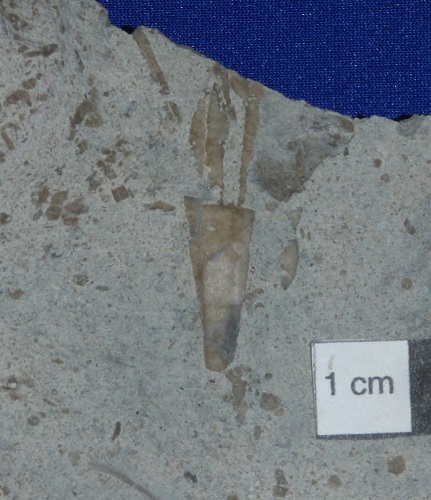
Talarocrinus patei Miller & Gurley mass mortality collected by me from Sample, Kentucky
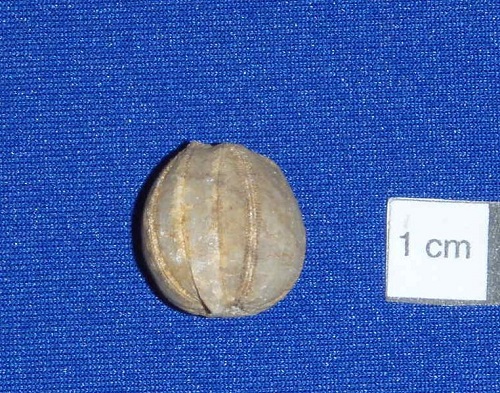
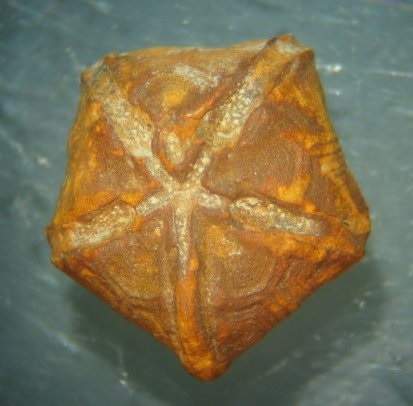
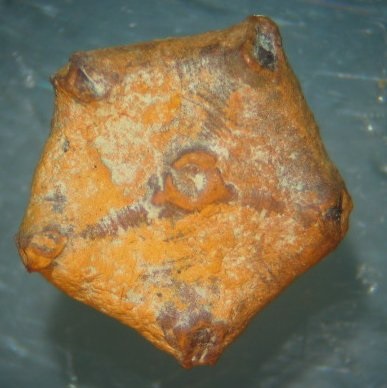
Euryocrinus veryi – top view, originally pyrite, now “limonite” (goethite) which is more stable.Euryocrinus veryi – bottom view
Euryocrinus veryi Ausich & Meyer # – from the pyritized Coral Ridge fauna, basal New Providence Shale, considered early or mid-Mississippian depending on reference. KY, IN? – Goethite,1
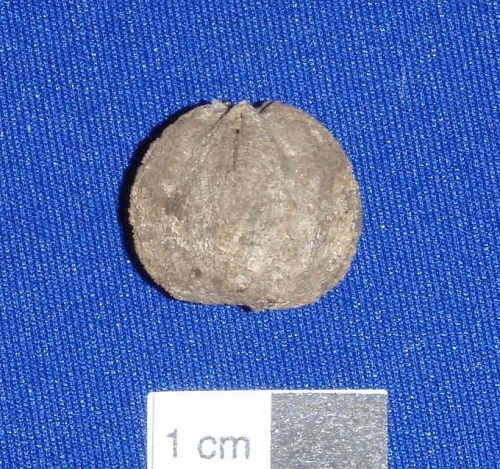
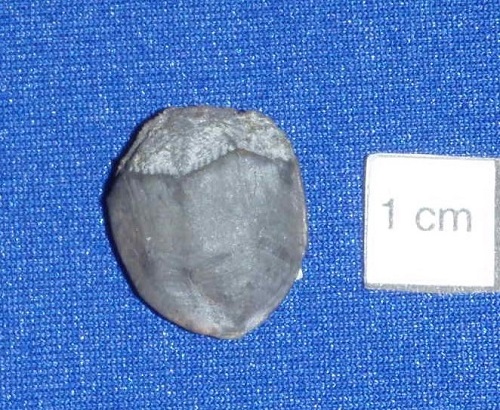
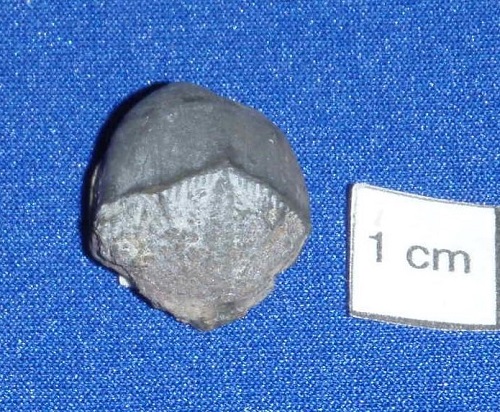
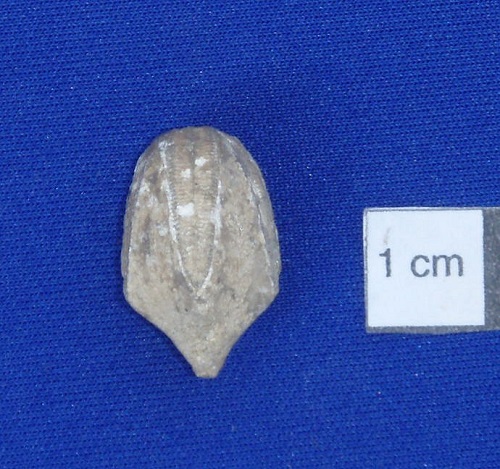
Granatocrinus kentuckyensis – side viewGranatocrinus kentuckyensis – top view
Granatocrinus kentuckyensis (Conkin)# – from the pyritized Coral Ridge fauna, basal New Providence Shale, considered early or mid-Mississippian depending on reference. KY, IN? – P,1
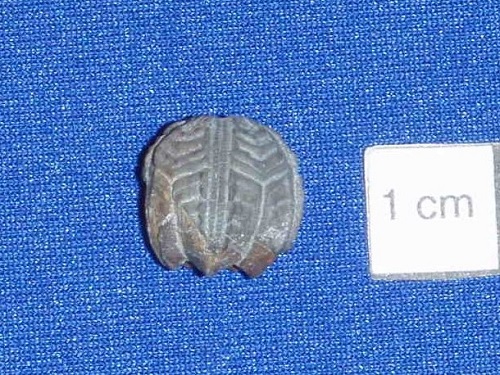
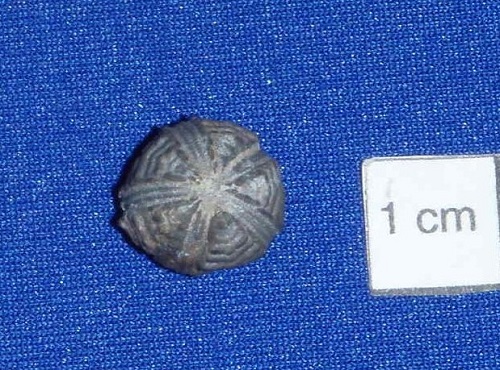
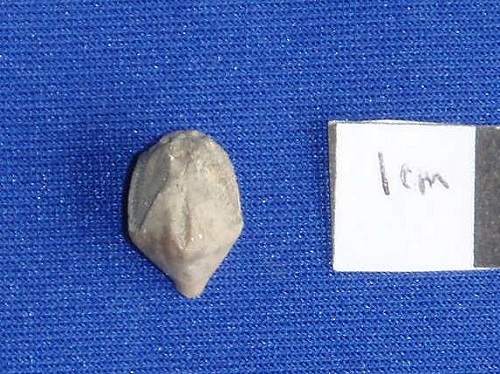
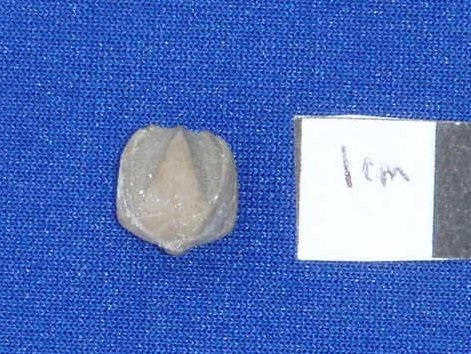
Hadroblastus sp., – side viewHadroblastus sp., – upper view
Hadroblastus sp., [H. kentuckyensis (Shumard)?] – same data as Granatocrinus kentuckyensis, though extremely rare instead of very rare. KY, IN? – P,1 Coral Ridge fauna article will be posted under articles… eventually.
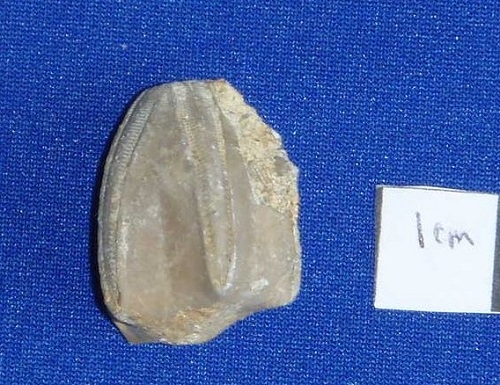
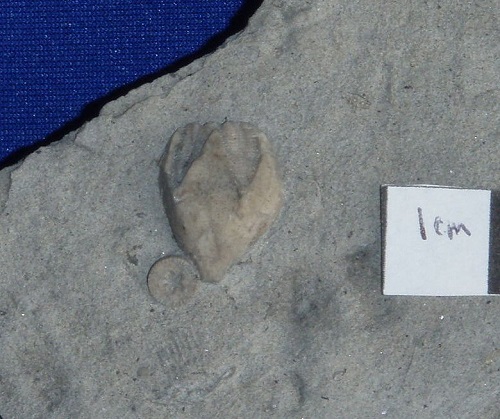
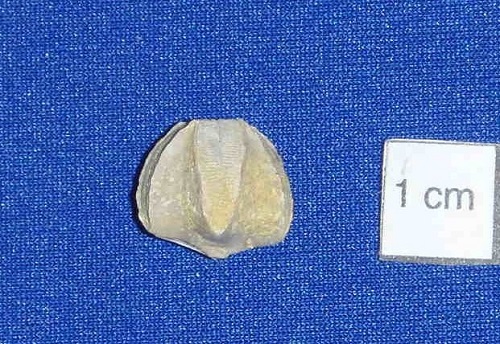
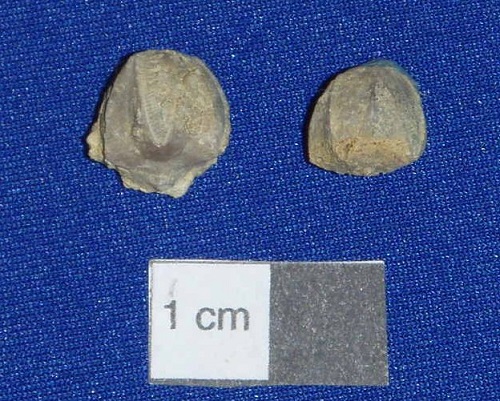
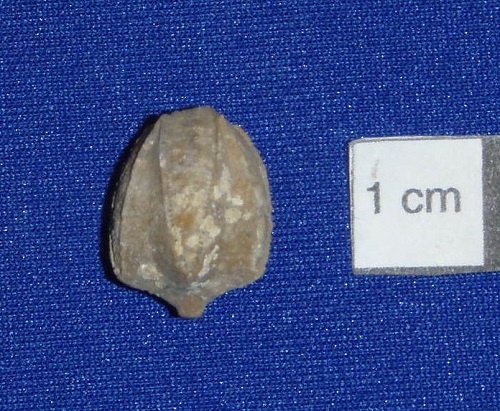
Fragments of Metablastus from the Muldraugh Fm. in Hardin Co., Kentucky
Metablastus sp. # – rare, Middle Mississippian, KY – C,2
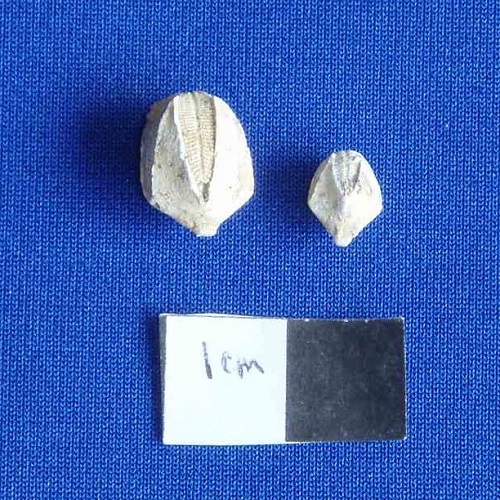
Pentremites is restricted to the Mississippian Period, primarily in North America. There are dozens of names in Galloway & Kaska’s monograph Genus Pentremites and its Species (1957). However, Dr. Alan Horowitz considered them to be overly split and that most were variations on a hand full of species.
Pentremites buttsi
Pentremites buttsi Ulrich?# – rare, Indian Springs Shale Mbr., Big Clifty Fm., Upper Mississippian, Crawford Co., Indiana.
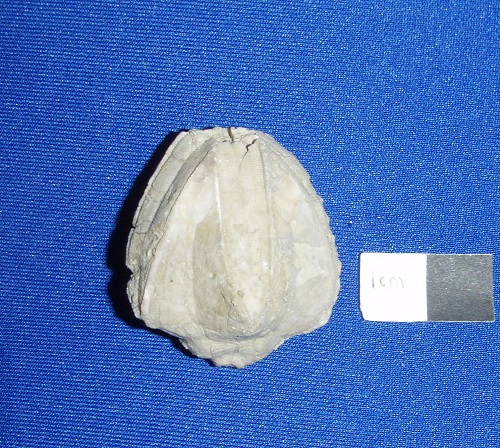
Pentremites conoideus is an index fossil for the Salem Ls.
Pentremites conoideus Hall – Salem Ls., Middle Mississippian, IN,KY – C,1,2
Pentremites godoni (Defrance) – Upper Mississippian formations, IL,KY – C,S,1,2 This species has been further sub-divided. Two examples below.
Subspecies: Pentremites godoni pinguis Hambach (L) & abbreviatus Ulrich (R), Renault Fm. near Shetlerville, IllinoisSubspecies Pentremites godoni major, Renault Fm., Hastie Quarry, Hardin Co., IllinoisPentremites ovoides
Pentremites ovoides Ulrich# – Ste. Genevieve Ls., Mississippian, Hastie’s Quarry, Cave in Rock, Illinois. Collected ~1987, at the Oxford-West Morrison cut that no longer exists.
A deformed Pentremites patei from the Sulphur road cut, Crawford Co., Indiana
Pentremites patei Ulrich# – Indian Springs Shale Mbr., Big Clifty Fm., Upper Mississippian, Crawford Co., Indiana.
Pentremites platybasis
Pentremites platybasis Weller# – Indian Springs Shale Mbr., Big Clifty Fm., Upper Mississippian, Crawford Co., Indiana
Pentremites pulchellus
Pentremites pulchellus Ulrich# – Renault Fm., Upper Mississippian, Shetlerville, Illinois
Pentremites pyramidatus
Pentremites pyramidatus Ulrich# – Renault Fm., Upper Mississippian, Shetlerville, Illinois
Pentremites pyriformis should be the Kentucky state fossil instead of the brachiopod
Pentremites pyriformis Say – Upper Mississippian formations, IN,KY – C,1,2
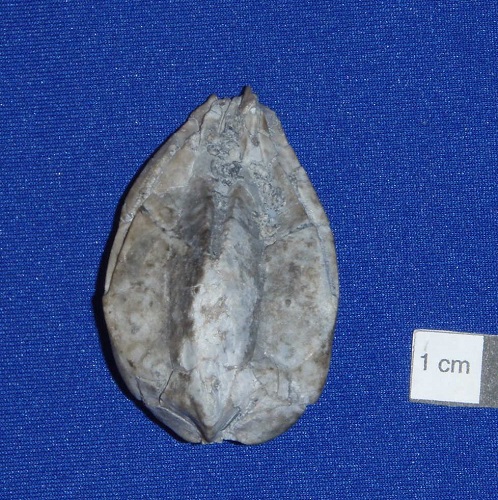
Pentremites robustus – a large species
Pentremites robustus Lyon# – Glen Dean Fm?, Upper Mississippian, Madison Co., Kentucky
Pentremites springeri
Pentremites springeri Ulrich# – Indian Springs Shale Mbr., Big Clifty Fm., Upper Mississippian, Crawford Co., Indiana IN,KY
Pentremites symmetricus
Pentremites symmetricus Hall – Upper Mississippian formations, IL, IN, KY – C,S,1,2
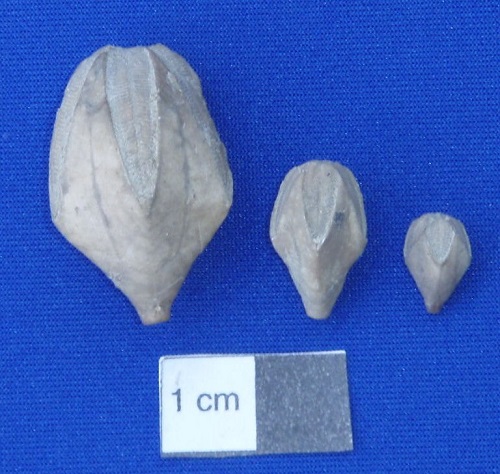
Pentremites welleri growth series
Pentremites welleri Ulrich – Indian Springs Shale Mbr., Big Clifty Fm., Upper Mississippian, Crawford Co., Indiana
Pentremites growth series available
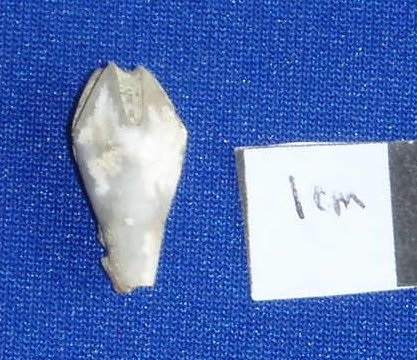
Tricoelocrinus woodmani – large, slightly compressed. Prepped by Tom Johnson.
Tricoelocrinus woodmani (Meek & Worthen)# – extremely rare, this specimen found on the family farm near Lanesville, Indiana, shortly before it was sold. Salem Ls. (Somerset Shale Mbr.), Middle Mississippian, IN, KY – C,1
Troosticrinus reinwardi
Troosticrinus reinwardi (Troost)# – from the Waldron Shale, Middle Silurian, in Tennessee. Similar to Decaschisma.
Comments about Pentremites
It’s possible to find more than the theca (body) and other features – including brachioles (feeding “bristles”), internal hydrospire folds (part of the respiratory system), and growth defects. No specimens like these are available for sale. Here are some examples:
Two Pentremites with columns and brachioles. Crawford Co., Indiana.3 cm view – embryonic Pentremites from holdfast to brachiolesEmbryonic Pentremites with brachioles
Perhaps the smallest complete embryonic Pentremites ever found. It will be featured in an upcoming monograph on blastoids written by the world’s experts. Found at the Sulphur exit road cut, Crawford Co., IN. Indian Springs Member of the Big Clifty Formation, Chesterian, Upper Mississippian.
Hydrospire folds on this interior of Pentremites conoideus.Hydrospire folds on this interior of Pentremites welleriHydrospire folds on this interior of Pentremites from Sulphur, Crawford Co., IndianaDeformed Pentremites welleri from Sulphur, Indiana.Deformed Pentremites symmetricus with lump near base. Sulfur, Indiana.
Photographing Echinoderms
The simplest technique is to get them wet. The problem is that they reflect light. Compare these Pentremites platybasis below.
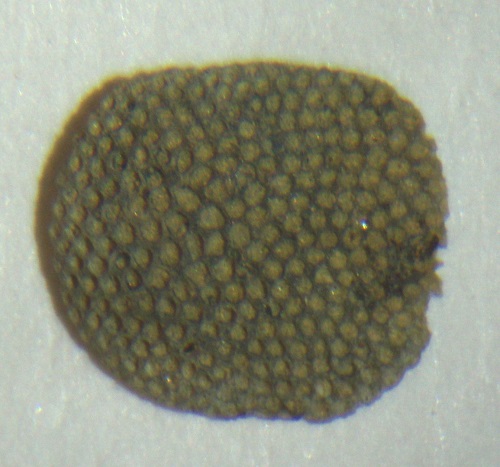
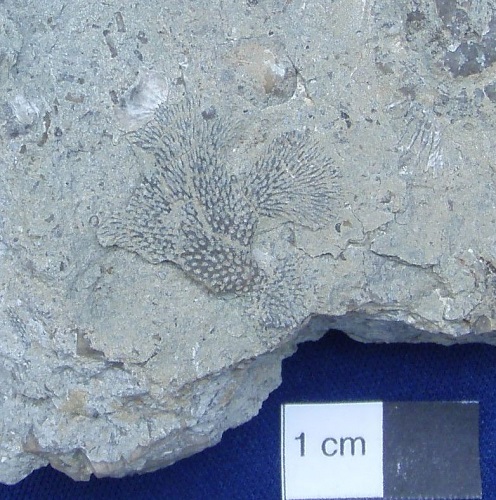
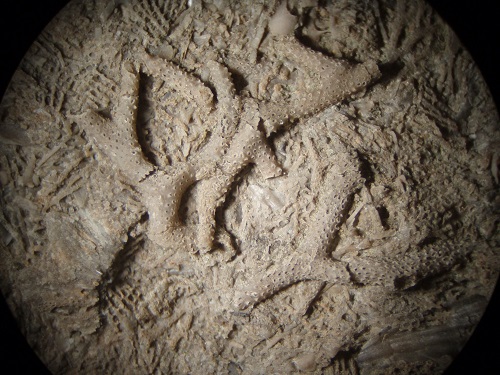
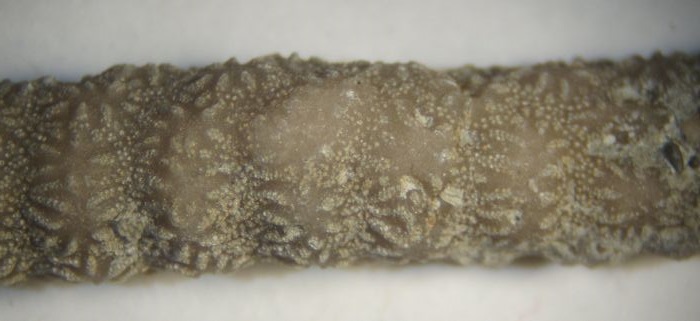
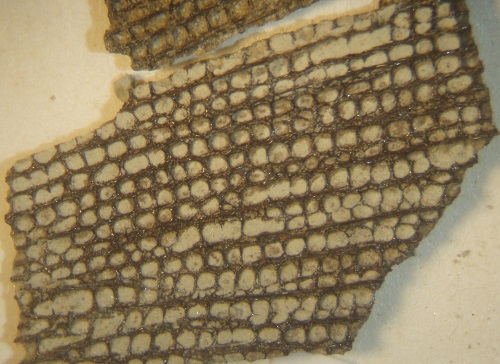
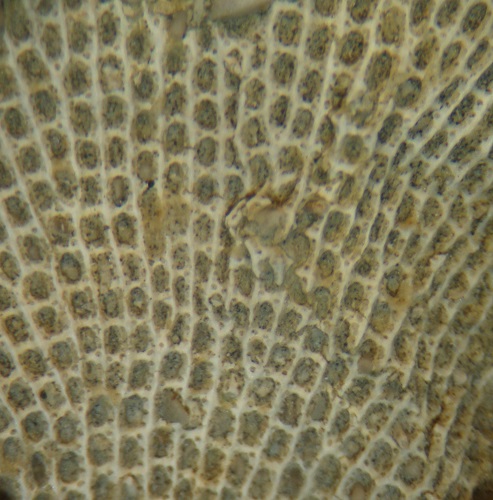
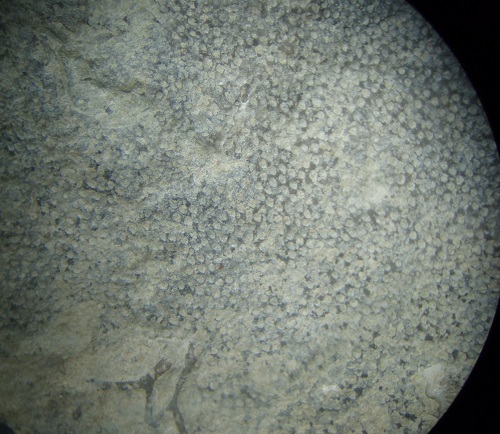
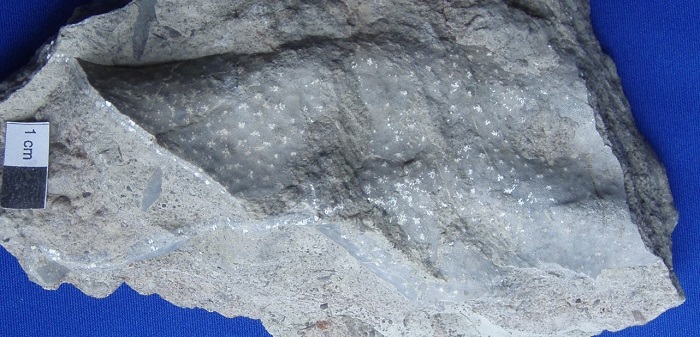
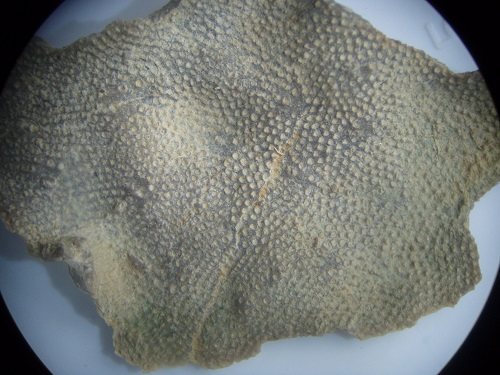
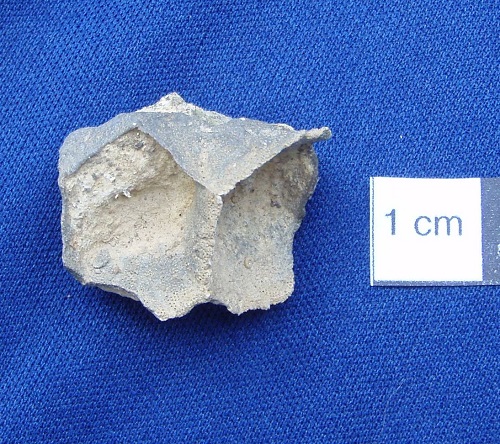
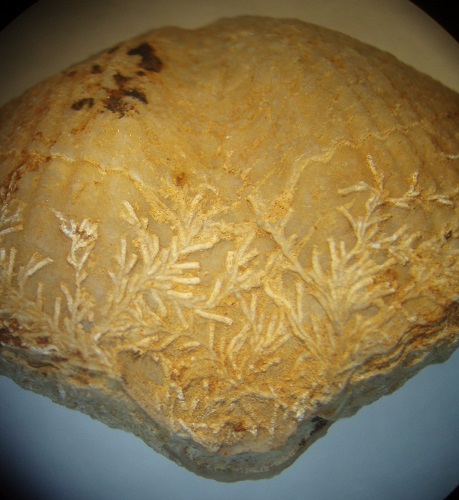
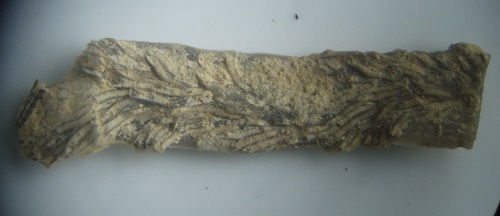
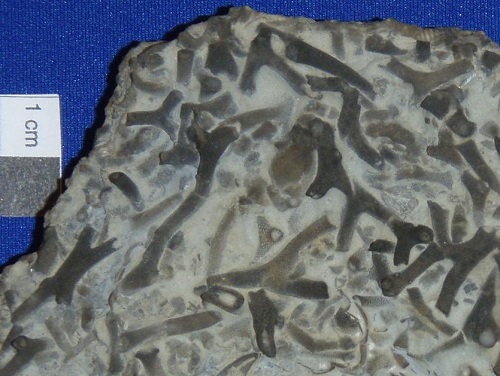
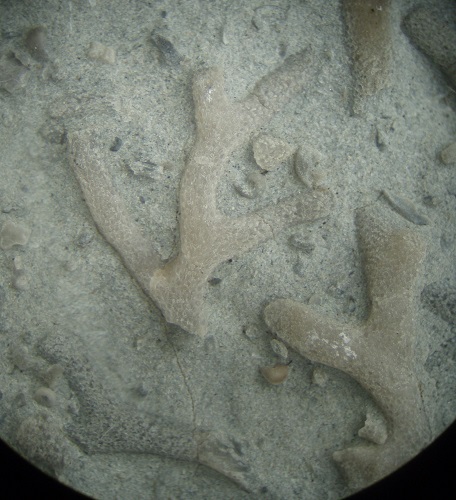
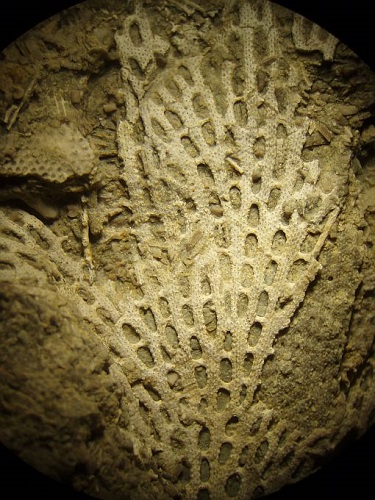
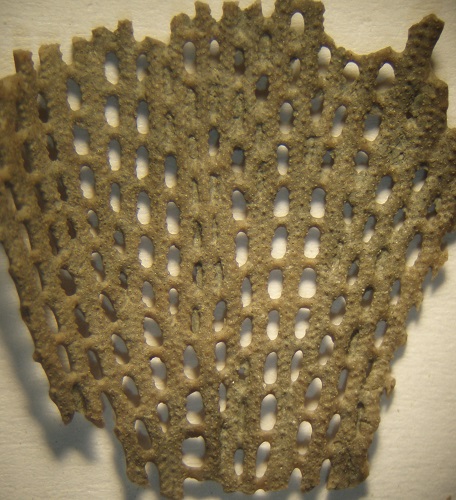
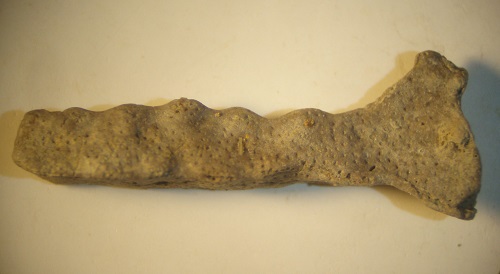
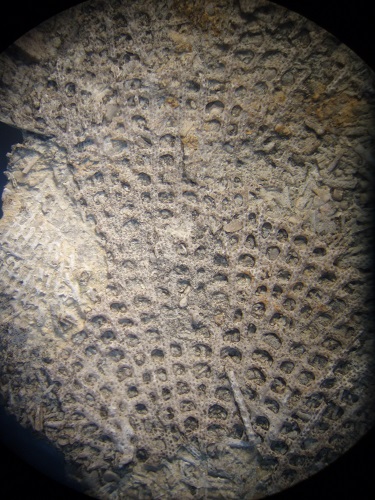
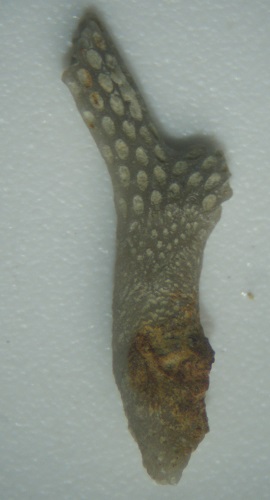
Bryozoans appear in the fossil record in the Lower Ordovician but might be found in Late Cambrian. They are colonial animals, dominantly marine. (Freshwater species have an organic skeleton that doesn’t preserve in the fossil record.) Bryozoans are difficult to identify because the internal structure is used. However, some bryozoans have distinctive exterior features.
Septopora subquadrans Ulrich
Bryozoan Photos (more to be added)
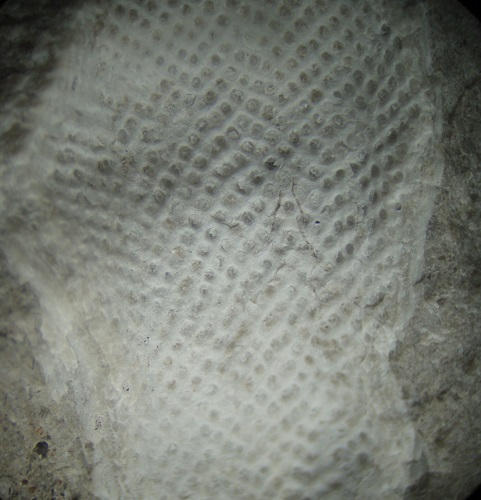
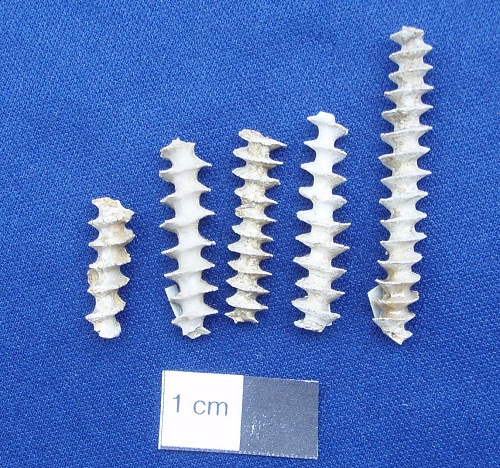
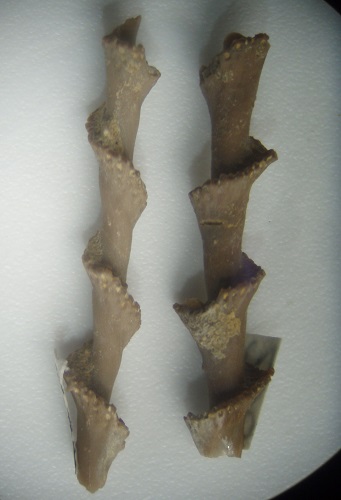
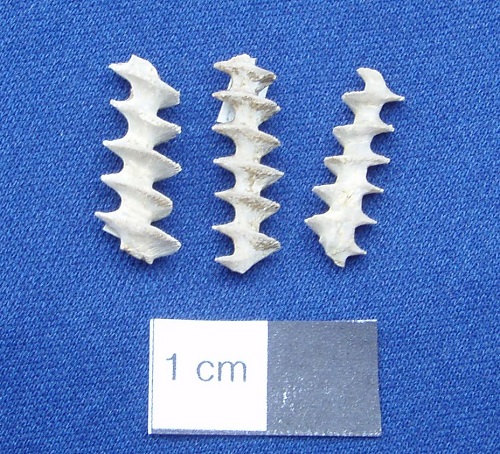
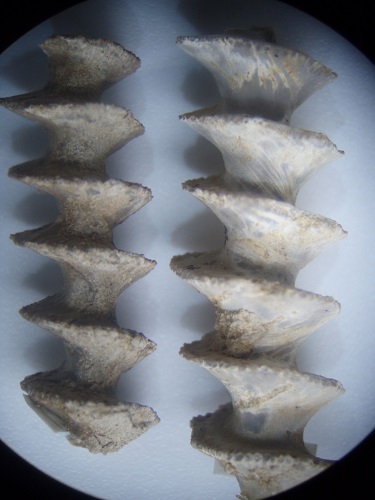
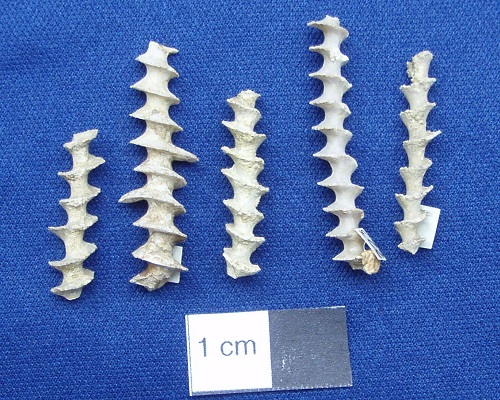
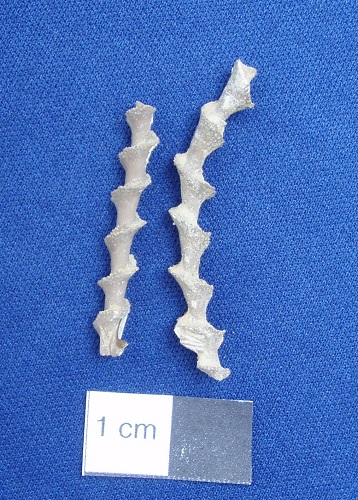
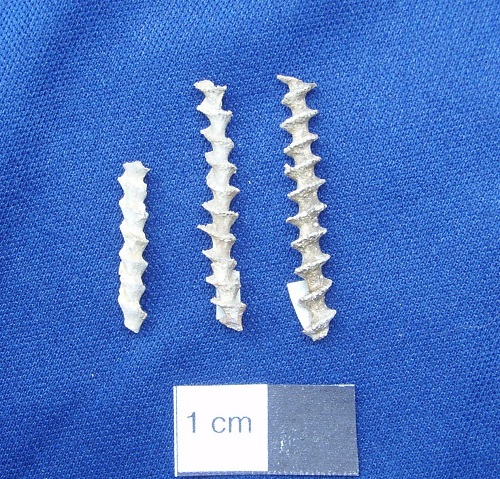
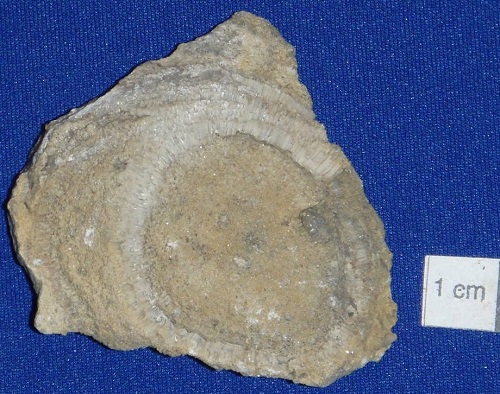
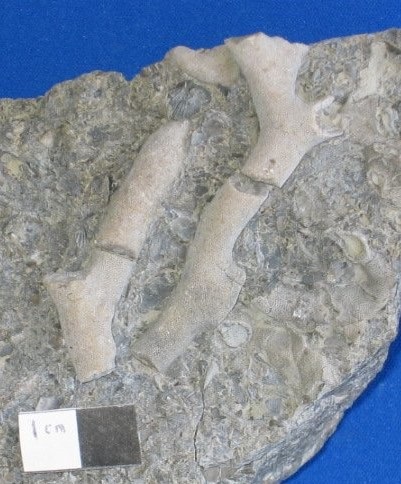
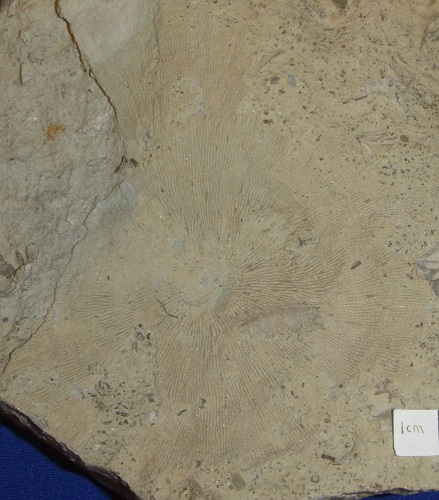
Archimedes is the central axis of a fenestrate bryozoan. Specimens are often found in matrix.
Preservation: C = Calcified, Ph = Phosphatic, P = Pyritized, S =Silicified, 1= w/o, matrix, 2 = w/ matrix
Archimedes confertus Ulrich – Glen Dean Fm., Upper Mississippian, KY – C,1,2
Archimedes distans Ulrich central axis
Archimedes distans Ulrich – Glen Dean Fm., Upper Mississippian, KY – C,1,2
Archimedes intermedius Ulrich
Archimedes intermedius Ulrich – Glen Dean Fm., Upper Mississippian, KY – C,1,2
Archimedes invaginatus Ulrich central axis
Archimedes invaginatus Ulrich – Glen Dean Fm., Upper Mississippian, KY – C,1,2
Archimedes laxus ” ” KY C,1
Archimedes macfarlani ” ” KY C,1,2
Archimedes meekanoides McFarlan central axis
Archimedes meekanoides McFarlan – Glen Dean Fm., Upper Mississippian, KY – C,1,2
Archimedes meekanus Hall central axis
Archimedes meekanus Hall – Glen Dean Fm., Upper Mississippian, KY – C,1,2
Archimedes proutanus Ulrich central axis
Archimedes proutanus Ulrich – Glen Dean Fm., Upper Mississippian, KY – C,1,2
Archimedes sp. ” ” IN,AL C,1,2
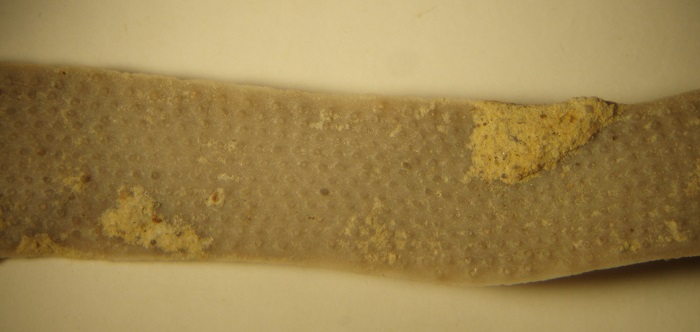
Aspidopora newberryi (Nicholson) – about 5 mm wide
Aspidopora newberryi (Nicholson)# – a small encrusting species, Upper Ordovician, IN, KY – C1,2
Batostoma gracilis Upper Ordovician KY,IN C,1
Batostoma jamesi ” ” KY C,1
Batostoma varians ” ” KY,IN C,1
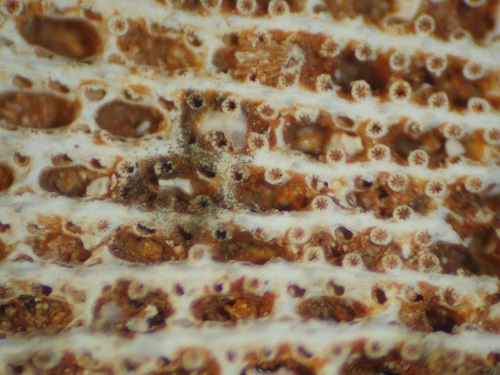
“Chaetetes” consimilis Hall
“Chaetetes” consimilis Hall# – current name unknown, flattened fronds. Waldron Shale, Silurian, IN – C,2
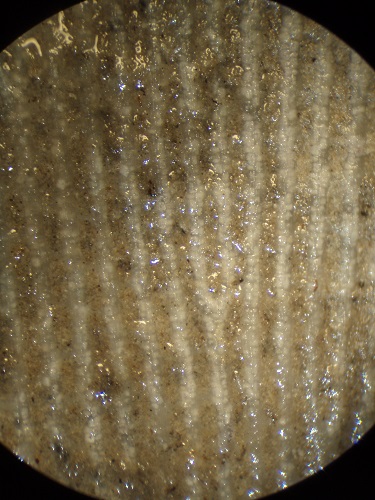
Cheilotrypa hispida Ulrich – 3 cm field
Cheilotrypa hispida Ulrich – very small branching bryozoan, Glen Dean Fm., Upper Mississippian, KY – C,1,2
Chondaulus ponderosa (Rominger)
Chondaulus ponderosa (Rominger) – a massive species in the Jeffersonville Ls., Middle Devonian, IN, KY – C,1,2
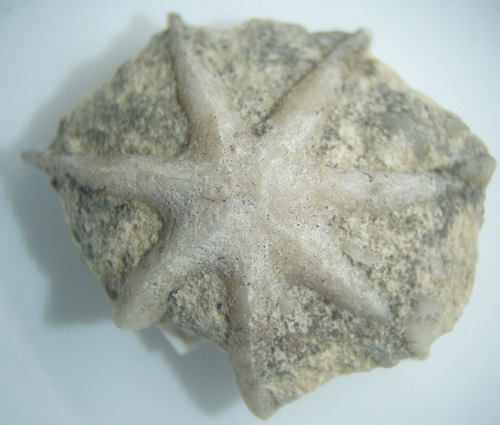
Constellaria florida Ulrich
Constellaria florida Ulrich – with star-shaped monticules, this genus is very distinctive. Occurs most frequently in flat fronds. Six species in the Upper Ordovician, IN, KY – C,1,2
Cyphotrypa clarksvillensis McFarlan
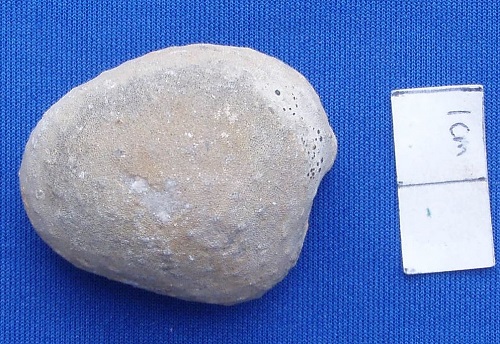
Cyphotrypa clarksvillensis McFarlan# – a massive, often hemispherical trepostome bryozoan of the Upper Ordovician, IN, KY – C,1
This is the version submitted and doesn’t include their editing.
By Alan Goldstein
The night sky is riddled with galaxies – vast agglomerations of stars, dust and gas. While a few seem isolated, most are found in groups or clusters containing dozens to more than a thousand galaxies. The size of an individual galaxy varies from several million stars stretching a couple thousand light years in space to more than a trillion stars spanning several hundred thousand light years.
A lot of empty space seems to lie between galaxies, but this is deceiving. Two near equal-mass galaxies several million light years apart may be drawn together by their mutual gravitational attraction. The effect both builds and destroys galaxies. These galactic collisions can be spectacular hurling stars millions of light years into intergalactic space or they can go virtually unnoticed.
Images from the Hubble telescope’s deep survey’s show that the farther back in time (more distant) one sees, the more galactic crashes may be observed. Astronomers believe (in part from these observations) that the galaxies you can see in your telescope were made by the collision and absorption of others. Physical laws favor the bigger galaxies when they smash together. Unlike a freight train hitting a compact car where the pieces scatter from the impact, the end result between galaxies can be a celestial object of amazing beauty! M51, the Whirlpool galaxy, is a classic example (photo).
M51, Whirlpool Galaxy – photo by Ron Yates
The affects of fly-bys, grazes or mergers between galaxies can make for breath-taking photography and very interesting visual observations. Watching galaxies collide is akin to seeing nature’s finest drama with a single still frame image. It would take thousands of lifetimes to see any changes between interacting galaxies. Disappointed? Don’t be – there is plenty of action “out there” and almost every combination of interaction can be observed.
“Near Misses – Near Hits?”
The gravitational influence between passing galaxies can be incredible even when they don’t appear to be in direct contact. Studies show that most galaxies are surrounded by a halo of gas and dark matter that adds to their bulk. As a result, even a “near miss” can alter the shape of one or both galaxies.
Andromeda’s M31 and M32 are the easiest pair of interacting galaxies to observe. The large spiral seems to be little affected by the proximity of dwarf elliptical M32, but in time the small galaxy will suffer. The bright compact elliptical is visible within the overall glow of the disk of M31. It is a good target for telescopes of any aperture!
M31 with M32 (9 o’clock position and M110 below – Ron Yates photo.
NGC2207 and IC2163 is a pair of spiral galaxies in Canis Major that are passing by one another. The result is a dramatic photograph – one of the favorites from the Hubble Telescope. Visually NGC2207 appears evenly illuminated and somewhat oval, while IC2163 is an open spiral with a low surface brightness giving it a ghostly appearance in comparison. Both are bright and relatively easy in a modest scope under good skies. In larger scopes a compact nucleus is visible on IC2163.
NGC4618 is an SBc barred spiral interacting with the spiral NGC4625 in Canes Venatici. The latter appears to be a compact spiral, but in reality it has a large disk that has a very low surface brightness. The smaller galaxy turns out to be is physically larger! In his 1966 publication on peculiar galaxies, H. C. Arp noted this duo as odd because the interaction created a pair of one-armed spirals! The interaction has caused both to undergo intense star formation. Both are visible with an 8-inch scope, with NGC4618 dominating the scene.
The widely spaced double system of NGC5963 and NGC5964 are Sb spiral and SO (lenticular-type) galaxies. The latter was originally described as an elliptical galaxy with unusual gas and dust clouds. Located in Virgo, they are separated by 14’ in declination. NGC5964 appears to be relatively unfazed by the proximity of NGC5963. However the latter has open spiral arms. Both are bright and are good targets for small telescopes. The SO-galaxy is an oval glow, while the spiral is smaller because the arms have a low surface brightness and require a larger scope to be well seen.
Fly-By-Night
Galaxies that are in physical contact, but do not appear to be in head-on collisions are a category I call “fly-by-night.” These graze pass one another with the outer rims of both interacting, but the main bodies remain intact. The smallest of the pair is usually “much worse for wear.” Eventually they will merge, but at the moment both galaxies are largely intact.
NGC3226 and NGC3227 is an easy target in Leo located a degree east of Gamma Leonis. At 11.4 and 10.3 magnitude, respectively, this pair is an elliptical and spiral galaxy. Their proximity has not distorted either appreciably, though deep photos show their halo stars are affected. With NGC3227 you should notice a bright stellar nucleus. It is a Seyfert galaxy with an explosive core powered by a super-massive black hole. This pair is relatively easy in a 6” and more impressive with increased aperture.
Canes Venatici is a small constellation but is well endowed with colliding galaxies. M51 is not only the favorite of the spring sky, but probably among any observer in the northern hemisphere. Called the Whirlpool Galaxy because of its easy-to-see spiral arms, it rates as the most famous interacting galaxy pair in the sky. NGC5194 and its dusty peculiar companion NGC5195 are 8.4 and 9.6 magnitude, respectively. Visible in binoculars, a 2.4” cm optical system will show it well. In moderate scopes the sweeping spiral structure may be seen and in instruments 12” and above, it can resemble its photograph.
If not overshadowed by the Whirlpool, NGC4485-90 could be the best-known colliding in Canes Venatici. It is a pair of Magellanic-type galaxies showing the slightest hints of spiral structure in good photos. The larger system NGC4490 (recently named the “Cocoon galaxy”) has a condensed nuclear region. Like the pair of NGC4618 and 25 above, this pair also shows dramatic star forming regions – only this time it is on the facing sides of each galaxy. Both are easy targets for a small telescope and are among the easiest interacting galaxies to find – less than a degree northwest of Beta Canum Venaticorium.
Impact!
When galaxies hit hard, the result can be a real galactic mess! Spiral galaxies can become so distorted and tangled that two become one. A number of galaxies at first glance do look like one weird galaxy. The advent of HST and the super-large telescopes have sufficient resolution to bring a murky mess into sharp focus.
NGC4038 and NGC4039 – the Ringtail or Antennae galaxies – are a pair of spiral galaxies with “full contact.” The “ringtail” name comes from the shape of NGC4039 with a bright ring of stars in the outer periphery and the tail is the far-flung arms of NGC4038. The “antennae” name comes from the fact that the interaction has flung stars in a pair of slightly curved arcs many times the diameter of both galaxies into deep space. The larger NGC4039 was originally type Sb. NGC4038 is a small two-armed Sc spiral. The collision has energized star-forming nebula on the facing sides and thrown dust arcing between them. In a telescope the unusual shape is easily seem in a small telescope. Look at it carefully – what shape do you see?
NGC4676A and B – the Mice – is a pair of galaxies undergoing collision and major deformation. This is a faint target at 13th magnitude, visible in telescopes larger than 8”. “A” is an SBb-type, while “B” could be an edge spiral, but is difficult to discern even with the best images because of debris from “A” crossing its middle.
NGC5128 is another very bright, very peculiar galaxy – the merging spiral and giant elliptical galaxy. The pair has become one, but the dust of the spiral bisects the globe-shaped elliptical. Also designated radio source Centaurus A, this is probably the nearest major collision at 30 million light years distant. The dust belt bisecting what would otherwise appear to be a circular elliptical type galaxy is very dramatic.
There are many other bright colliding galaxies to be observed. A second list of ten galaxies can be found on Astronomy.com. Get out and enjoy the universe’s demolition derby and enjoy the spectacle unfold in the slowest of slow motions.
Data for Selected Targets
Name Coordinates (for brightest) Mag.Vis. Size (minutes arc)
Although the mines of the Illinois-Kentucky fluorite district are no longer active, the thrill of discovery is still possible. The discovery described in this article was made in early May at the Hastie’s Mining Co. quarry near Cave in Rock. I have visited this site more times than I can count while leading university geology department trips and during the preparation of my major article on the district (Goldstein, 1997).
Geophysics professor Hal Noltimier of The Ohio State University arranged this particular trip. His objective was to obtain specimens of minerals and ores for the geology department’s collections, as part of his current personal mission to gather ore samples from mines around the world to enhance their teaching collections. We planned to go to specific places on the Hastie’s property as well as several other mine dumps to obtain samples.
In addition to Hal and his girlfriend, I invited geologist and friend Mark Easterbrook who traveled from the Charleston, South Carolina area to join us. Mark had collected with me in the past. Ron Stubblefield, curator of the Ben E. Clement Mineral Museum in Marion, Kentucky joined us as well. A Martin-Marietta geologist was to join us so we could check out their quarry east of the Hastie’s, but his plans fell though due to back problems.
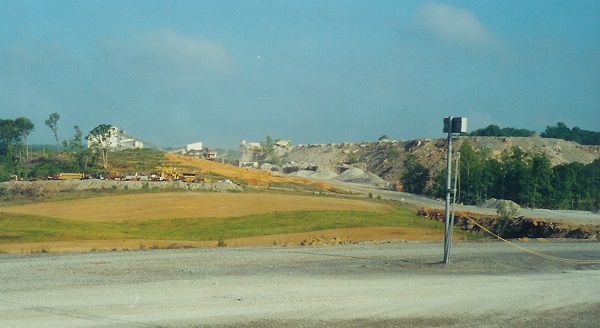
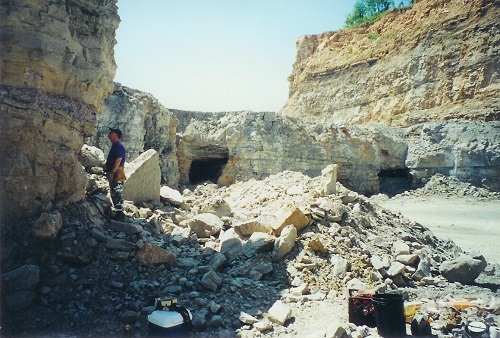
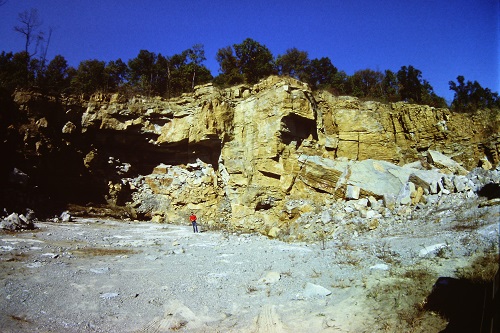
The first stop on our itinerary was the Hastie’s quarry located in an area of the fluorite district called Spar Mountain. (It is actually an escarpment.) Their limestone and sandstone mining operation is visible from several miles away (see photo 1). Fluorite has not been the Hastie’s bread and butter for a number of years since the bottom fell out of the fluorspar market. The first thing we noticed was a new entry road to the scale house – straight and wide – much better than the previous road, which was actually a county road. We met at the office and followed Bob Hastie to a section of the pit not being mined the day we were visiting. We were out of the way of their heavy equipment.
1.) Hastie Mining Co. operations. Crusher plant is to the left and the quarry is to the right.
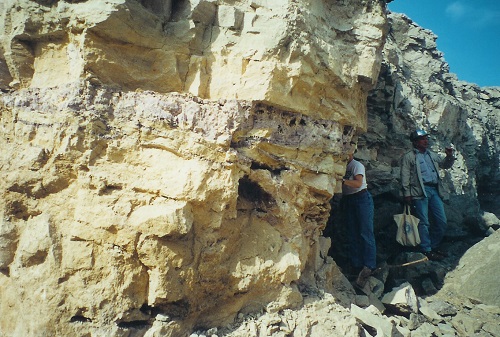
The mined out area was 30 – 40 feet lower than during my last visit two years earlier. Previous collecting had been from the Lead mine (or Austin Lead mine) deposits in the upper Ste. Genevieve Limestone. This time, we collected from Minerva Oil Company’s mining operation in the 1950’s that was exposed during quarrying recently (see photo 2) in the middle of the Ste. Genevieve Limestone. Several tunnels were obvious. According to Don Hastie, their driller has experience that enables him to avoid or minimize the trouble caused by punching through the roof of the numerous mine tunnels, so they don’t break drill rods during their operations. The main inconvenience when they do penetrate is plugging the drill hole before placing the explosives.
2.) Mark Easterbrook in the Hastie quarry. Two old tunnels are exposed on the west wall.
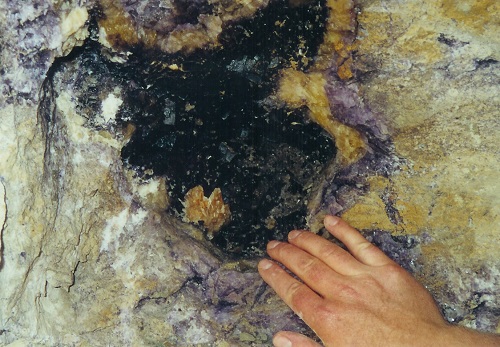
Although there were plenty of places to inspect, I zeroed in on a mine pillar on the south wall of the quarry which was dominated by purple fluorite (see photo 3).
3.) The pillar of fluorite with numerous pockets. The largest pocket in the center was largely devote of good crystals. The smithsonite pocket was below the wedged-shape rock to the right on the large pocket. A room exists behind this pillar.
One pocket I discovered was over a 30 cm in diameter, a 30 cm deep completely lined with 5mm – 1 cm cubes (see photo 4). There were numerous other pockets exposed, with primarily purple crystals of various sizes and luster.
4.) Deep purple fluorite with brown calcite crystals
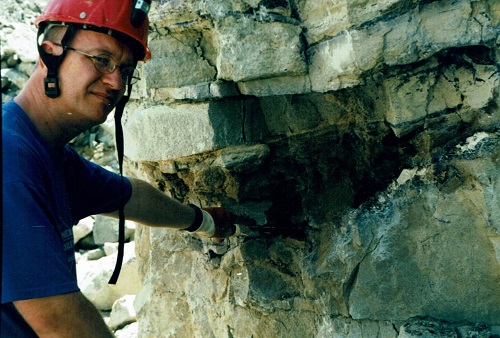
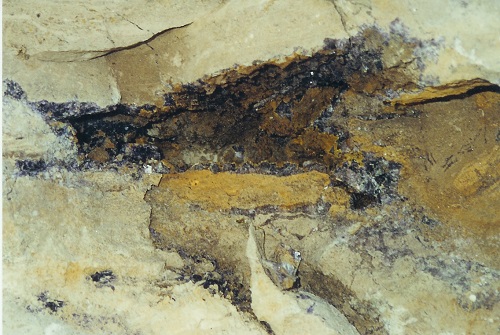
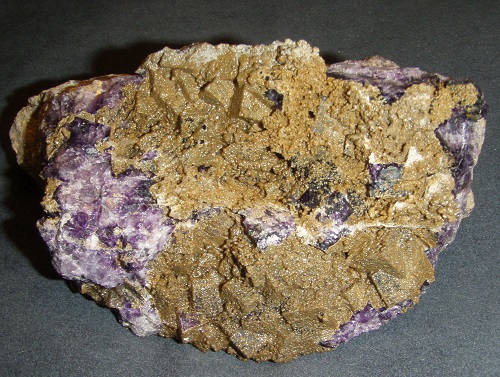
The discovery was a pocket of gemmy purple fluorite with barite partially to completely covered with orangish-brown to yellowish-brown smithsonite in this pillar! I noticed a small fluorite lined opening, and opened it with a 3 pound sledge hammer and wide chisel. The smithsonite specimens are botryoidal or have small club-shaped crystals. They average 1mm in length and when they are not inter-grown, are typically doubly-terminated. Inter-grown crystals are quite interesting under low magnification. Some specimens and cleavages are “turkey-fat” color, a couple are chocolate brown and almost as lustrous as sphalerite!
The occurrence of smithsonite is particularly curious, since I have not recorded a single sphalerite crystal in all my years studying the Hastie’s property. The pocket was almost 3 feet in length and varied from a couple to 10 inches in thickness. Immediately below the pocket was an unusual area where the limestone had been leached away, leaving a porous, silicious rock in its place (see photo 5).
5.) Mark Easterbrook pointing to the center of the smithsonite pocket. The “V”-shaped area on either side is the leached limestone, now consisting porous siliceous rock. The best smithsonite is from the bottom edge of the “V.”
The paragenesis of this pocket seems to indicate the carbonate component came from the leached limestone below the pocket. The zinc must have migrated an unknown distance up-dip from the sphalerite source. The barite formed after the fluorite, and generally prior to the smithsonite. However some late-forming barite crystals smaller than 3 mm occur on the smithsonite. Photo 6 shows a closer view of the smithsonite pocket.
6.) Smithsonite pocket – brown crystals about 1mm long coat fluorite
We collected specimens from nearly a foot across to thumbnail size, with a few micromount specimens, too. I immediately donated one fine specimen to the Clement Mineral Museum, another to Hal Noltimier. We ended up with seven or eight flats of smithsonite.
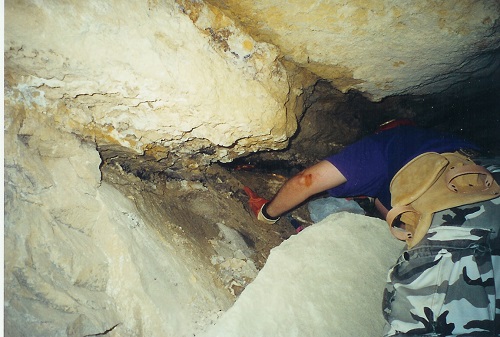
Above the smithsonite, Mark worked an area particularly rich in lustrous purple cubes (up to two inches across). Most of the specimens were so inter-grown, it was difficult to get any “knock-out” specimens (photo 7). In the adit on the far side of the pillar, I found a large pocket where a couple of nice lustrous yellow fluorite crystals and some small gemmy clear calcite were picked up (photo 8).
7.) A nice brown smithsonite specimen coating cubes of fluorite in Alan’s collection.8.) Mark Easterbrook looking for yellow fluorite in the adit behind the mine pillar.
Ron Stubblefield collected a specimen with several late-forming tabular purple fluorite crystals perched on regular cubes. I found one like that associated with the smithsonite. Hal and Paula collected fluorite off the rock piles in the pit. One razor-shape crystal required him to dig into the first aid kit.
Our plans to visit Rosiclare and mine dumps on top of Spar Mountain did not pan out, so Mark and I stayed in the pit as late as was practical. We visited the large mine tunnel and gingerly explored the first 100 feet (see photo 9). Roof bolts were hanging like iron stalactites: the 45 to 50 years of weathering – combined with the blasting above – had knocked the loose rock down from the roof of the tunnel. A number of specimens were found in the loose rubble. One was a 17 cm long specimen with cubes up to 6 cm wide, but they are somewhat etched. I also carried out a 30 cm -long boulder consisting of a doubly terminated honey-brown scalenohedral calcite crystal, deep purple fluorite and smaller calcite parallel crystals in pockets. This is the largest calcite crystal I have personally collected from Cave in Rock area. While aesthetic, it is not a high-quality piece and was placed my rock garden.
9.) Tunnel from the workings on the Minerva Oil Company originally accessed through the Crystal mine.
Mark and I brought back 25 flats of specimens along with a bucket with ore samples for grab bags and fluorite cleavages to make octahedrons (photo 10) collected from other mine dumps. We cleaned and divided the specimens before he headed back home. At the last minute, I had used my clamshell luggage topper on his car to hold our camping gear. The last time I had been in a small car this fully-packed was on a cross country astronomy junket I did with a friend 20 years ago!
9.) Fluorite and smithsonite specimens on the ground before we packed them up.
After an incident a couple of years ago the Hastie’s changed their property-access policy and do not want to deal with groups or collectors they do not already know. I have known the owners for 18 years (geez, that’s hard to believe!) and respect their wishes. This is an active quarry with huge equipment and dangerous areas not suitable for inexperienced collectors. I will have some material available, although it is possible that most will be sold or traded before the article is published. I am scheduling another trip later this year, but with the Hastie operations, there is no telling what areas will be accessible and what will be found!
Reference:
Goldstein, Alan, 1997. The Illinois-Kentucky Fluorite District, The MineralogicalRecord, vol. 28, no. 1.
The Walker vein one of the most well-known mineralized veins within the area described as the Central Kentucky Fluorspar District (see Anderson et al, 1982; Currier, 1923; Fohs, 1907, 1913). It has never been a source of economic mineralization, unlike some of the others. The claim to fame is its collectibility and beautiful minerals available to collectors.
In brief, the Central Kentucky Fluorspar District, which cover all or parts of 16 counties is a typical Mississippi Valley type deposit. Unlike the Illinois – Kentucky Fluorspar District (see Goldstein, 1997), there are no significant bedding replacement type deposits. Most veins are associated with faults, which are very numerous. Over 125 veins are known with traces of barite according to Anderson, et al (1982).
Exposed within the Middle Ordovician Lexington Limestone sought by the Caldwell Stone Company, this locality lies on the southeast side of Danville, in Boyle Co., Kentucky. This vein was first documented by Robinson, (1931). It is actually part of a fault zone containing numerous veinlets in an area 200 feet wide and 2,000 feet long. The primary vein varies from as little as a few inches to nearly six feet wide (Anderson, et al, 1982). Collecting productivity varies with the width of the vein. The best mineralization occurs where the vein becomes cavernous.
Minerals have been sought by local collectors in this quarry for many years. More recently, this locality has become regionally known, with regular visitors from surrounding states. Some strata within the quarry contained rare fossils, but these areas have been removed by regular operations, although a collector found a distorted, but complete 3” (8 cm) Isotelus trilobite on the dumps above the quarry in April.
Mineralization
The mineralization is dominated by calcite and barite. The thickness of crystallized specimens on barite matrix can make for some pretty heavy specimens. During the February collecting trip, two specimens exceeding 100 pounds were obtained and the April trip netted a specimen which required a backhoe to load into the pick up. (How they got the specimen out I do not know!) In addition, a boulder weighing about 1000 pounds was collected in mid April and moved to the quarry office where it is prominently displayed on the front lawn. The writer has not studied this vein sufficiently to describe the mineral paragenesis, but Jolly & Heyl (1964) described the mineralization for the entire district. This article should be considered a preliminary report based on three collecting trips and observations of a number of specimens.
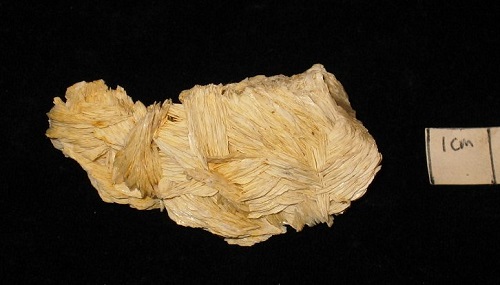
Barite appears to be early forming, but occurs in stages throughout the history of mineralization (Jolly & Heyl, 1964). This mineral forms massive veins. Where fissures occur, it may be collected in crystals, often forming plates and rosettes. Aggregates are composed of flat blades 犀利士or thin pod-shaped crystals typically 3 mm – 1 cm long (photo 1). Large crystals (i.e. solitary blades) have not been observed by the writer or described in the literature. Crystals are usually white, but have been noted as pale blue. Barite crystals can be lustrous or chalky depending on the collecting area. It may be colored brown or black by bitumen, either as a light tar-light coating or as dark inclusions within massive specimens.
Photo 1 – Barite in bladed crystals
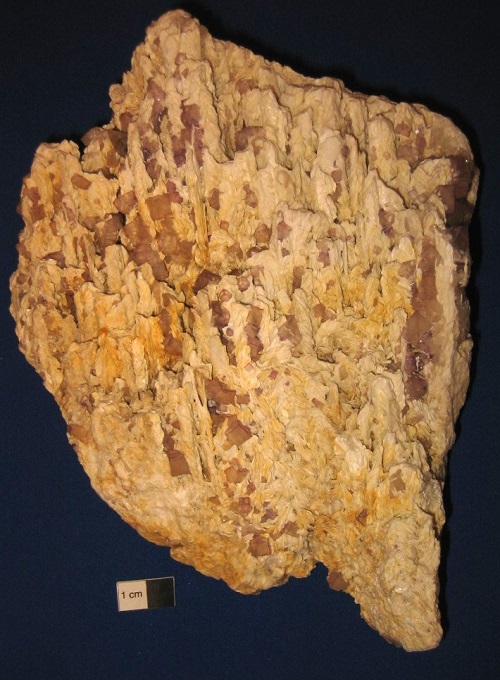
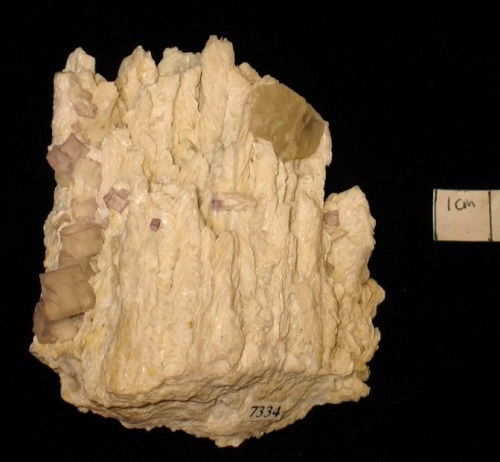
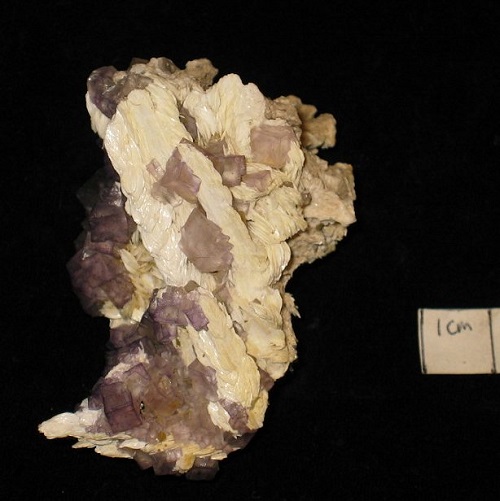
The most unusual specimens collected by the writer occur as parallel stalactitic aggregates, composed of stacks of 3 mm crystals neatly oriented like a deck of cards spread at a 45 degree angle. The aggregates are often sprinkled with purple fluorite cubes (photos 2, 3, and 4).
Photo 2 – Odd barite with fluorite – a large slabPhoto 3 – Odd barite with fluoritePhoto 4 – Odd barite with purple fluorite cubes
Calcite is probably the most abundant vein mineral. It occurs in various stages throughout the mineralization within the vein. Crystals are typically white or colorless, but may be pale lavender or pink. They are occasionally lustrous, but often have a silky luster due to some dissolution. Usually twinned, they are similar in form to those from the zinc deposits in Smith Co., Tennessee. Doubly terminated crystals are common, from one inch (2.5 cm) to six inches (15 cm). Terminations are razor sharp, making collecting with good, thick gloves a necessity.
Doubly terminated calcite crystal.
Crystals are often associated with mud-filled cavities within the vein. These openings are often large and allow crystals to grow as much as two feet (60 cm) in length! One such crystal is in the collections of the Louisville Science Center, having been on display since 1985. (It will likely be taken off exhibit later this year when the new exhibit gallery will be created. It is uncertain whether it will be displayed in the future.) The April, 2000 collecting trip netted the author three crystals from between 14 and 18 inches (32 – 45 cm) in length. Unfortunately, most have some surface etching or were damaged by equipment before I found them.
Calcite with twin terminations on one side.
One specimen contained white phantoms forming a “cap” (covering only the top growth of the calcite) on a localized patch of doubly terminated twinned crystals. The white inclusion lay a millimeter below a clear mineralization.
Calcite crystal on barite.
Chalcopyrite occurs as inclusions in calcite. They are usually thin wires oriented perpendicular to the faces of the calcite crystal. When cleaning barite specimens in HCl, as the calcite dissolves away, the illusive chalcopyrite can be seen. Occasionally it may be seen within transparent calcite crystals forming a zone few millimeters below the surface.
Fluorite is very common in the vein. Crystals are generally cubic, from a few millimeters to a centimeter across. Crystals above 1 cm are rare from this locality. Within the district, Jolly & Heyl (1964) report a paragensis starting with white to buff, followed by bluish, clear, and finally purple. The latter color is pale or lavender and may have a dark purple rim (photo 4). Within a lower portion of the vein, I collected optically transparent fluorite in 5 mm crystals on barite. Some had a curious modification on one corner of the cube. Some crystals we coated with smithsonite. The most recent collecting trip netted some amber to yellow crystals. Iron stains played a role in creating these atypical colored cubes (for this locality).
Smithsonite – this is the first published report of this mineral from the Walker Vein. It was collected in fair quantities in August, 1999. This late-forming mineral is associated with barite, decomposing sphalerite, fluorite and occasional etched calcite. Smithsonite is brown or yellow in color in botryoidal, boxwork and in microcrystals of a rhombohedral or scalenohedral habit. Occasionally sub-millimeter spheres and hemispheres are found. Yellow colored smithsonite occurs as tiny rhombs, presumably colored by greenockite, and is often associated with fossil broyozoans. Some microscopic crystal aggregates are associated with decomposing calcite. The calcite will look like parallel needles in the x-axis, while the adjacent smithsonite is growing in the y-axis!
Some of the most interest specimens consist barite crystals coated with a thin veneer of smithsonite, sometimes sprinked with microcrystals.
Smithsonite coating barite, collected August 21, 1999.Detail of the above photo. ~2.5 cmBow-tie crystals of smithsonite on barite, 2.5 cm FOV.Smithsonite, close-up of central crystal in the above photo. FOV ~5mmGreenockite-colored smithsonite on a bryozoan colony. 2 cm FOVGreenockite-colored smithsonite, FOV 3 cm
Sphalerite is an early forming mineral, occurring as blackish crystalline masses, usually in barite. Crystals or aggregates may be up to 5 inches (12.5 cm) across. Well-exposed sphalerite crystals are not common. Bill McKenzie collected an etched sphalerite crystal coated with either greenockite or cadmium-rich smithsonite in April. (Naturally, it was in a boulder that I let him work on after I decided to go elsewhere!)
Strontianite is a later forming mineral that occurs is scattered occurrences through the vein. Curiously, celestine has not been documented from this locality. It occurs as white puff-ball aggregates from 3 – 8 mm in diameter. Stronitanite may be scattered on calcite, barite or fluorite.
Strontianite on barite. FOV 2 cm
Cleaning the specimens
Specimens occurring in the mud-filled openings are best left alone and let the mud protect the specimen during transportation home. Specimens should be spread out and left to dry. At that time, the minerals can be blasted with a nozzled garden hose and the dried mud will pop off. Mud that does not come off immediately will with a second water blast a few minutes later. This prevents the gooey mud from being shoved into the microscopic cracks with a tooth brush.
Collecting at the Quarry
The owners of this family-run quarry have been gracious to let individuals and clubs collect here over the years. Collecting hours are on Saturday from 7:30 am til noon. If you are traveling any great distance to collect here, contact the quarry or local collectors to see if it is going to be worth the effort. Although the vein spans the entire quarry, accessibility is limited to only a portion. Mineralization is restricted to areas around the vein and the swarm of smaller veinlets. The most productive collecting is associated with the widest veins. As would be expected, quarry operations cover a large area and blasting through the vein does not occur regularly. Presently the vein is exposed on several benches which are adjacent to highwalls of about 40 – 50 feet, both above and below.
Addendum: In recent years (2010+) the quarrying has moved away from the vein and the vein itself has pinched according to my friends.
References
Anderson, W. H., Trace, R. D., and McGrain, P., 1982, Barite deposits of Kentucky:
Kentucky Geological Survey, Series XI, Bulletin 1, 56 p.
Currier, L.W., 1923, Fluorspar deposits of Kentucky: Kentucky Geological Survey,
Series 6, vol. 13, 198 p.
Fohs, F. J., 1907, Fluorspar deposits in Kentucky: Kentucky Geological Survey, Series
3, Bulletin 9, 296 p.
Fohs, F. J., 1913, Baryte deposits of Kentucky: Kentucky Geological Survey, Series