
Jim Lobb and I drove to northeastern New Jersey to attend the annual Franklin-Ogdensburg Mineral Society show, visit the Franklin Mineral Museum and the Sterling Hill Mine & Museum. This is the first time I’ve traveled to New Jersey as a destination, rather than through it on my way elsewhere.
Jim’s mission was to increase his knowledge of Franklin-Sterling Hill (FSH) minerals, both for personal benefit and to help me with the FSH collection at the Ben E. Clement Mineral Museum. There was a special collection for sale on the morning we arrived. He joined about two dozen other collectors looking to upgrade their collections.
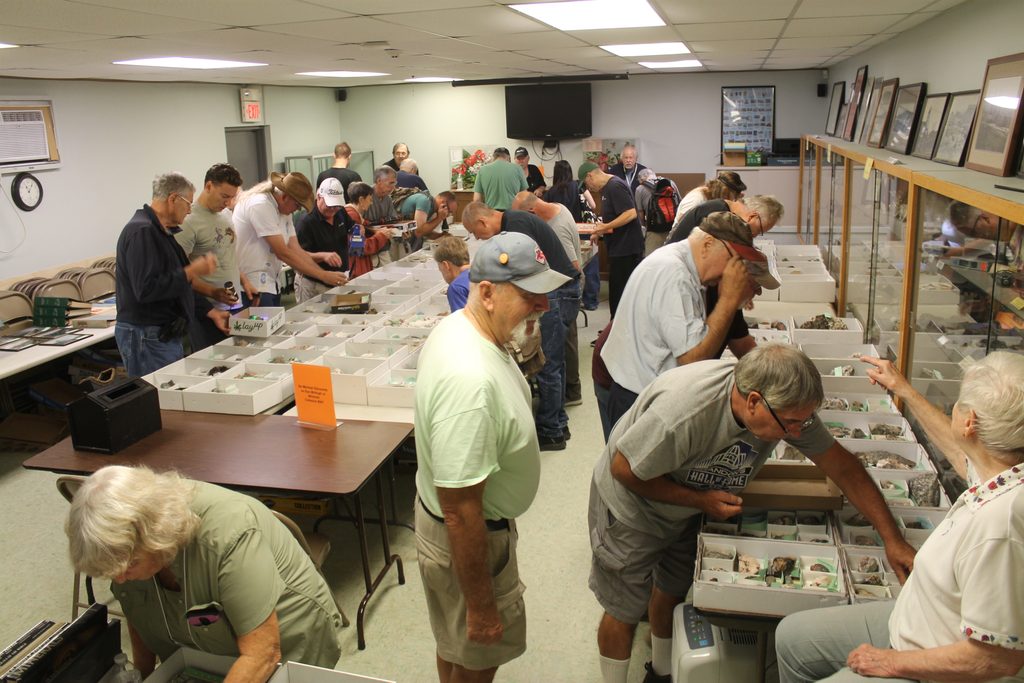
The Don McHugh collection sale attracted a lot of interest. This is the museum’s classroom.
My goal was purely educational: To compare the two museums with other mineral museums I have visited and look for connections and partnership possibilities with the Clement Museum in Marion, Kentucky, where I volunteer. The Franklin Museum is closer to the Clement Museum in size and scope.
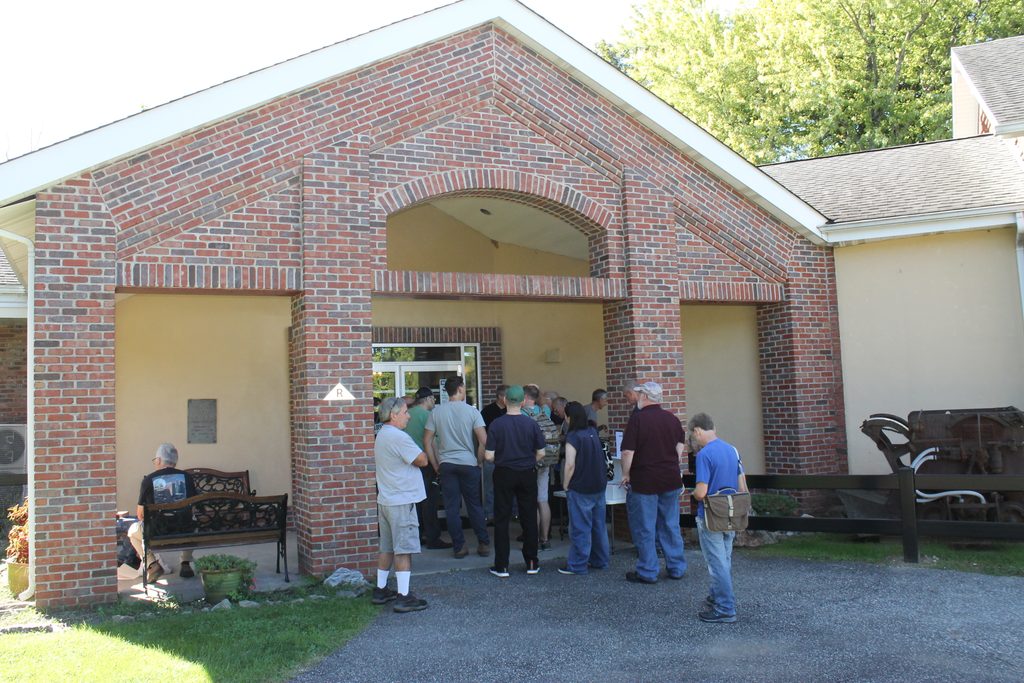
The entrance to the Franklin Mineral Museum.
The Franklin Mineral Museum has nice displays in several rooms. One is dedicated to FSH minerals, others include a fluorescent display, minerals of the world, and fossils of the world. For school groups, this allows students to scatter. Children get a scavenger hunt pamphlet that covers the objects in every room. (Except the bathroom!)
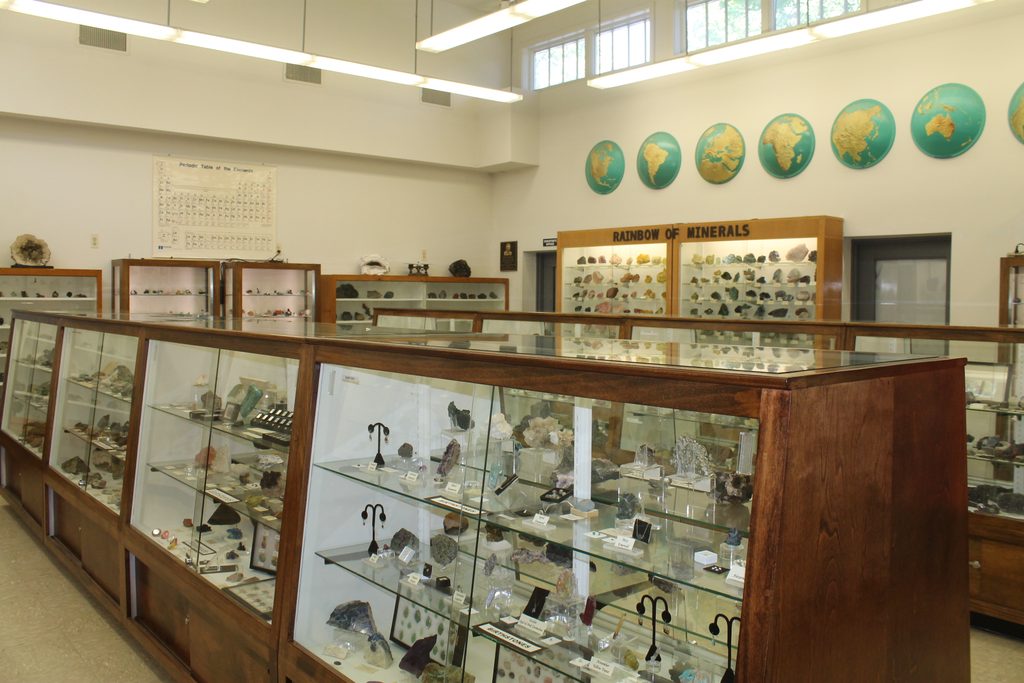
Minerals of the World exhibit room
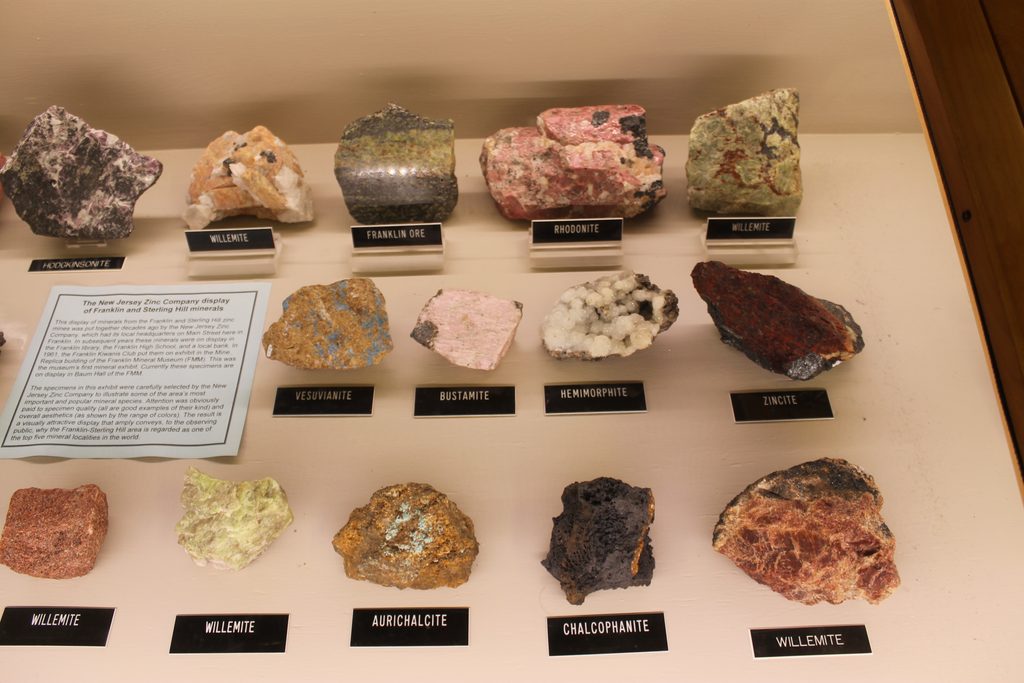
Part of a display of minerals from the local zinc mines.
The Buckwheat mine dump is open to collecting, for a fee. They have a “dark shed” to look at rocks collected with a UV light. They offer occasional night digs, where collectors bring shortwave lights to find goodies.
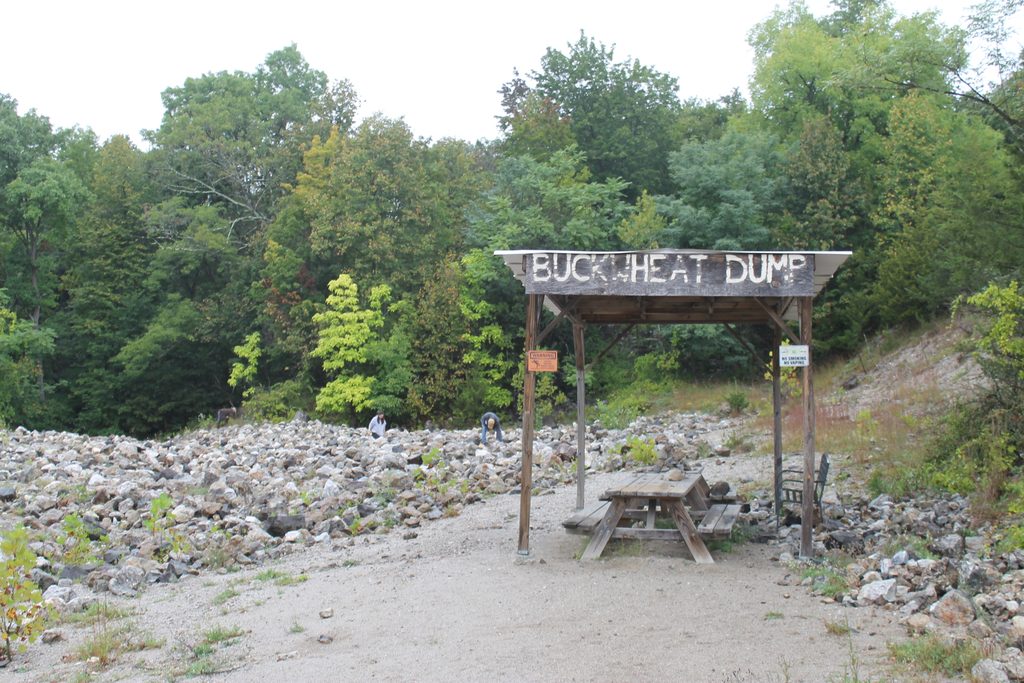
The Buckwheat mine dump with several collectors. This is a partial view of the collecting area.
The Sterling Hill Mine operated continuously from 1854 to 1986, and was one of the largest zinc mines in the world. When it closed, sizeable ore reserves remained, but local taxes made it unprofitable for the company. Ore was mined as deep as 2,800-feet below the surface.
Underground tours are offered; it’s all walking, no hopping into mine cars! Most famous is the Rainbow Room, where shortwave UV lights provide a light show.
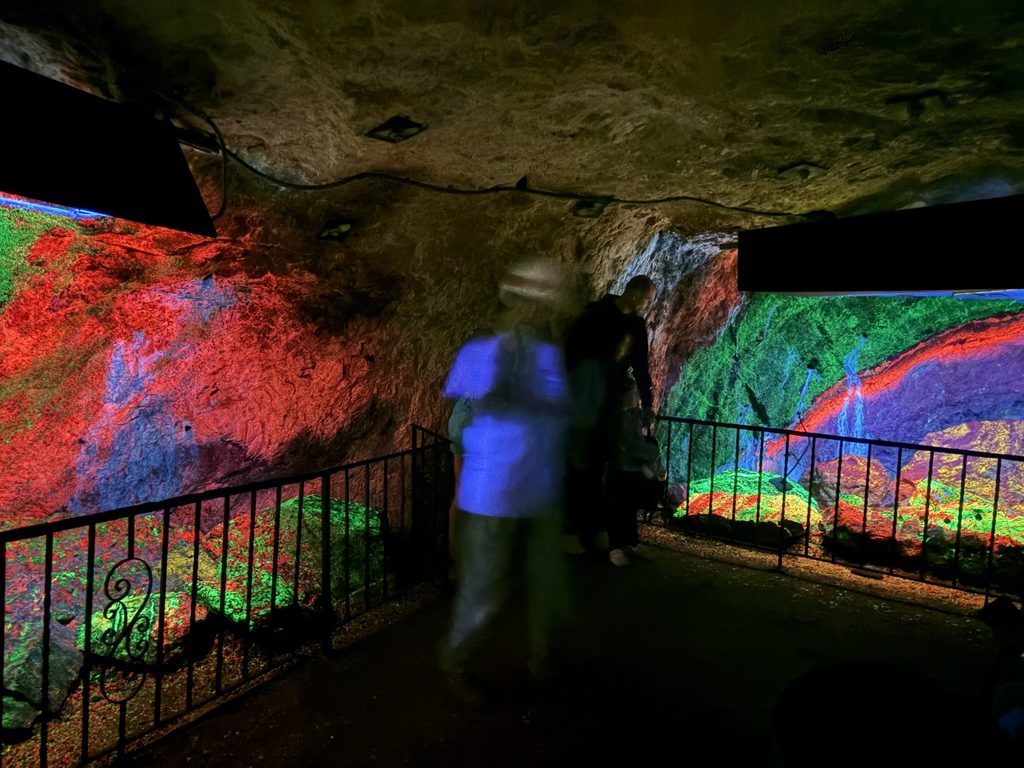
Rainbow Room in the Sterling Hill Mine.
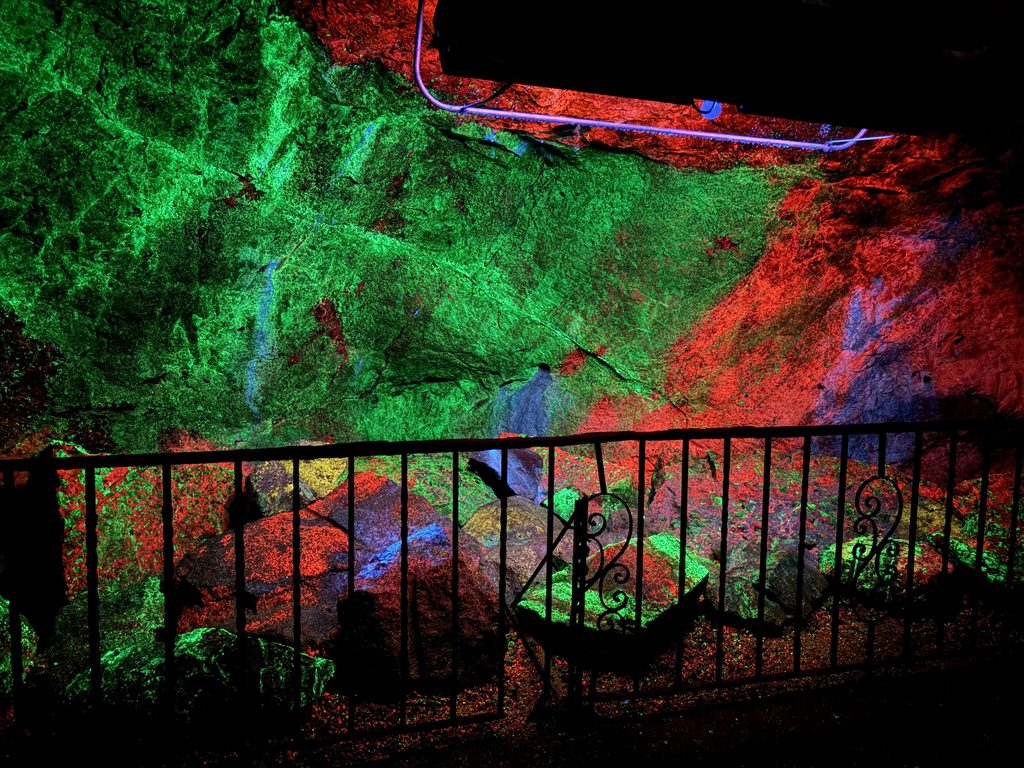
Rainbow Room in the Sterling Hill Mine in shortwave UV. Green is willemite (zinc ore), red is calcite.
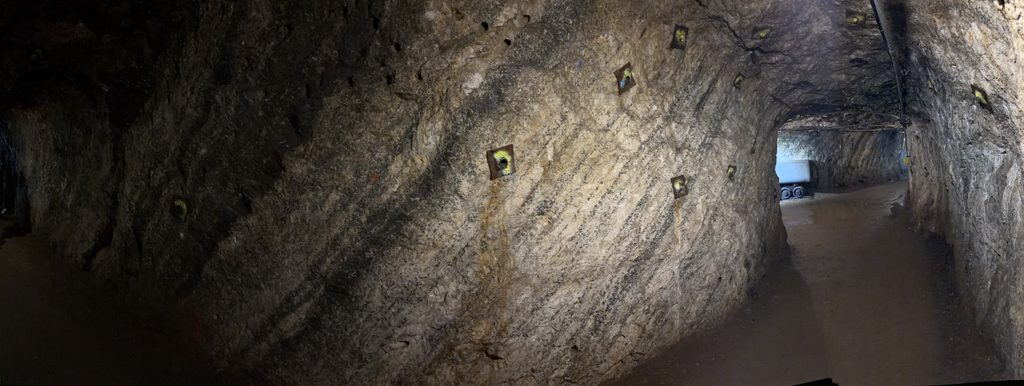
Panorama of Sterling Hill Mine under “normal” light – not colorful at all!
The collecting piles at the Sterling Hill Mine are much smaller, but according to Jim, contain more types of minerals than the Buckwheat dump. They dropped a load of drill cores (which I collect) and I had fun examining them. Mostly white Franklin Marble with small graphite crystals inside.
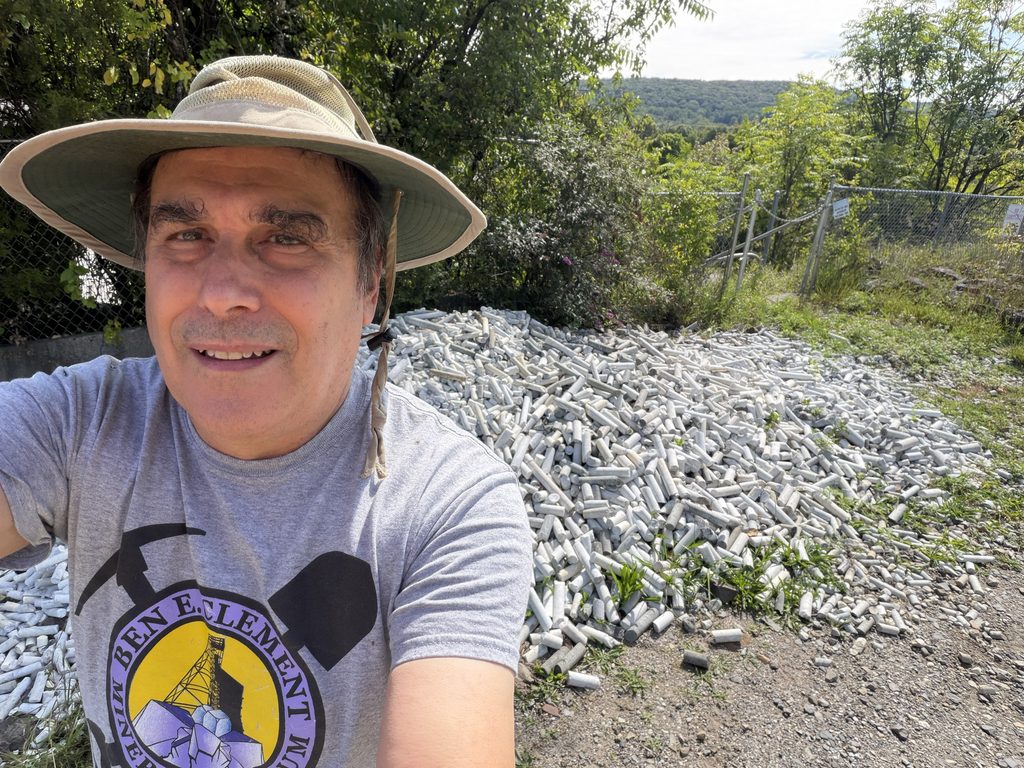
I’m standing next to the core dump, dominated by cores of the Franklin Marble. I collected one that was drilled from 2,600-feet underground.
I found a brown lump that was much less dense than the others on the collecting piles. I broke it with a hammer and found a bluish and yellow interior. Weird. I showed it to Earl Verbeek, curator of the Franklin Mineral Museum. It stumped him! I spent the evening studying it will a 10x loupe, UV lamp, and Jim’s fluorescent mineral book. The yellow crystalline mineral fluoresced a weak magenta. The only mineral that matches is meionite, a scapolite mineral. The bluish mineral looks closer to black with magnification and looks like chalcophanite I’ve got from the Ojuela and Gold Hill mines.
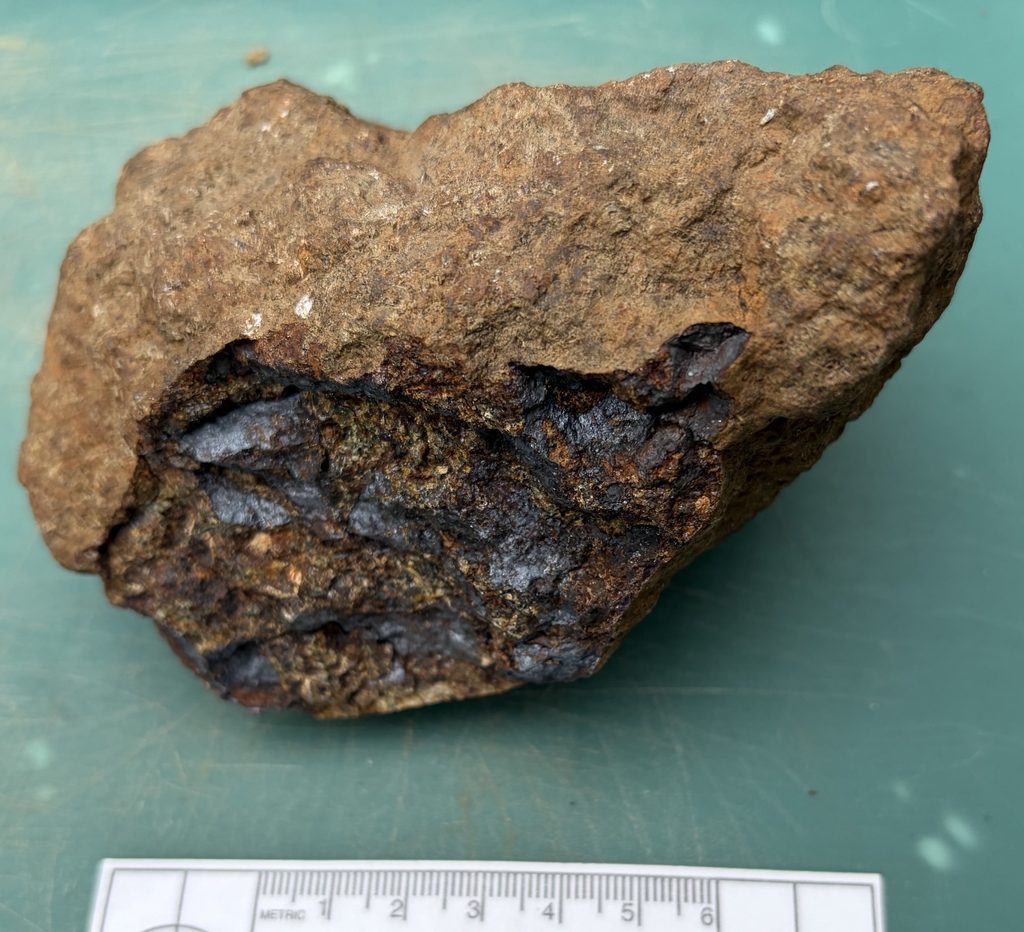
Mystery rock from the Sterling Hill mine collecting pile. My guess: bluish-black is chalcophanite and the yellow is meionite (because it fluoresces magenta). Stay tuned!
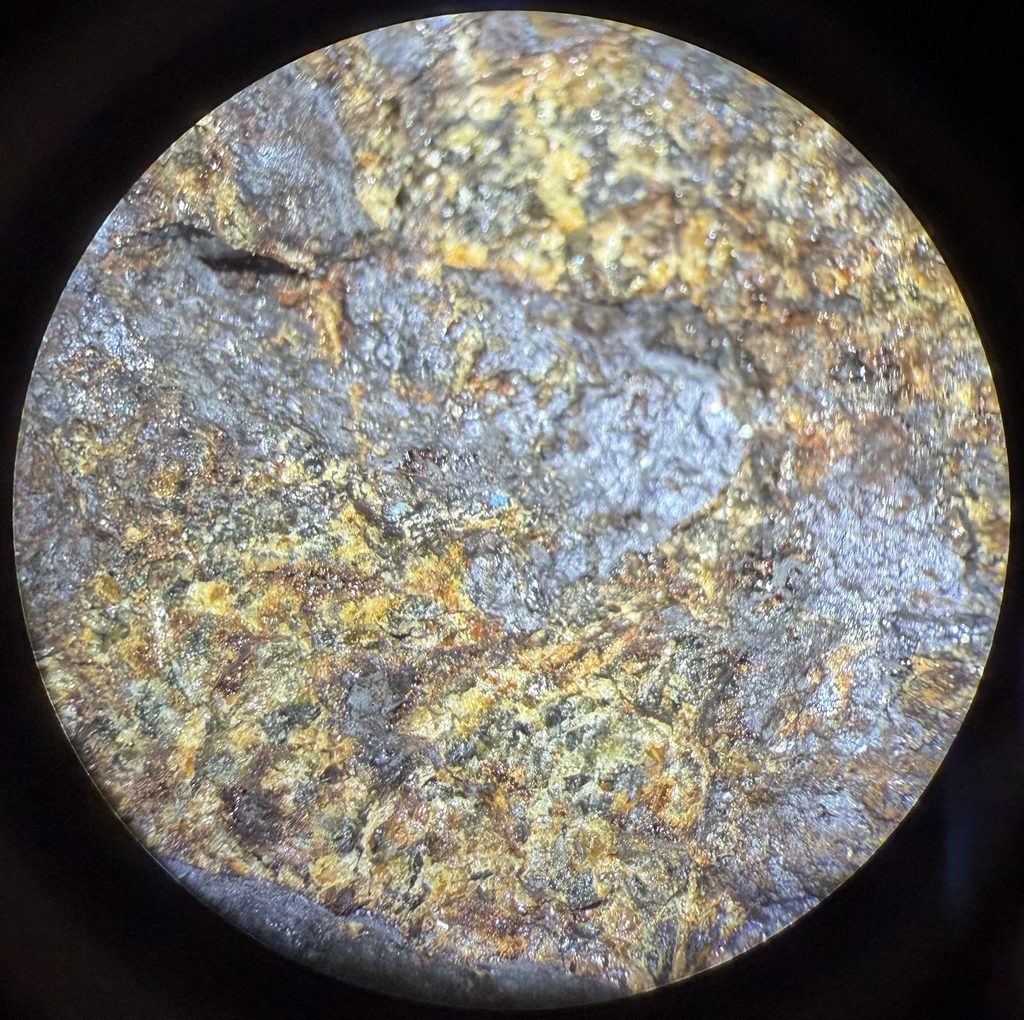
Mystery rock from the Sterling Hill mine collecting pile through a microscope. The small blue mineral in the center is another mystery. FOV is ~2 cm
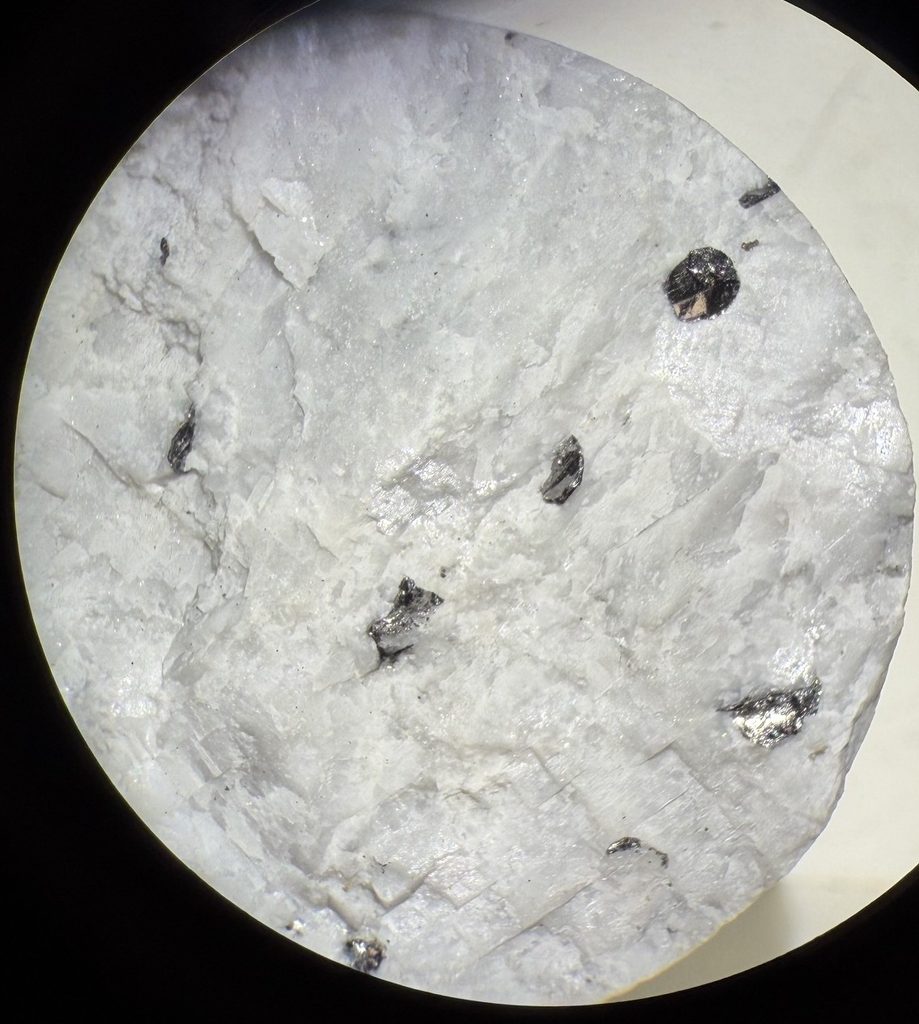
Graphite crystals in white marble in a diamond drill core. Coring is done to determine whether mining should continue and in which direction. FOV = 3.5 cm
All in all, the trip was very interesting. My interest in fluorescent minerals is a small part of my general interest in geology and minerals. In other words, I don’t collect minerals for their fluoresces. I prefer “white light” specimens. Consequently, except for some cores and the mystery rock, I brought home very little. For anyone who likes fluorescent minerals, the Franklin-Sterling Hill mines are hallowed ground.