I visited with Chris Anderson in May, 1987. We spent an 8-hour shift documenting the mine operations and geology. This page will document the operations. Photos were taken by Chris Anderson and are in Alan Goldstein’s collection.
According to mine geologist Eric Livingston, this may have been the only time that an eight-hour shift was recorded through photography of any fluorite mine in the Illinois-Kentucky fluorspar district’s history! (The first mine opened in 1835 in Kentucky and in the 1840s in Illinois. The text from the visit to the mine will be posted – when I can dig it out my files…
Mine headframe with a fisheye lensBack of headframe away from ore binsCompressor room – wide angle lensHoist operator. Our life was in his hands!Where we enter and leave to cage. The top is 868 feet – almost 90 stories of rock between us and the surface!Tom Rose (L) and Alan Goldstein in the cage that is attached to the skip – ore bucket. Fisheye lensThe “Jumbo” operating two horizontal drills into the ore face.This machine was hauled down in pieces and assembled in the workshop.The noisiest place on the planet! Ear protection critical.Pole mounted drill to blast away from the main tunnel. We’re 1,300 feet underground here!This work was in the north orebody. The Annabel Lee mined two separate deposits hundreds of feet apart.Mined out tunnels in the north orebody at 1300-feet down.Tom and Alan walk under an air duct. The air is full of water vapor and a little diesel exhaust.I’m inspecting the mine face looking for pockets. Barite and calcite are the white mineral. There is purple fluorite chunks but not much crystals.Chris Anderson poses 1300-feet down – deeper than any cave he ever photographed.The buggy we moved around in.The ore face at the 900-foot level in the south orebody.I’m inspecting a large pocket of mostly broken fluorite crystals. The pocket behind me had a small amount of flowing water. Chris Anderson poses with my rock hammer. Silhouette of Chris Anderson at the face of the fluorite deposit in the south orebody, 900-ft down.Drill holes in rock in the south orebodyOil & gas-filled calcite crystals on roof, south orebody, 900-foot level.Calcite crystals in brecciated limestone, south orebody, 900-foot level.Calcite crystals on roof, south orebody, 900-foot level.Chipping fluorite octahedrons during lunch break.I’m checking out a big pocket while Tom examines a piece of fluorite.Near silhouette of Chris Anderson in tunnel, 900-foot level, south orebodyAnother photo of Chris Anderson. Camera on tripod. He operates the flash. Walking in the dark is involved…Multiple flash photo of the mine tunnel. Note the roof bolts on the ceiling.Chris Anderson’s ghost. When you trip a flash and then move and do it again.Tom Rose scaling the roof. Dropping loose slabs before roof bolts can be attached.I’m watching Tom Rose drop rocks from the roof of the tunnel. Note roof bolts that keep the rock tight and safe.Tom Rose scales roof near a big fluorite pocket, south orebody, 900-foot level.Tom Rose scales roof. Note crystal pockets of fluorite to the left. They were drilled and blasted out the next shift.Front-end loader assembled in the mine’s shop. Carried down 868-feet in pieces.Small ore car for haul rock back to the shaft where it will be carried up to the ore hoppers on the surface.Small ore haulerSmall ore hauler backing up to get in position.Moving in to muck ore 900ft S orebody. That’s scooping out everything loose.Scooping ore, 900ft S orebodyMucking ore, 900ft south orebodyMucking ore 900ft, south orebody. Note the small amount of water.There goes the fluorite! 900-foot level, south orebodyEmptying rock into hauler, 900ft S orebodySmall ore haul loaded and on the move.Ore hauler heading to shaft.The grizzly and chute leading to the ore car that carries rock to the surface.Jackhammer and grizzly – the grate that allows a maximum size rock to pass through.Unloading ore into the grizzly.Dumping ore into the grizzly.Jackhammer breaking rock that drops through the grizzly.Jackhammer breaking rock that drops through the grizzly.Looking up at the roof bolts near the shaft.Shift change by the cage – time to get back to the surface! Where did the time go?
Examples of Minerals from the Annabel Lee Mine
Fluorite from the Annabel Lee mine
This specimen was obtained at the Cincinnati Geofair.
Calcite from the north orebody – it’s more needle-like than the south orebody calcite.
This specimen was obtained at a rock shop north of Cave in rock that was opened for about a year. It cost me $15 even though it is a large specimen.
Gypsum var. Selenite needle with calcite (left side)
This micro specimen was collected from the mine surge pile (ore dumped when the hoppers are full).
Stringy barite
Purchased at Palmer’s Rock Shop in Cave in Rock in the late 1980s.
Calcite on fluorite
Quite a few of these were collected from the south orebody.
Calcite crystal with gas bubble
This doubly-terminated crystal “exploded” a day or two later when a gas bubble (visible) ruptured along the calcite’s cleavage plane. Probably a pressure difference from 900 feet down to the surface. The townhouse smelled like an oil well until we opened the doors.
Calcite crystals on brecciated limestoneCelestine on barite-coated calcite over fluorite
Celestine is only one of a hand full of mines in the fluorspar district. It was abundant in this mine – I even found solid specimens on the dump.
Sphalerite crystals
Numerous sphalerite specimens were found on the surge pile. I’ve got some sphalerite boulders in my rock garden that sparkle today – 30+ years after they were collected.
I would ask you to close your eyes, but then you couldn’t read my story. Imagine if you could close your eyes and say ‘alakazam’ and go back in time to the location of the Falls of the Ohio State Park when the coral beds were alive! What would you experience if we could go back to the Devonian Period?
“ALAKAZAM!”
“Yuck! I have salt water in my mouth!”
That is not surprising, because the Falls of the Ohio – in fact most of the central and eastern United States – was covered under a shallow sea. Since we are talking magic, let’s put on a snorkel, mask and flippers and swim around to investigate beneath the waves. Oh, and don’t try to ask me any questions under water!
Look at all the corals! There are a lot of different shapes, sizes and colors. See that long, tall one? It is the largest horn coral in North America – almost four feet long! Most of that type is a foot and a half to two feet long (45 to 60 centimeters). The soft body of a coral is called a ‘polyp.’ Watch those soft tentacles; I don’t want you to get a nasty sting!
Why do corals sting, you ask? (Okay, I told you not to talk underwater so you won’t drown. I’ll ask questions for you!) Corals sting to capture food. They can paralyze their prey, to allow their slow moving tentacles to pull food into their guts where it will be digested. What do they eat? Whatever swims or floats by their tentacles. Small fish (if there were any around here), soft-bodied creatures, squid-in-shells called cephalopods, some crustaceans…
Now, look to your left. See those two mounds? Those are two different types of colonial coral. One has small polyps with a ring of tentacles about an inch across (2.5 centimeters); the other colony has really tiny polyps. You have to swim down close to see them – no touching! They are only a ¼-inch (3 millimeters) wide. The colony larger coral is related to the horn corals, even though it doesn’t look anything like it. We call them Petoskey Stones because they are famous as polished rocks along the shore of Lake Michigan near the town of Petoskey. At the state park, we call them Prismatophyllum. That is their scientific name.
The colony with the smaller coral polyps (remember, coral is not a plant!) is commonly called Honeycomb Coral. It is not related to horn corals, although is still a coral. If you look over here where the colony is dead, you can see the honeycomb pattern. It is a type of coral called Favosites, which means ‘honeycomb.’ If we were to swim around this area for a long time, you would see Favosites in all sizes – from more than 10 feet (3 meters) across to colonies smaller than your thumb.
Swim this way – I think I see a type of sponge – and no, it is not wearing square pants – or any clothing at all! This mound-shaped colony is almost as wide as you are tall! Look closely, you will see two differences from a coral. First, there are no tentacles. Sponges do not use stinging tentacles to trap food. Second, see those star-shaped patterns? Those allow the water to filter inside the sponge where the colonial animals can feed.
What? You don’t think it looks like a sponge? That isn’t surprising! It does not look like modern sponges. These have the lovely name ‘stromatoporoid.’ I know, it sounds like an Italian meatball sandwich. The more you snorkel, the more sponges you will see. They eat tiny plankton.
Tricky current, isn’t it. You really don’t even have to kick your feet to see new things. Look in this open white sandy area, between the larger colonies. See those little horn-shaped creatures? They are other types of horn corals. Notice that some lay against the sea bed, while others are shaped like little palm trees and are upright. If you swim down, you’ll see they all have stinging tentacles. They are different heights above the sea floor, so they aren’t in direct competition for the same food (mostly plankton or small animals that swim or float by).
Those bushy things over there are stag-horn coral. They are colonial corals that grow like a hedge, with lots of branches. Unlike a bush, see how the branches interconnect? They are related to the honeycomb corals (and also eat plankton).
What’s that? You found something? Let’s take a gander at it together. See that slender stalk with the flower-looking thing at the end? You found a crinoid – they are related to starfish. Imagine a starfish on a stalk, having long, delicate tentacles with tube-feet, and that’s a crinoid. Unlike corals, crinoid tentacles (really, arms) are made of tiny calcite plates. You would need a magnifying glass to see them. You want to guess what they eat? Right! Plankton!
Hey, look over here – see those large shells? Good guess, but they aren’t clams. They are an animal called a lamp shell or brachiopod. If you look at the shell closely, you will see they aren’t mirrors of one-another. With a clam, the top and bottom shells are mirrors of each other. With lampshells, the left and right side of each shell are mirrored. I’ll give you one guess – what do they eat? Correctamundo! Plankton!
See that pattern in the sand? It looks like it was made by small feet. Let’s follow them and see who made the tracks. There! Behind that patch of seaweed, looks like an underwater roly-poly, doesn’t it? You’re right, that’s a trilobite. These fellows are not common as fossils, even though they got pretty big. This guy is about three inches (8 centimeter) from head to tail, excluding his antennae. See how it rolls up when it gets startled? That is one of their defense mechanisms. What does a trilobite eat? Hah! Fooled you! They are scavengers and eat whatever they can find in the sand and mud in or on the sea bottom.
Do you notice something that is missing? Where are the fish, you ask? Good question, especially since the Devonian is called the ‘Age of Fish.’ Fish aren’t found in the coral beds. We don’t even find microscopic teeth or scales. They are around, but are too scarce to be found as fossils in the coral beds. When we examine the upper fossil beds, fish remains become more common.
Tired of breathing through that little tube? Let’s tread water and catch our breath. Look at your surroundings – blue skies, a few puffy cumulus clouds near the horizon.
“It’s warm! And why is the Sun in the northern part of the sky?”
Excellent observations, my friend! We are in the tropics – that is the only place that limestone can form on the ocean floor and where coral are most abundant. Stony coral don’t do well in cool water. As for the Sun, during the Devonian Period, the Falls of the Ohio area was almost 30 degrees south of the equator! That’s like southern Brazil! Since then, continental drift has moved the fossil beds north at a rate that is similar to how fast your finger nails grow.
Ready to return to the present?
“MAZAKALA!”
That’s ‘alakazam spelled backwards. We are now back to the present. You can open your eyes. What? You never closed them. Oh, how embarrassing.
Coral-rich Devonian sea floor preserved at the Falls of the Ohio.
Review Questions
What were the fossil beds like during the Devonian Period?
What do most animals eat?
Does a sponge use sting cells to capture food?
Was the Falls located north or south of the equator during the Devonian.
The roof of the shallow sea was rough and laced with stringers of foam. A terrible storm raged in the mysterious ‘above.’ Tremendous winds pushed the water, like it was trying to force the air deep enough to reach the white seafloor covered with all manner of creatures, living and dead. Storms seasonally swept through the continental sea, wreaking havoc on anything floating, swimming or lying on the bottom. Most plants and animals could sense changes in the pressure and had prepared themselves.
Bobbing along furiously was Tentacles, a small creature with dozens of leathery appendages with numerous muscular ridges. She tried to keep her shell vertical in the water, they way she always swam. Yet, it was a mighty struggle as the storm-induced currents lashed her from all sides. Every time she tried to turn into the flow, the current would change direction and she’d start to spin dizzily. She was young and had never before experienced something this horrible!
Tentacles lived within a coiled shell that was white, dappled with blue-gray and brown camouflage splotches. Her shell was special, not dull and simple like her distant cousin, the snail. It was divided by walls into chambers; each had a little perforation so she could control her buoyancy. On a whim, she could fill the chambers with gas causing the shell to rise. Or she could push the gas out by adding sea water which increased her density so she could sink toward the bottom.
At the moment she was filled with a combination of panic and confusion. Her instinct for self-preservation was still being perfected. To the left and right, she had large eyes with slit-like pupils. Her vision wasn’t great, but served her well enough. She knew how to keep an eye out for predators – the rare fish or larger versions of herself.
But the storm was an invisible predator. Tentacles didn’t understand the signals: the sky darkening the sun, the bright flashes of lightning above, the deepening waves on the roof of her world, whereas most other creatures had recognized them. She would not be caught out in the open the next time a storm appeared!
During a lull between giant crashing waves, the sea became calm enough for her to breath in water to fill her chambers, and exhale a jet through her siphon to shoot downward. With every meter farther from the deadly surface, the strength of the currents battering her shell became less terrifying. She zigged and zagged, looking from her left eye, then right in the direction she was moving.
Looking down, Tentacles saw a shoal of brachiopod shells mixed with fans of lacy bryozoans, but they offered no measure of safety against the storm. The empty shells were tumbling with the force of each wave above, mixing with lime mud giving the seafloor a milky wash. If she tried to shelter here, she might be pounded by a rolling piece of coral that would crack her beautiful shell. No, she would have to find someplace that was protected.
Muscles repeatedly pulsed water through her nostril-shaped siphon. The inward flow gave her necessary oxygen. The outward flow acted like jet propulsion and moved her backward. She struggled to stay high above the dangerous debris stirred up by the storm, but low enough to keep from being pulled in random directions by the fickle storm currents.
She caught a dark silhouette to one side and twisted to get a better view. Ah! What’s that? It looked like a small rise in the distance. She moved as smoothly as the rough conditions allowed until it resolved into a large coral colony. The shape was like a large saucer with hundreds of long tube-shaped polyps radiating outward. There was just enough space… Yes! She could get on the leeward side of the coral head where the ocean currents were blocked.
Safely hidden between shell-gravel and the bone-like coral, she breathed slower, taking in the oxygen-rich water through her gills. Her eyes adjusted to the darkness of the colony’s shadow – deepened by the ominously dark clouds in the ‘above.’ Resting comfortably for the first time in ages, she detected the slow movement of a small snail crawling on its tasty foot muscle across a fragment of bryozoan. She twisted slightly and stretched out two of her arms. Nimbly, she wrapped around the morsel and pulled it up to her beak. The horn-like jaws crushed the shell easily and she had her first snack of the day. Most of her food was creatures that lived on the seafloor, though as she grew larger, she would be able to ambush prey that drifted on the currents.
It triggered her appetite, so she carefully moved around looking for more live prey. A small trilobite darted out from under a flat brachiopod shell. Her tentacles snapped out after it. Ummm! Yummy! She dared not go out of her coral shelter.
While the storm pummeled her surroundings, she felt safe enough to fall asleep. She wrapped her longest leathery arm around a piece of rock sticking out of the mud to keep from drifting away. When she woke up, she was startled by the presence of another creature. It was like looking into the reflection from the surface of her sea.
Cautiously, her other long arm reached out to get a feel her neighbor. It had a coiled shell that was the same size and shape of hers. The mottling pattern was similar. When she touched it, the other startled and turned its lensless eyes in her direction. The rings of numerous ribbed tentacles had been retracted until she surprised it with her own touch. It had a familiar scent. Perhaps it was a long-lost brother or sister?
She had no lost love for the intruder. It seemed intimidated by her presence, making no aggressive moves – even backing away a few inches. She returned to her previous spot under the coral and retracted her own tentacles. Sleepiness washed over her as she kept one eye on her neighbor. They both dozed as the storm continued unabated around them.
When Tentacles awoke, the ocean felt different. It was quiet and peaceful. The light filtering down from the waves was muted, but not threatening. Her temporary companion was gone. She ventured out from the safety of the coral colony. Rising above it, she saw the polyps were open, their long jelly-like tentacles flicked lazily back and forth, matching the rhythm of the calmer currents. By instinct, she knew to keep away from them. While her arms could grab hold of prey and pull it in toward her mouth, the corals had tentacles that stung! They could paralyze and kill just by brushing against them. With a jet of water from her siphon, she moved to a safe distance.
Her poorly-developed eyes couldn’t pick up the pink clouds from the sunset. They opened wide, but didn’t have sensitivity to color. Returning to the bottom, hunger gnawed, so she began a relentless search for dinner. Brachiopods had little nutritional value with so little meat in the shell. They could be eaten in a pinch, but she wasn’t that desperate. Not yet. She knew where snaily morsels could be found and swam in that direction, poking and prodding in the detritus of the bottom along the way. Lots of other creatures that had to hold tight or hide during the storm were also hungry. She snapped up a tubeworm here, tried to yank out a clam there as she worked toward a large rocky mound coated with green hair-like algae as well as brown and purple fronds, swaying in the currents.
The pickings were good. She grabbed the first snail she found browsing on the seaweed. Its shell was almost as big as hers. It wouldn’t release its grip from the rock, so she snipped at the shell with her hard beak. Success! The soft, tasty meat inside was hers to enjoy.
Tentacles dined peacefully for a while on the assortment of mollusks that were herbivores. But she froze when a black silhouette blocked the light from the quarter moon and stars above. Slowly, very slowly she wrapped herself in a blanket of filaments and hid in the very algae that her own food was eating. Would that be enough? Her night vision was sufficient to see the moonlight glint off a row of snaggleteeth in its lower jaw.
The bane of her kind, this monster was a carnivorous fish called a coelacanth (SEE – la – kanth). She was small – not even a snack for that beast. Nonetheless, Tentacles knew that hunger would drive it to eat anything. She waited a long time after it had vanished in the darkness before releasing her grip on the greenery.
Today had been the most difficult in her young life: a terrible storm and a horrible fish. She had taken refuge beneath deadly coral tentacles and survived. Life was not easy in the Devonian Period. Tentacles hoped that hers would be long enough to mate and release her own eggs for the next generation.
Epilogue
Who was Tentacles? She was a type of mollusk called a cephalopod, which means “head – foot” because the tentacles or foot-like appendages were attached to her head, surrounding her mouth. Millions of years later, they would be called nautiloids – squid-like creatures related to Pearly Nautilus. During the Devonian, they were the dominant predator, after the newly evolved fish. In her sea, there were carnivorous fish around, but they weren’t abundant. Devonian cephalopods are very rare in limestone deposits. They swam and weren’t easily buried by storm debris.
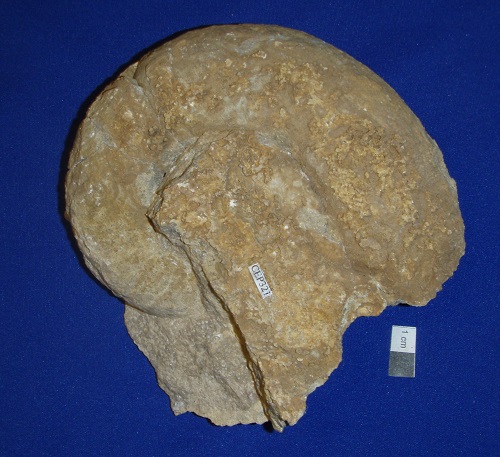
A rare, large coiled Devonian nautiloid cephalopod, from the Jeffersonville Limestone, Speed Quarry, Clark Co., Indiana..
Review Questions
Why was Tentacles given that name?
List two Devonian animals capable of eating Tentacles.
What did she like to eat?
How did the storm affect her?
Why are Devonian cephalopods rare as fossils?
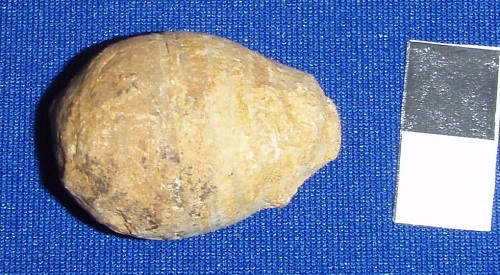
An uncommon bulb-shaped Devonian cephalopod from the North Vernon Limestone, Clark Co., Indiana.
This is the story of ‘Tiny’ the trilobite. Tiny started, like all trilobites, from a very small egg under her mother’s belly. She hatched and began her life as microscopic creature of the sea.
With only a couple of legs for swimming, she was at the mercy of the warm ocean currents. She could move around on her own, but could not avoid the moving water, unless she got behind a coral. But coral was not something any tiny creature would want to get near! They had tentacles covered with small stinging cells or sticky mucous. Either one would mean Tiny would die. Most of her brothers and sisters met that fate. Only a few of her siblings would live long enough to grow up.
Tiny was a lucky baby trilobite. She fed on alga that was even smaller than she was! And she grew… and grew. Her skin would get too tight, so Tiny would molt, shedding her old skin and replacing it with something new and improved. It was better because as she grew, her body was changing, adding more legs and segments to her middle.
Months went by. She was able to avoid stinging coral, the innards of clams and lamp shells (brachiopods) and thousands of creatures of all shapes and sizes looking for a small morsel to eat.
One day, her body became so large after molting many times, that she decided it was time to stop swimming and start crawling around on the sea floor. Her eyes were larger, with lots of small eyes (called eyelets) that pointed in almost every direction. She could see the blue of the sky above her water-world. She could see the green seaweed. Most important – Tiny’s teeny brain could see movement. If an animal tried to sneak up on her, to eat her for breakfast, she could bury herself in the sand and disappear.
Life on the sea floor as a young trilobite was no less dangerous than when she was an infant. There were still lots of animals that would love to eat Tiny! She used her many eyelets to watch for predators like squid-in-shells, small fish, corals, anemones and jellyfish.
Now a year old, Tiny was a couple of inches long. She used her sensitive feelers to seek out food. Whenever food was in front of her, Tiny would open her scoop like mouth on the underside of her head. It might be alga, bacteria, or very small creatures living on the sea floor. Moving forward and down, she would eat anything in her path. If it was nutritious, her stomach would digest it. If it wasn’t (like silt and mud particles), it would just go through her and out the back end.
She continued growing (and shedding her skin) and was now almost three-inches long. Tiny was no longer tiny, she was a full-grown adult trilobite! Was she out of danger? No! While the small predators could no longer eat her for breakfast, she could be a fine, tasty meal for larger animals. Squid-in-shells and fish were the biggest threat.
Tiny wandered around on the sea floor for years, always seeking the next meal, ever mindful of the danger of ambush from above or below. One day, she was minding her own business, basking in the warm, shallow ocean, when a shadow passed above her. Instinctively, she dug furiously in the gritty sea bed until only her eyes stuck out – and they were the same color as her surroundings. When the threat swam away, she waited a few minutes before pushing herself out.
Another time, a small cone-shaped squid-in-shell came over to investigate her. It was about the same size as Tiny. She tried to dig herself into the mud, but the creatures probing tentacles kept pulling her out. Tiny had another trick. She folded herself up like a pocket-knife, putting her head and tail together. Her legs, gills and feelers were all packed nice and safe inside her hard shell. (Kind of like a roly-poly, but flatter.) The curious young squid-in-shell probed his tentacles trying to figure out what Tiny was doing. Why wouldn’t she play with him? Eventually, he got bored and swam off.
Another day, Tiny (who wasn’t truly tiny any more), was looking for food when she detected another trilobite just like her! Now, trilobites didn’t get married, but they did mate and go their separate ways. Tiny laid eggs that rested protectively beneath, against her legs. Eventually, they would hatch and swim away like plankton, just like she started her life. She had several mates over the years, and her babies continued roaming the Devonian sea floor.
One day, the sky above the sea was very dark. Winds blew hard, pushing the water fiercely. She was deep enough that the waves didn’t bother her, but the ocean current grew stronger and stronger. She tried to fight the current, but she had become old and her legs just weren’t as strong as they use to be. She tried to bury herself, but the sand would float away rather than settle on top of her. Tiny was exhausted!
The storm current rolled her for a short distance until she got wedged under a rock. She was stuck. The sand piled around her, getting deeper and deeper until she was completely buried. Too weak to move, there she died. But that isn’t the end of our story!
The Earth went around the Sun 390 million times. One day, a young elementary school student was visiting the Falls of the Ohio State Park on a field trip. The class was exploring the upper fossil beds when the student came upon a rock with a funny-looking pattern on it. A fossil! He showed it to a park naturalist, who oohed and aahed over the discovery: a complete trilobite! How very rare! It is now preserved in the park’s Interpretive Center and will be put on display.
Tiny lived a long, long time ago. Geologists call her time the Devonian Period. In years, that would be about 390 million years ago, written out like 390,000,000. That was before people, before mammoths, before T. rex, even before reptiles! During the Middle Devonian, the kings of the world were fish. Trilobites died out – became extinct – by the end of the Permian Period, during the greatest extinction in Earth’s long history.
Trilobites started as tiny creatures like most marine life.
Review questions:
Is the story something that happened recently?
What creatures liked to eat baby trilobites? Bigger trilobites?
(This was originally published in the EXPO XIV Edition of the MAPS Digest in 1992. This article has been updated.)
Introduction
The Coral Ridge member of the New Providence Formation (Osagean, Middle Mississippian) provides a fascinating array of mollusks, echinoderms and other creatures. Yet, because of the paucity of collecting localities coupled with the low abundance, the fauna contains many poorly described species. This article will acquaint readers with the depositional environment, faunal abundance and collecting tips for the fossils which may be preserved in exquisite detail.
The Coral Ridge member and fauna were first described by Conkin (1957) from the Coral Ridge quarry of the General Shale and Brick Company, Jefferson Co., Kentucky. While some fossils are found in road cuts and small outcroppings, there are really only four documented localities where this fauna occurs. One is in Clark County, Indiana. The type locality has the most diverse fauna. More than 80 percent of the species are mollusks. Indeed, over 70 percent of the fossils (excluding traces) belong to a single species!
Stratigraphy and Paleogeography
According to Conkin (1957, 1972), the New Providence Formation consists of three members, in ascending order they are: the Coral Ridge member, the Button Mold Knob member, and the Kenwood Siltstone member. The formation is part of the Borden Group (Figure 1.). Some geologists list the Borden at formational level and assign the New Providence a ranking of member. The Coral Ridge and Button Mold Knob members are not differentiated because the lithology is similar (Figure 2.). The Coral Ridge is considered to be earliest Middle Mississippian age.
During the early Middle Mississippian, sedimentation in the east-central United States was dominated by deltaic deposition. Called the Borden delta, the sedimentary rock show evidence of conditions on the basin floor, the prodelta or foot of the delta, the delta slope, and the delta platform or top. Each portion of the delta had a different environment which supported various faunas.
The Coral Ridge fauna is associated with the basin beyond the delta’s farthest edge in the deepest water. During the earliest Mississippian, the environment was anaerobic, forming black carbon-rich shale. Conditions gradually changed to an oxygen-poor sea floor, as indicated by bioturbated greenish clay shale. This allowed life to exist in patchy communities where conditions were best-suited under a less-t犀利士han-ideal situation.
Pyritic steinkerns (internal casts) are the most common form of fossil preservation. Trace fossils of animals that burrowed in the mud may be preserved as pyrite in three-dimensions. The occasional fossil with the external shell ornamentation preserved shows incredible detail. The oxygen-poor conditions were likely anoxic beneath the top few centimeters of sediment (Kammer, 1985) allowing microenvironments for the sulfate-reducing bacteria. They would react with detrital iron to in-fall the empty aragonite exo-skeletons with pyrite. In altered to marcasite, siderite, goethite (“limonite”) and quartz. Fossils may be found partially geodized. In addition, conularids are preserved as phosphatic mineralization.
Paleoecology
The Coral Ridge fauna does not have the diversity of other Osagean faunas. The communities were likely of low abundance or only an extremely low number of exoskeletons were preserved. The fossils are dominated by small individuals. Stunting is thought to be the primary mechanism. This cannot be proven in most mollusks, but can be seen in the goniatites. With the exception of the corals (primarily a single species, Amplexus fragilis) the bulk of the fossils are smaller than one cubic centimeter. Very rarely, large gastropods, goniatites and nautiloids are found, but these make up less than one percent of the population. Examples include: Glabrocingulum – 5 cm, Loxonema – 7 cm, Sinuitina – 5 cm, Michelinoceras – 30 cm, and an unidentified coiled nautiloid – 8 cm.
Epifaunal deposit feeders, animals that can move around on the sea floor, dominate. Most are archaeogastropods (Kammer, 1985) – see Table 1. They were likely ingesters of detrital organic material. The actual depth of the basin is unknown. Kammer (1985) indicates that it was likely below the photic zone, however the abundance of tabulate corals indicate that light was present, though at very low levels. (Most tabulates were attached to crinoid columns, elevating them above the muddy sediment.)
The most abundant archaeogastropod is Glabrocingulum ellenae (Conkin), making up 72 percent of the fossils found and 92 percent of the epifaunal deposit feeders! It ranges in size from one millimeter to about three centimeters across. About one in 100 shows external ornamentation, many are steinkerns.
Less common is Trepispira, similar in form to Glabrocingulum which requires close examination to distinguish as a steinkern. The bellerophont gastropod Bucanella is much rarer, as is platycerid Orthynochia (as listed by Conkin, 1957). This snail is coprophagous, situating itself over the anal opening of crinoids.
The monoplacophoran Sinuitina annaea Conkin is uncommon when compared to Glabrocingulum populations, but this mollusk is typically scarce.
Trilobites are uncommon epifaunal deposit feeders. The Coral Ridge fauna is represented by two species. Phillibole conkini Hessler is the more common form, but it is still very rare. Brachymetopus spinosus (Herrick) is less common. Occasion phosphatic nodules are found composed of trilobite fragments – some of them are from large individuals.
Epifaunal suspension feeders including brachiopods, corals and echinoderms, make up about half of the species, but comprise less than 13 percent of the fossils found (table 1). Apparently circulation permitted enough food into the environment to allow a variety of epifaunal suspension feeders, but they did not thrive.
Favosites corals are found surrounding crinoid columns. The soft, muddy seafloor wouldnot allow larva to get established. In addition, the elevated colony could feed a few centimeters higher above the basin floor. Colony distribution on the crinoid columns is asymmetrical, indicating a growth preference, likely facing nutrient-bearing currents.
The tiny Crurithryis? sp. is the most common brachiopod. At one to five millimeters in width, this diminutive suspension feeder was the most successful animal living on the seafloor. It is more common than the infaunal suspension feeders which, while buried in mud, fed essentially from the same zone.
Echinoderms are highly diverse, but identifiable plates and calices are very rare. Blastoids with fused plates may be found as a complete head or theca. Granatocrinus kentuckyensis (Conkin) is the most common blastoid. Crinoid plates are usually bound by soft tissue. Upon death they disarticulate quickly. The depth of the Coral Ridge fauna precluded rapid storm burial, as a result, crinoidal material is typically column sections, single plates and rarely arm sections or basal cups. Crinoid holdfasts are the type with cirri spreading away in all directions at regular or irregular intervals along the length preserved. The longest crinoid column found by the writer is about 20 cm.
A substantially smaller number of fossil were infaunal deposit feeders, consisting of at least three genera of bivalves and a rostroconch, Psueomucelens cancellata (Hyde) (table 1). The variety of size and shape of the non-siphonate clams (Ctenodonta sp., Nuculopsis sp. and Phestia sp.) suggest a division of food resources in the sediment (Kammer, 1985). Soft-body infaunal deposit-feeders were abundant, as indicated by bioturbation of the shale and numerous pyritized trace fossils, including Scalarituba missouriensis Weller.
Unlike other Borden delta communities, the Coral Ridge fauna is relatively rich carnivorous cephalopod. Four goniatites and several nautiloids have been report (Work and Mason, 2004). The small goniatites Polaricyclus conkini Work & Mason and Polaricyclus ballardensis Gordon make up five percent of the fossil collected for this report. Other Cantabricanites? greenei (Miller)and Winchelloceras knappi Work & Mason are considerably less common. A larger goniatite is occasionally found at the Clark Co. locality. The distance above the seafloor that these cephalopods lived is not known.
Although the nature of Paraconularia sp. is not well understood, it is found in phosphatic exoskeletons with the Coral Ridge fauna. It is typically associated with the siderite nodules and in the double cone-in-cone nodules. These nodules may consist of numerous fragments or contain a single specimen preserved three-dimensionally. Opercula preservation is very rare.
Table 1
Species Number** % Fossil Feeding Notes
* = Photograph of this fossil at end of the article.
** Number in original article. Some species are now known with additional specimens (i.e., Barycrinus body plates).
Glabrocingulum ellenae (Conkin) 1024 72.2 MG ED Trepispira not listed in original publication. It is probably 2- 4% of the number.
Rugose Corals undifferentiated 141 9.4 CR ES Amplexus fragilis dominates, with Cyathaxonia and Baryphyllum in smaller numbers
Polaricyclus* (both species) 79 5.3 MC C This study done before the species were named.
Sinuitina annaea Conkin 42 2.8 MM ED
Loxonema sp. 36 2.4 MG ED Conkin (1957) lists L. delphincola
Crurithryis? sp. 22 1.4 BA ES
Michelinoceras sp.* 16 1.1 MC C
Cantabricanites? greenei (Miller)* 12 0.8 MC C
Nuculopsis sp. 12 0.8 MB ID
Phestia sp. 10 0.7 MB ID
Cyrtina-like brachiopod* 10 0.7 BA ES
Psueomucelens cancellata (Hyde) 8 0.5 MR ID
Winchelloceras knappi Work & Mason* 8 0.5 MC C
Ctenodonta sp. 7 0.5 MB ID
Granatocrinus kentuckyensis (Conkin)* 6 0.4 EB ES Highly ornate
Rhynchopora beecheri (Greger)* 6 0.4 BA ES
Phillibole conkini Hessler 4 0.3 AT ED
Punctospirifer? subelliptica (McChesney) 4 0.3 BA ES
Orbiculoidea sp.* 4 0.3 BI ES
Paraconularia sp. 4 0.3 CC ES
Bucanella sp. 3 0.2 MG ED
Sponge spicules, indeterminant 3 0.2 P ES
Synbathocrinus dentatus* 2 0.1 EC ES Conkin (1957)
Cyathocrinites australis Kammer* 2 0.1 EC ES Isolated plates
Magnumbonella? sp. 2 0.1 BA ES
Catillocrinus tennessensis 2 0.1 EC ES
Hadroblastus kentuckyensis?* EB ES Conkin (1957) lists Codaster jessieae; Xenoblastus sp. was in Conkin & Conkin (1976)
The following specimens were represented by a single specimen during the original study, although additional specimens have been found since.
Orthonychia sp. MG CO
Favosites sp. (F. divergens?) CT ES Conkin (1957)
Barycrinus – B. sculptis? EC ES Additional collecting revealed this to be more common than Synbathocrinus or Cyathocrinites.
Taxocrinus sp. EC ES
Platycrinites hemisphericus EC ES
Euryocrinus veryi (Rowley)* EC ES Found after initial study
Dichocrinus* EC ES Found after initial study
Dielasma? sp. BA ES Poorly preserved specimen, Conkin (1957) lists Girtyella.
Eumetria sp. BA ES
Brachymetopus spinosus (Herrick) AT ED
Crinoid columns and trace fossils are not included in this survey.
For collectors, there is one fossil considered abundant among this fauna – Glabrocingulum ellenae (Conkin). Trace fossils have been excluded because a single Scalarituba missouriensis Weller make break into many fragments. As a group, corals are relatively common. Amplexis fragilis (White & St. John) is often geodized and may be enlarged to as much as 15 cm in length. Multiple visits to the collecting sites does not change the percentage of the most common eight species, but the rarest (percentages <0.5 percent) have the changes from trip to trip. It is these fossils that add “spice” to the collecting trips.
The Collecting the Fauna
There are only four published collecting localities (Conkin, 1957; Kammer, 1985). This writer has collected from two – the quarry of the General Shale and Brick Company and the old Louisville Cement Company quarry near Sellersburg, Indiana. Both are private property and not accessible by non-scientists. The Indiana locality has more abundant Winchelloceras goniatites.
The sparse and patchy nature of this fauna means collectors must be very thorough. Without a systematic sweep of the outcrop, it is quite easy to miss the only Granatocrinus or Phillibole that has weathered out. It is also easy to miss a cluster of mollusks. Glabrocingulum is usually found in clumps of four or more within a 30 square centimeter area.
The soft greenish shale weathers rapidly. Unlike some formations where a single collector can stripe an outcrop for decades with a single visit, the nature of the lithology is self-sustaining. A couple of months (or several good downpours) between collecting trips is sufficient to re-concentrate the fossils. The rarest fossils are uniformly (and widely) distributed.
This article is not designed to aid the collector to gain access to known collecting sites, only provide information about an unusual Middle Mississippian fauna. Pyrite-replaced fossils are found in similar-aged formations throughout Kentucky. They are never abundant, particularly when compared to the faunas of the Glen Dean and other Upper Mississippian formations.
References
Ausich, W. I., Kammer, T. W., and Lane, N. G., 1979, Fossil communities of the Borden (Mississippian) delta in Indiana and northern Kentucky. Journal of Paleontology, v. 53, p. 1182 – 1196.
Conkin, James E., 1957, Stratigraphy of the New Providence Formation (Mississippian) in Jefferson and Bullitt Counties, Kentucky, and Fauna of the Coral Ridge Member. Bulletins of American Paleontology, no. 168, p. 109 – 157.
Conkin, J. E. and Conkin, B. M., 1972, Guide to the Rocks and Fossils of Jefferson County, Kentucky, Southern Indiana, and Adjacent Areas. University of Louisville Printing Service, 331 pp.
Conkin, J. E. and Conkin, B. M., 1976, Guide to the Rocks and Fossils of Jefferson County, Kentucky, Southern Indiana, and Adjacent Areas, second edition. University of Louisville Printing Service, 239 pp.
Kammer, T. W., 1982, Fossil communities of the prodeltaic New Providence Shale Member of the Borden Formation (Mississippian), north-central Kentucky and southern Indiana. PhD Dissertation. Indiana University, Bloomington, IN, 301 pp.
Kammer, T. W., 1982, Basinal and prodeltaic communities of the Early Carboniferous Borden Formation in northern Kentucky and southern Indiana (U.S.A.). Palaeogeography, Palaeoclimatology, Palaeoecology, v. 49, p. 79 – 121.
Weller, S., 1914, The Mississippian Brachiopoda of the Mississippi Valley Basin, Illinois State Geological Survey, Mon. 1, 508 p. (2 volumes).
Work, D. M., and Mason, C. E., 2004, Mississippian (Late Osagean) ammonoids from the New Providence Shale Member of the Borden Formation, north-central Kentucky. Journal of Paleontology, v. 78, p. 1128 – 1137.
Photo Album of Fauna
Brachiopods
Ambocelia sp. – a very small brachiopod (1 – 3 mm)A Cyrtina-like spiriferid brachiopod, ~ 1 cm wideOrbiculoidea sp. – a tiny inarticulate brachiopod attached to a crinoid columnRhynchopora beecheri – a rhynchonellid brachiopod
Bryozoans
Pyrite-coated Fenestrate Bryozoan
Cephalopods
Cantibricites greeni – a flat goniatite up to 1.5 cm wide.Michelinoceras sp. – an orthocone cephalopodPolaricyclus attached to a nodule.Winchelloceras a goniatite cephalopod about 1 cm across.
Echinoderms – Blastoids (All pyrite-replaced)
Granatocrinus kentuckiensis side view with very ornate platesGranatocrinus kentuckiensis top viewHadroblastus kentuckiensisHadroblastus kentuckiensis showing thecaEuryocrinus veryi – the only specimen found – goethite-replacedEuryocrinus veryi bottom view
Echinoderms – Crinoids (All pyrite-replaced)
Assorted pyrite-replaced crinoid body platesBarycrinus body platesBarycrinus, the columnal below the calyx basal platesCatillocrinus tennessensis body plateCatillocrinus tennessensis anal tubeCyathocrinites body platesDichocrinus cupHoldfast wrapped around a columnPlatycrinites columnal with its odd shapePlatycrinites column with small nodesSynbathocrinus cup with columnalUnidentified crinoid armsUnidentified crinoid cupUnidentified crinoid cup (bottom)Unidentified crinoid cup (interior)
One of the most collectible non-gem minerals on Earth. It’s calcium fluoride, the primary source of fluorine, a highly reactive element and an important industrial chemical. Fluoridated toothpaste and water get their fluorine from this mineral.
Fluorite is found throughout the world. Major deposits are in the U.S. (particularly Illinois & Kentucky), Mexico, South Africa, England, Spain, and France. But collectible minerals come from even minor, non-economic deposits.
Crystals have perfect cleavage (they break really easily!) and are soft – 4 on Moh’s hardness scale. That combination makes the cut stones a bad choice for jewelry. One tiny bump and it can be scratched or crack. Drop it and it’s history!
Fluorite occurs in virtually every color and hue but in its purest form is completely transparent. Purple, blue, yellow and green are the most sought crystals. The cube is the most common form, but other shapes include octahedron, tetrahexahedron, dodecahedron, etc. – and combinations thereof!
I have written extensively about the fluorite deposits of southern Illinois and western Kentucky (see my bibliography). The “fluorspar district” has a dedicated page, so the specimens shown here are from other locations.
Nancy Hanks claim, Unaweep Canyon in Mesa County, is a mine known for green fluorite.
Botryoidal fluorite formed from intergrown crystals
Wagon Wheel Gap Mine, Saguache County, is well known for fluorite,
Purple cubes – a more classic crystal habit and colorStalactitic fluorite composed of a myriad of tiny cubesCleavage chunk of fluorite showing bands of purple and white with green in the center.Complex intergrown cubesLarge white fluorite cubes from Stope 1.
Indiana
Mathes Quarry, Harrison Co. (currently owned by Vulcan Materials which has ceased operations)
Dolomite on Fluorite – fluorite fills in Syringopora coral tubes in the upper part of the photo.
Corydon Quarry, Harrison Co. – is best known for pink dolomite and calcite, but also has a fair amount of fluorite scattered in pockets. Fluorite is usually the first mineral to form in pockets and is often partially or completely covered by later dolomite.
Fluorite in small vugs without other associated minerals.
Kentucky
Irvington Quarry, Breckenridge Co. – perhaps the best fluorite outside of the western Kentucky fluorspar district and the central Kentucky Mineral District. Purple and yellow cubes in a specific layer that is rarely mined these days.
Fluorite and CalciteFluorite surrounded by calciteYellow fluorite – fluorescent & phosphorescent in UV, with dolomite
Muldraugh dome in Meade County, at Fort Knox – Geodes bearing isolated, usually etched, fluorite cubes occur in geodes found near the center of the geological a structure.
A fuzzy, partially dissolved fluorite cube (about 1 cm wide) from a geode. A real oddity!
Hayden Mine (East Faircloth vein), Mundy’s Landing, Woodford Co. near the Kentucky River. These photos were from a summer 1989 collecting trip. Photos inside the mine will eventually be posted.
Fluorite and bariteAlmost gray fluorite crystals with mounds of barite that resemble that mineral from Elmwood mines in Tennessee.Fluorite and bariteFluorite cockscomb around bariteSometimes you can hold the specimen so the barite is hidden behind the cubes – due to preferential accumulation of the mineral on one side.
A temporary quarry was established on the Bluegrass Parkway at KY33 during road work. It was buried and covered in grass and is no longer visible – much less collectable.
A lustrous yellow cube about a cm long.Fluorite with dolomite and an unidentified white powdery mineral. 3 cm FOVVugs with fluorite and dolomite in limestone.Vugs with fluorite in large purple over yellow cubes & dolomite in limestone.Closeup of a cube in the above specimen sowing the “city scape” surfaceAnother fluorite cube in same specimen showing only a small amount to purple fluorite over yellow..Relatively large fluorite crystals with dolomite in limestone vug.About half dolomite and fluorite fill this specimen.
Idaho
Keystone Mountains, Idaho – a location described to me by economic geologist Allen Heyl that I forwarded to Idaho collector Lanny Ream.
Fluorite in small cubesVuggy mass with small blue cubes
New Mexico
There are many fluorite occurrences in New Mexico. Some are on claims others on private ranches where collecting is no allowed.
Blue fluorite is common at the Blanchard Claim / mineQuartz and blue fluorite from the Blanchard Claim / mine.
Fluorite, almost botryoidal. Label says “Redrock, New Mexico.” Based on a photo of the specimen, Mineral expert Ray Demark thinks it is from the Great Eagle mine, Telegraph district, Grant Co., New Mexico – which isn’t far from Red Rock. Collected in 1993. Obtained in trade from Kevin Ponzio (Wisconsin) at the 2009 Kyana Geological Society show.
Ohio
The Silurian limestone quarries in Ohio are famous for fluorite. It is usually yellow or brown due to organic inclusions like petroleum. As such, they fluoresce brightly.
Fluorite from Auglaize, Ohio. View about 2 cm
Wyoming
Banded fluorite from the Big Creek Mine, Encampment, Wyoming. Ex-David Horn specimen from his great uncle’s collection.
Fluorite – Calcium Fluoride – became an important mineral in the 1880s when it was found to be an ideal flux to purify molten iron. Since then, it has found thousands of other industrial uses. During World War II, miners and anyone associated with the fluorspar mining industry were not allowed to join the fight in Europe or the Pacific. They had to produce ore for the war effort. Anyone who slipped away to join the army were sent home to work the mines!
Fluorite occurs in many colors. In the district, shades of purple and yellow were most common in the bedding replacement deposits, while white and brown were common in the veins. Blue is well-documented and highly sought by collectors. Green was found in the Rose mine in Hick’s dome. I found pink crystals at Conn’s mine in Pope Co. In general, most fluorite doesn’t fluoresce in the fluorspar district, except from oil inclusions. Fluorite around Hick’s dome has enough rare earth elements so it glows bright blue!
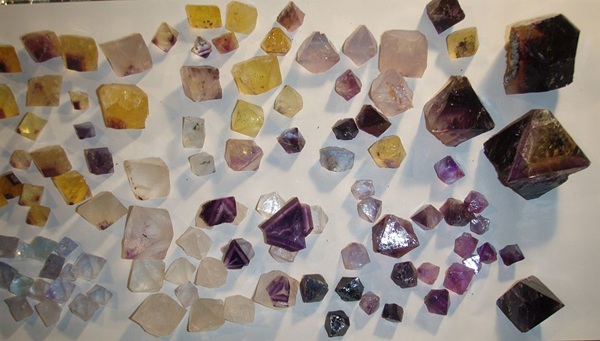
Smoky blue fluorite with caliche from Conn’s mine, Pope Co., Illinois. Collected in 1984. Smoky blue fluorite from Conn’s mine, Pope Co., Illinois. Collected in 1984. Zoned fluorite cut to show white and purple inside, from Conn’s mine, Pope Co., Illinois. Collected in 1984. A chunk of fluorite cut to show blue and purple inside, from Conn’s mine, Pope Co., Illinois. Collected in 1984. Pink fluorite with cerussite and galena, from Conn’s mine, Pope Co., Illinois. Collected in 1984. FOV ~2 cm Yellow fluorite from Conn’s mine, Pope Co., Illinois. Collected in 1984. Yellow cubes with a little purple. Back contains corroded crystals coated with tiny quartz needles. Conn’s mine, collected in 1984.Purple over yellow fluorite, from Conn’s mine, Pope Co., Illinois. Collected in 1984. Smoky blue fluorite with caliche from Conn’s mine, Pope Co., Illinois. Collected in 1984. Fluorite dusted with barite, old Austin Lead mine, Hastie’s Quarries, Cave in Rock, Hardin Co., Illinois. Collected in 1983. Fluorite dusted with barite, old Austin Lead mine, Hastie’s Quarries, Cave in Rock, Hardin Co., Illinois. Collected in 1983. Fluorite cube cluster, old Austin Lead mine, Hastie’s Quarries, Cave in Rock, Hardin Co., Illinois. Collected in 1984. Fluorite matrix specimen cut with a diamond saw showing crystalline fluorite and a seam of barite on the back. Collected October 26, 1984 from the dump on the north side of the old Austin mine.Fluorite with iridescent goethite (iron hydroxide) coating. Old Austin Lead mines, collected in 1984. FOV ~ 2 cmBitumen coating lustrous amber fluorite cubes. Old Austin Lead mine. Purple over yellow fluorite surrounded by shale. Oxford Cut, Collected summer, 1987.Mass of purple fluorite crystals protected by wet clay when found. Oxford Cut, Collected summer, 1987.Large purple fluorite crystals protected by wet clay when found. Oxford Cut, Collected summer, 1987.Fluorite chip showing “Mercedes” pattern on the corner axis. Diamond drill cores on solid fluorite found in Allied Chemical Co. core dump by Victory mine shaft.Fluorite octahedra chipped by Alan. A small part of his octahedron collection.
Ben E. Clement Museum Fluorites
Ben E. Clement Mineral Museum Specimens
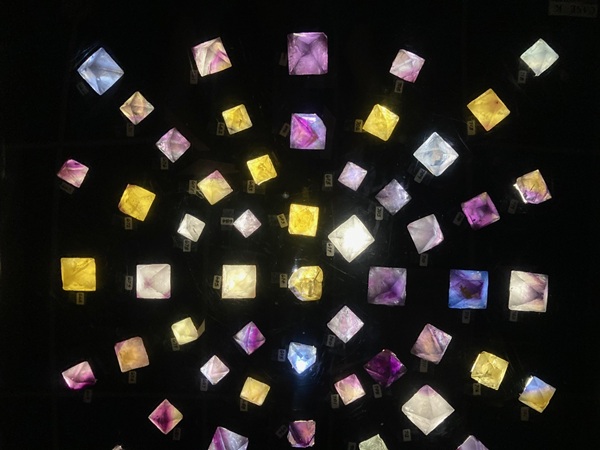
Backlit fluorite octahedra at the Clement Mineral Museum
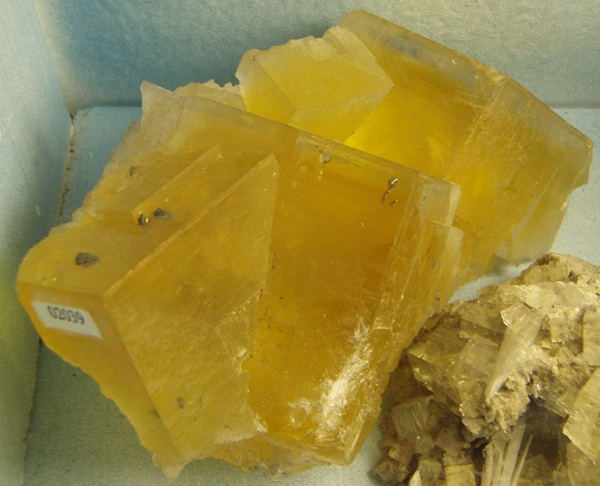
Yellow fluorite with chalcopyrite. Specimen 2039.
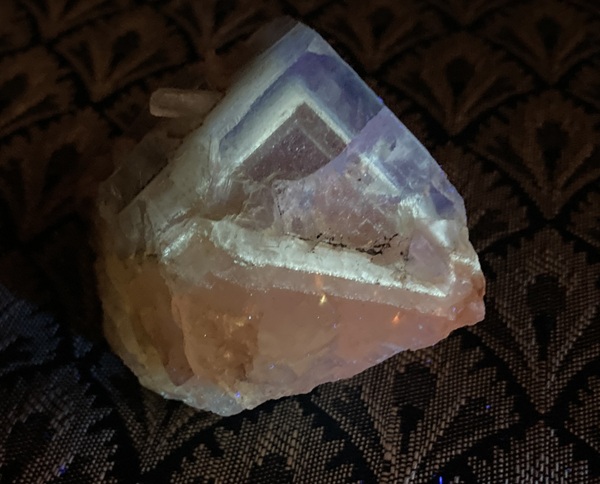
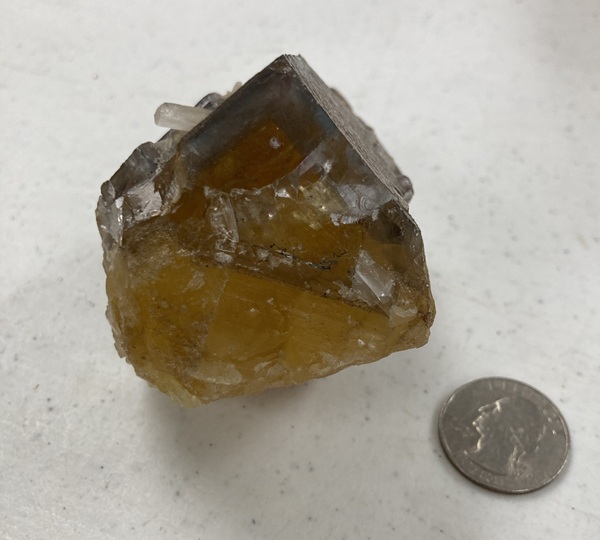
Fluorite with a fluorescent phantom of petroleum inclusions. Clement Mineral Museum specimen.
Fluorite crystal shown above under normal light, blue over yellow.
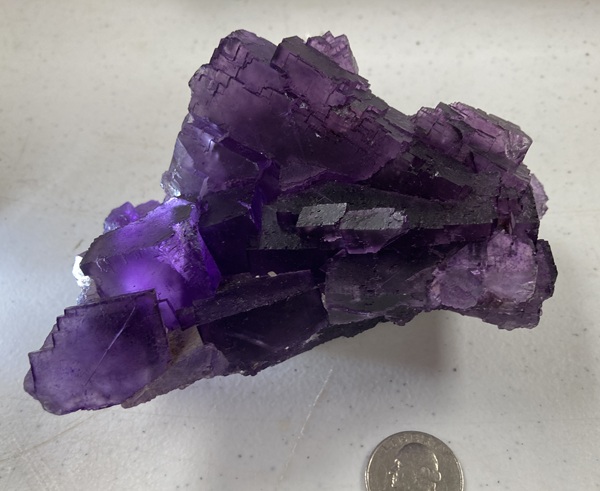
Complicated purple fluorite crystal cluster. No mine information available.
Text: This fluorite specimen is a gem in the field of gems was probably found before 1919 (before I [Ben Clement] came in Ky. Mr. [Edwin] Reed[er] was great [mine] engineer and a man with a love of minerals – my first desire to collect and my inspiration came from Eng. Redd[er]. He had a fine family always good to me for which I was grateful. See this specimen in sunlight.
Alan’s comments: This specimen looks like the Benzon mine (Cave in Rock) fluorite I saw at the Smithsonian in 1988. (Though smaller.) Benzon mine was at the current location of the Hastie’s mines, and may have included the Austin Lead, Oxford Cut, Cleveland, and Green-Defender mines.
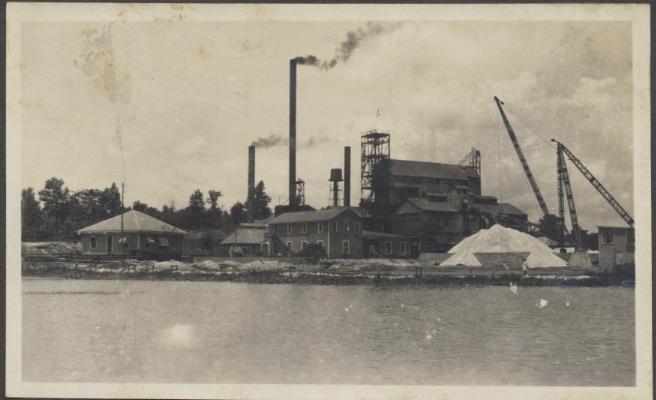
I was given historical photos of the fluorspar district by Edwin Reeder’s great niece in the late 1980s. She took a ‘Geology of Kentucky’ class I taught. Edwin Reeder was killed in an automobile accident in Cave in Rock in 1931. He was never married and had no children.
Edwin Reeder photo of the Rosiclare mill complex in 1919.
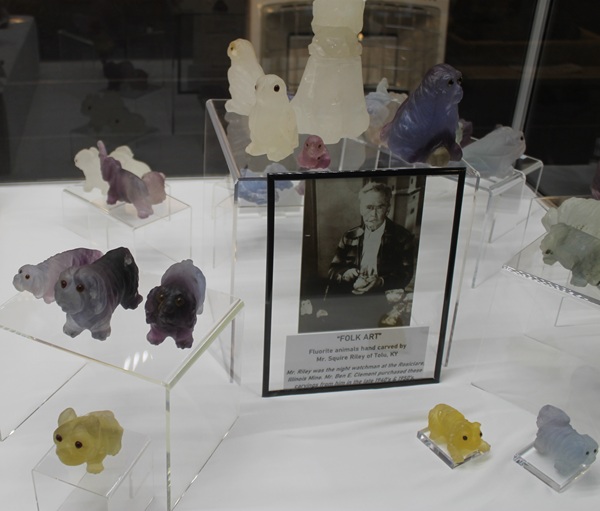
Squire Riley fluorite carvings in the Clement Mineral Museum collection.
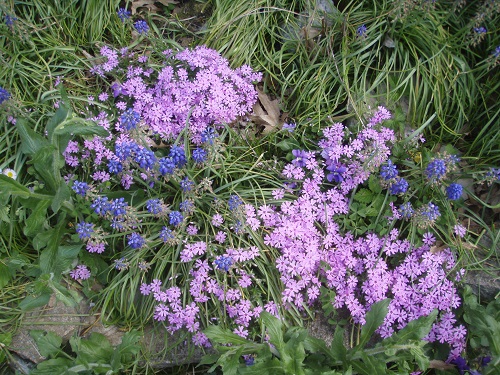
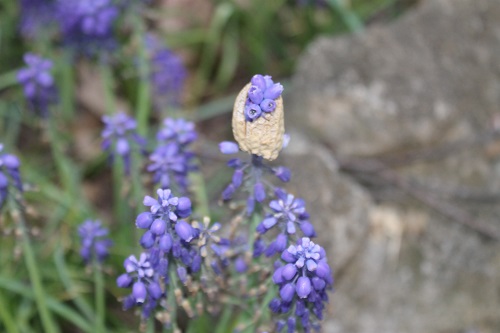
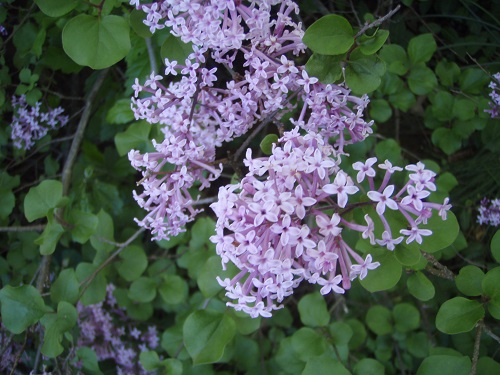
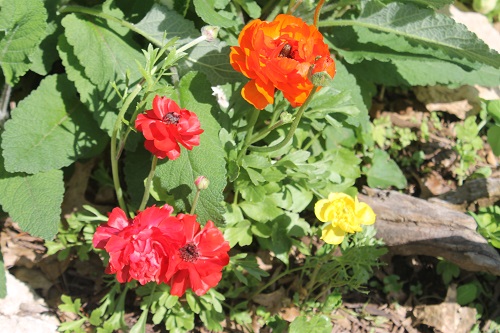
This gallery includes native species and my favorite garden flowers. Look for information with each photo. I live in plant zone 6. I’m using the most common name although sometimes it might be the Latin name.
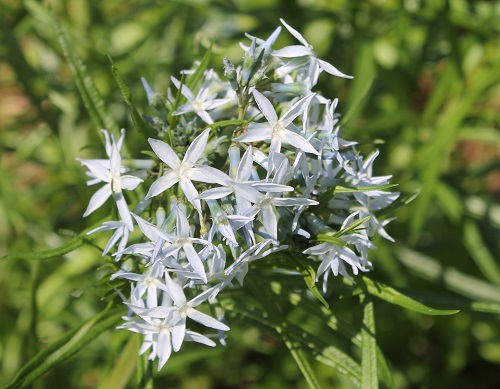
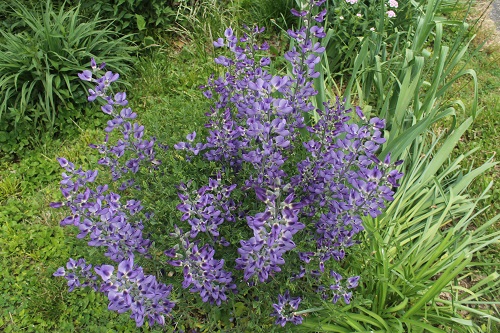
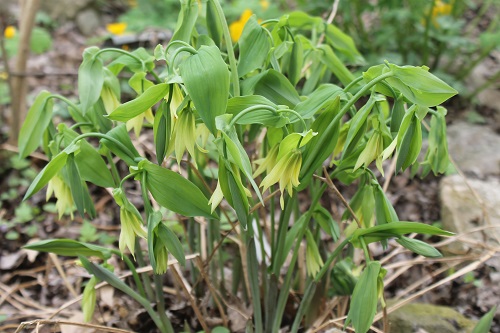
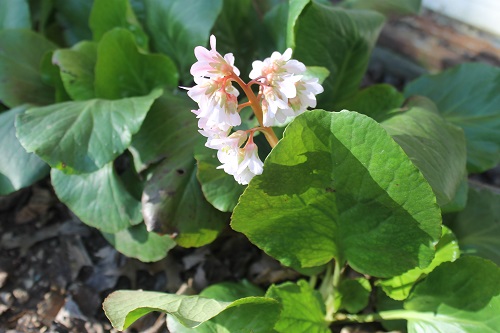
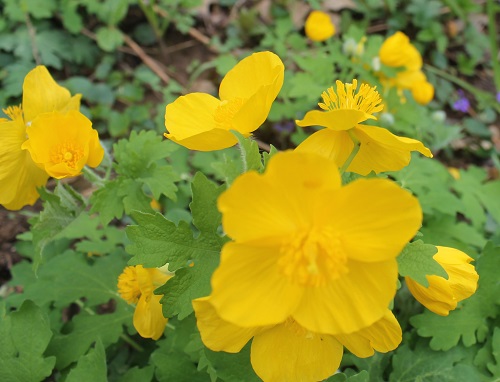
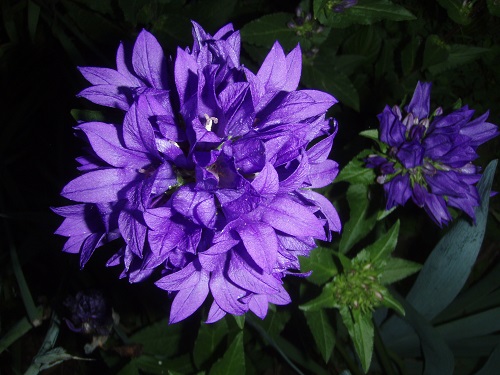
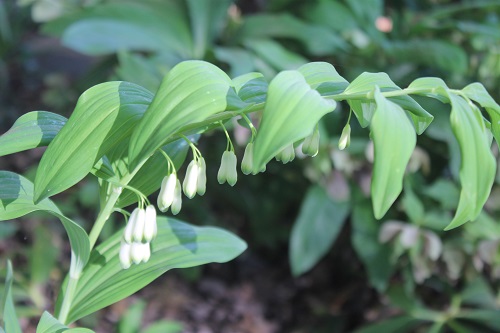
Threadleaf or Arkansas Bluestar blooms in April, gets about 6-feet wide, 3-feet tall and turns golden yellow in the fall.Baptisa australis var. minor, dwarf False Indigo, is like its larger variety with beautiful flowers.Bellwort is native plant that blooms in the spring.Bergenia “Baby Doll” is a shade-loving semi-groundcover that blooms in March. My plants don’t flower every year.Celandine Poppy is a native that blooms from late March until December. It spreads through “exploding” seed pods.Clustered Bellflower (Campanula glomerata) isn’t just a beautiful flower, it’s a groundcover. Combination of Creeping Phlox “Candy Stripe” and Grape Hyacinths – it’s a long-lived plant.Grape hyacinths grow through a peanut shell left in the ground by a squirrel.Korean Lilac is a small, long-lives shrub. The fragrant blooms pass all to quickly! Our plant is almost 30 years old.Ranunculus is a colorful flower that looks like a poppy.Solomon’s Seal is a native plant with pendulous flowers in the spring.
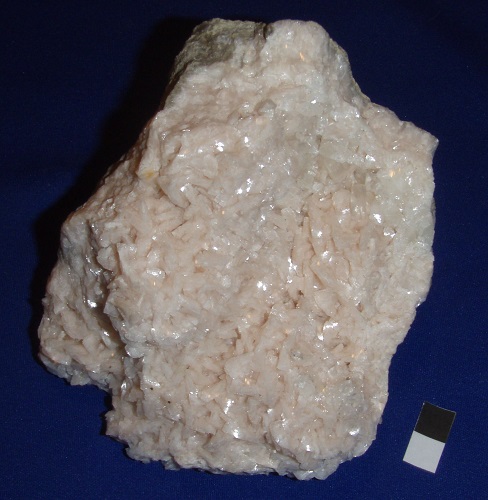
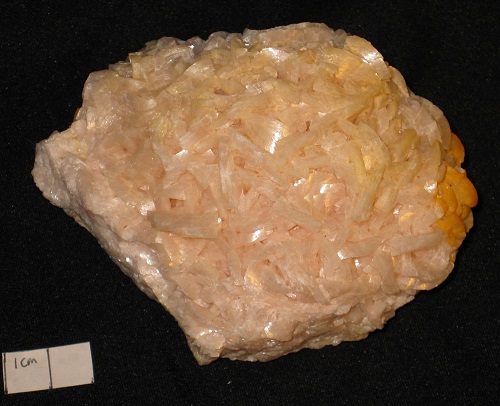
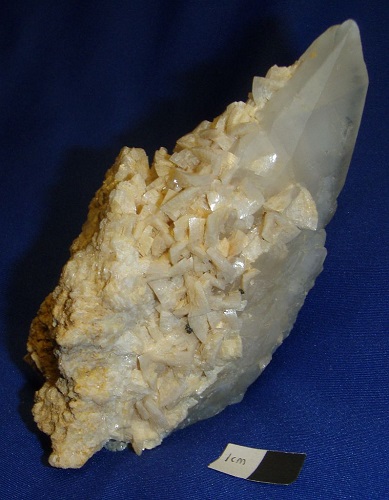
Dolomite is another common mineral in sedimentary rock. It’s a carbonate mineral CaMg(CO3)2. Crystals are usually rhombic though growth can create a saddle-shape crystal. Color is commonly pearly white, but it can be pink, yellow, orange, brown or red. Those with the reddish tinge have iron in the atomic structure and are called ferroan dolomite.
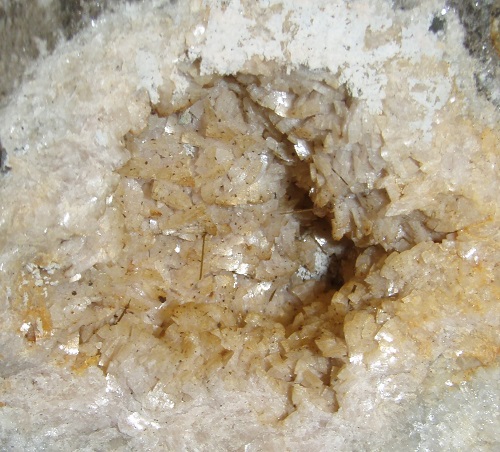
Corydon Crushed Stone Quarry in Harrison Co., Indiana, is a top 3 or 4 American locality for its pink color. Intensity is variable and the color disappears if the specimen is left outside for a period of months or years.
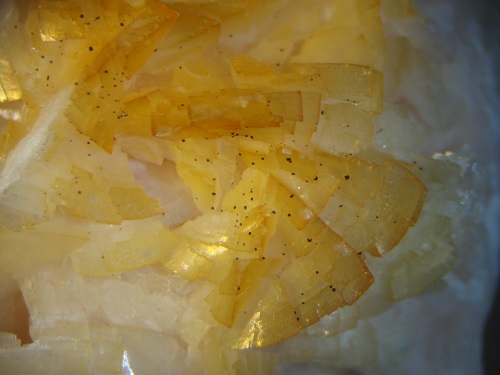
This specimen I won as a door prize at my very first Kyana Geological society meeting I attended as a “Pebble Pup” in 1969.This pink dolomite has small calcite crystals that formed later.A close-up of dolomite is saddle-shaped crystals, colored by iron and sprinkled with manganese oxide blebs.Intense pink dolomite from the upper vuggy zone (often has bigger crystals)Dolomite encrusting calcite; from the upper vuggy zone
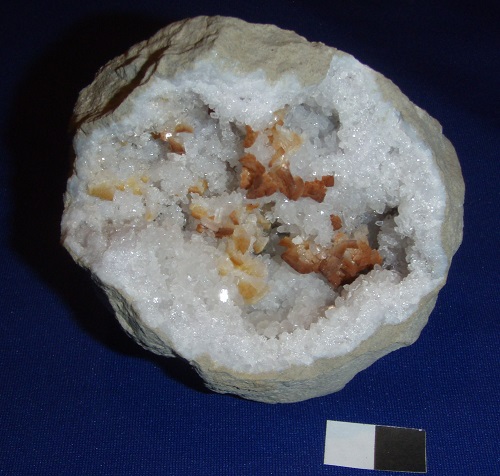
Harrodsburg, Monroe Co., Indiana, is a famous collecting locality for geodes. One of my favorites is the dolomite with a little iron giving it a vivid color.
Ferroan and regular dolomite on quartz in a geode
Sellersburg Quarry, Clark Co., Indiana, has rare vugs of dolomite, calcite and pyrite in the Jeffersonville Limestone.
Dolomite in pale, pearly curved crystals. This is the best specimen Alan collected.
Lebanon Quarry, Marion Co., Kentucky, has pale dolomite crystals in a dolostone breccia and in rare calcareous nodules in the New Albany Shale.
Light pink-brown dolomite with needle-like crystals of goethite in a New Albany Shale calcareous nodule.





![ext: This fluorite specimen is a gem in the field of gems was probably found before 1919 (before I [Ben Clement] came in Ky. Mr. [Edwin] Reed[er] was great [mine] engineer and a man with a love of minerals - my first desire to collect and my inspiration came from Eng. Redd[er]. He had a fine family always good to me for which I was grateful. See this specimen in sunlight.](https://alangoldsteinsuniverse.com/wp-content/uploads/2022/01/Edwin-Reeder-fluorite-and-label-Memorial-Room-600.jpg)